Hey there, fellow warehouse folks! Let’s cut to the chase: if you’re here right now, scrolling through this, you’re probably deep in the weeds trying to figure out if warehouse automation is worth it—and if so, which pieces aren’t gonna break the bank. I’ve been on this side of the table for over a decade, working directly with folks who run warehouses, distribution centers, and e-commerce fulfillment spots. I’ve seen way too many teams drop big cash on automation that either underdelivers or costs way more than they expected, so today, I’m gonna break down the real cost comparison of the most common automation gear, no fancy jargon, no sales fluff—just what actually hits your budget. Warehouse Automation Equipment
First off, let’s get one thing straight: automation isn’t a “one size fits all.” A 10,000 sq ft e-commerce warehouse shipping 500 packages a day has totally different needs than a 100,000 sq ft grocery DC moving pallets of milk and bread. That’s why I’m gonna stick to the most popular stuff people ask about right now: AMRs (Autonomous Mobile Robots), conveyor systems, AS/RS (Automated Storage and Retrieval Systems), and pick-to-light tech. No random niche gear here—this is the stuff most small to mid-sized operations are looking at, and even some bigger ones testing out.
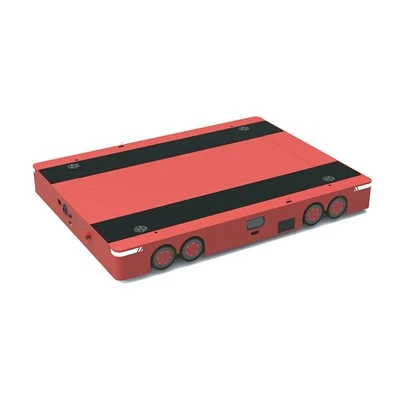
Let’s start with the entry-level stuff because that’s where a lot of teams get tripped up. AMRs are the big buzzword right now—everyone’s talking about them because they don’t need permanent wires or fixed tracks like old AGVs (Automated Guided Vehicles). I’ve seen a company just starting out go all-in on AMRs and then panic when the total cost blew past their projections. Let’s do the math here, and I’m gonna use real numbers from clients I’ve worked with, not some vendor’s marketing sheet. A single basic AMR that’s just for transporting pallets or picking bins? That’s $15,000 to $25,000 each upfront. If you’re a 50-person warehouse, you’ll probably need 10 to 15 of these just to keep up with daily moves. Wait, that’s $150k to $375k right there. But hold on—upfront isn’t the only cost. You’ve got software licenses, which are usually $200 to $500 per robot per month. Oh, and maintenance: batteries that need replacing every 3 to 5 years, parts when they bump into shelves (yes, that happens), and updates. Also, if your warehouse layout changes—say you rearrange storage or add new dock doors—you don’t have to rip out tracks, but you do have to reprogram all the robots, which adds $5k to $10k per robot in labor.
Here’s the thing people miss about AMRs: they’re great for repetitive, straight-line moves, but if you’ve got weird nooks, high racking, or last-minute order changes, they slow down a lot. I had a client in Denver last year who ordered 8 AMRs for their apparel fulfillment center. They shipped 1,200 orders a day, but 20% of the orders needed to pull items from a mezzanine level, and the AMRs couldn’t reach it. They had to add 4 more specialized AMRs that could lift 12 feet, which upped their total cost by another $100k. Total cost after 2 years? They thought it’d be $250k, ended up at $550k. Ouch. Don’t get me wrong—AMRs can save you 30 to 40% on labor in the long run, but you have to factor in the “hidden” costs before you sign the dotted line.
Next up: conveyor systems. This is the older guard, but it’s still super common, especially for warehouses that handle consistent, high-volume boxed goods. A basic conveyor line for moving packages from packing to shipping? That’s cheaper upfront than AMRs, right? A linear 100-foot conveyor run is $10,000 to $20,000. But here’s the catch: if you need to sort packages by size, destination, or order type, you’re not done. A sorter module for that adds $5,000 to $10,000. And if your warehouse is more than 50,000 sq ft, you’ll need multiple conveyor runs—so that can add up quick. I had a client in Atlanta last year who wanted to expand their conveyor from 200 feet to 500 feet. They thought it’d be $50k, but they had to run power, add supports for the high ceiling, and integrate it with their existing warehouse management system (WMS). Total ended up at $120k, and installation took 3 weeks, which shut down part of their shipping line. Labor costs for installation are a big one with conveyor—if you’re not handy with industrial gear, you’ll pay $100 to $150 per hour for technicians, and those add up fast.
But conveyor’s upside? Maintenance is way simpler than AMRs. No software updates every month, no random battery replacements, just occasional belt changes or roller repairs. I’ve seen a 500-foot conveyor line run for 10 years with less than $20k in maintenance, which is way better than AMRs’ ongoing costs. The downside? Conveyor is inflexible. If you want to rearrange it, you can’t just reprogram it—you have to take it apart and rebuild it, which means downtime and extra cash. So if you’re a warehouse that changes layouts a lot (like e-commerce that does holiday shifts or seasonal inventory), conveyor might not be worth it long-term.
Now let’s jump to the mid-range stuff that a lot of growing warehouses look at: pick-to-light. This is the tech where shelves have little lights that tell pickers exactly which bin to take from, how many items, and which order it goes to. It’s paired with a WMS, so it cuts down on pick errors by like 90%—no more grabbing the wrong size shirt or missing a item. Upfront cost here? Per bin, it’s $200 to $500. A small warehouse with 1,000 bins would pay $200k to $500k to outfit them all. But wait, that’s for the light units themselves. You also need the controller software, which is $5,000 to $15,000 upfront, and ongoing maintenance—usually 5 to 10% of the total upfront cost per year. So for that 1,000-bin warehouse, annual maintenance is $10k to $50k.
The big win with pick-to-light is that it’s super easy for existing workers to learn. No fancy robot training, just push a button when you pick an item. I had a client in Houston last year who switched from manual picking (where pickers walked around with a clipboards) to pick-to-light. They cut their picking time by 40% and reduced order errors from 2% to 0.2%. That meant they didn’t have to hire 5 extra workers during peak season, which saved them $120k a year. But here’s the trade-off: pick-to-light doesn’t move inventory for you. You still have to have someone move the bins to the shelves, and if you’re shipping a lot of pallets, it doesn’t help with that. It’s a great add-on, but not a standalone solution for most warehouses.
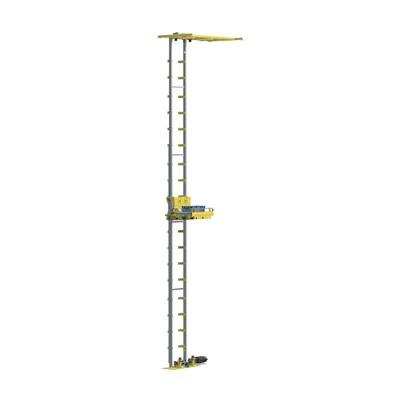
Now for the heavy hitter: AS/RS. This is the automated storage and retrieval systems that use cranes or shuttles to pull pallets or bins from high racks, way higher than a human can reach. It’s for big, high-volume warehouses—like grocery DCs, big e-commerce fulfillment centers, or retail distribution hubs. Upfront cost for AS/RS? Let’s be real, it’s not cheap. A small AS/RS for 10,000 pallets is $1 million to $2 million. A big one for 100,000 pallets can be $10 million or more. That’s a huge number, so why do companies go for it? It saves tons of space—you can stack pallets 80 feet high, vs. 25 feet with manual racking. That means you don’t have to build a bigger warehouse, which saves you $50 or more per sq ft every year. For a 100,000 sq ft warehouse, that’s $5 million in savings over 10 years. But again, hidden costs: installation takes 6 to 12 months, so you’re paying rent or mortgage during that time and not getting any output from the new system. Maintenance for AS/RS is also steep—10 to 15% of the upfront cost per year, since those cranes and shuttles are precision gear. If one part breaks, it can shut down the whole system for days. I had a client in Chicago last year whose AS/RS crane motor burned out during the holiday rush. Replacement parts and repair labor cost $80k, and they were closed for 5 days, losing $200k in sales. That’s a risk you don’t take with smaller gear.
Now, let’s talk about something no one tells you about cost comparisons: total cost of ownership (TCO), not just upfront price. A lot of vendors will show you a low upfront number, but ignore the ongoing costs, downtime, and labor savings. Let’s do a quick TCO breakdown for a 50,000 sq ft e-commerce warehouse shipping 1,000 orders a day, over 5 years:
-
AMRs: Upfront $200k, annual software/maintenance $50k, labor savings $100k/year. Total TCO: $200k + ($50k x 5) – ($100k x5) = $200k + $250k – $500k = -$50k. Wait, negative means you make money, right? But that’s only if you don’t have layout changes or repairs. If you add $50k in extra costs, it goes to $0, so break-even, not profit.
-
Conveyor: Upfront $80k, annual maintenance $8k, labor savings $70k/year. Total TCO: $80k + $40k – $350k = -$230k. That’s a big win, but only if your layout doesn’t change. If you rearrange it for holiday inventory, you spend $40k extra, so it drops to -$190k.
-
Pick-to-light: Upfront $150k, annual maintenance $15k, labor savings $90k/year. Total TCO: $150k + $75k – $450k = -$225k. Great, and it’s way more flexible than conveyor.
-
AS/RS: Upfront $1.5M, annual maintenance $150k, labor savings $500k/year, space savings $300k/year. Total TCO: $1.5M + $750k – ($500k x5 + $300k x5) = $2.25M – $4M = -$1.75M. That’s huge, but only if you can handle the big upfront cost and installation downtime.
Wait a second—so why isn’t everyone just going for the AS/RS? Because not every warehouse has the volume or space to make it work. If you only ship 500 orders a day, you’re not gonna save enough in labor and space to pay off the $1.5M upfront. That’s the biggest mistake I see teams make: copying what a big competitor does, even if their own operations don’t match.
Another thing to factor in: integration with your existing WMS. A lot of automation gear doesn’t play nice with old systems, so you might have to spend $20k to $50k on custom integration software. I had a small apparel client last year who bought cheap AMRs, only to find out their WMS was from 2012 and couldn’t talk to the AMR software. They had to spend $30k on a middleware tool, which doubled their initial cost. So always check integration before you buy—don’t assume it’ll work right out of the box.
Also, scalability. If you’re a startup that might grow 2x next year, conveyor is a bad choice because you can’t add to it easily. AMRs and pick-to-light are way easier to scale—you just add more robots or more light units, no major rebuild. AS/RS is scalable too, but it’s way harder and more expensive to expand than smaller gear.
Let’s get real about who this is for, okay? If you’re a small warehouse (less than 20,000 sq ft, less than 500 orders a day) and you’re just looking to cut pick errors, pick-to-light is your sweet spot. It’s not too expensive, easy to integrate, and pays for itself in a year or two. If you’re mid-sized (20k to 100k sq ft, 500 to 5,000 orders a day) and your layout doesn’t change much, conveyor or AMRs work—go with whichever fits your space. If you’re big (over 100k sq ft, 5,000+ orders a day) and can handle the upfront cost, AS/RS will save you the most in the long run, but make sure you plan for installation downtime.
Now, I’ve got one last tip that no vendor will tell you: test before you buy. A lot of companies will let you rent a couple AMRs or a small pick-to-light setup for a month to see how it works in your warehouse. Do that! I had a client in Phoenix last year who almost bought 12 AMRs, but rented 2 for 2 weeks. They found out that their warehouse had narrow aisles, and the AMRs kept getting stuck on pallets left out overnight. They switched to a smaller, cheaper conveyor sorter instead, which saved them $100k. Test runs are free (or super cheap) and can save you from a huge mistake.
At the end of the day, warehouse automation isn’t about getting the fanciest gear—it’s about getting the gear that fits your budget, your volume, and your long-term plans. If you’re tired of guessing what automation will actually cost you, I’m here to help. I’ve worked with hundreds of warehouses, from startups to Fortune 500, and I can walk you through your specific numbers, no sales pitch, just straight talk about what will work for you. Shoot me a note to connect and we can dive into your warehouse’s needs, compare the exact costs, and figure out the best move.
Material Handling Equipment References:
- "Warehouse Automation Total Cost of Ownership Report," Material Handling Industry Association, 2023.
- "AMR vs. Conveyor: Cost and Performance Comparison for Small to Mid-Sized Warehouses," Logistics Management Magazine, 2022.
- AS/RS Implementation Guide for Distribution Centers, Supply Chain Digest, 2023.
- "Pick-to-Light System ROI Analysis," Modern Materials Handling, 2022.
- "Hidden Costs of Warehouse Automation: A Practical Breakdown," Industrial Equipment News, 2023.
Anhui Rayo Automation Technology Co., Ltd.
With abundant experience, we are one of the most professional warehouse automation equipment manufacturers and suppliers in China. Please feel free to wholesale advanced warehouse automation equipment in stock here and get quotation from our factory. All customized products are with high quality and competitive price.
Address: No.28 Yongzhen Road, Wuhu Area, China (Anhui) Pilot Free Trade Zone
E-mail: ahry@ahrayo.com
WebSite: https://www.rayosmart.com/
