Hey everyone, let’s cut to the chase—if you’re in the screen print game, you know how much a wonky, shifting pallet can ruin a print run. I’ve been selling screen print pallets for years, and one question I get nonstop is: “How the hell does a vacuum pallet actually work, anyway?” Most people see it as that fancy, pricey add-on, but it’s not rocket science once you break it down. Let’s walk through this like we’re chatting in the shop, no textbook jargon, just real, how-it-works stuff. Pallet for Screen Printing Press
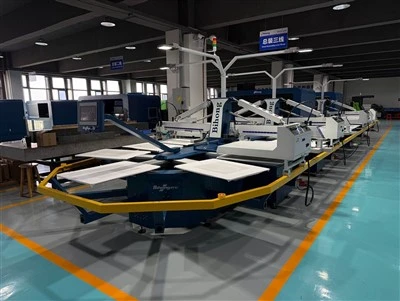
First, let’s start with the basics of what a standard pallet does, just to set the bar. A regular wood or aluminum pallet is flat, right? You tape your t-shirt down, maybe use some spray adhesive, and pray it doesn’t slip mid-print. But here’s the thing—tapeless is a game changer, especially for runs that take hours. That’s where vacuum pallets come in. They’re not just flat boards; they’re engineered to hold fabric tight without tape, and I’ll explain the mechanics step by step so you get it.
Let’s break down the core parts first. Every vacuum pallet has three main pieces that work together like a team: the base, the top work surface, and the vacuum system. The base is usually a heavy-duty aluminum frame (we use aircraft-grade aluminum in our pallets, not that flimsy cheap stuff) that’s sealed tight—no gaps, no cracks, because air leaks are the enemy here. Then the top work surface—this is where the magic holes are cut. We use a dense, porous material for this, like a high-density EVA foam or a perforated aluminum sheet with tiny, uniform holes. The holes are super important; if they’re too big, fabric will pull through (ask me how I know that mistake), if they’re too small, air can’t pass through to create suction. We engineer the hole size and spacing based on if it’s for garments, hats, or even small flat goods like phone cases—one size doesn’t fit all, which is why we make custom pallets too.
Between the base and the top work surface is a plenum chamber. That’s the hidden middle layer, basically a hollow cavity that connects all the little holes in the top. Think of it like a big bucket under a colander—when you pull water out of the bucket, it siphons through every hole in the colander, right? Same idea here. The plenum has to be evenly sized, no weird bulges or tight spots, because if one area of the plenum is smaller, air will flow unevenly, and half your shirt won’t get held tight. I’ve seen cheap pallets cut corners here—their plenum is lumpy, so the edges of the shirt always lift, and you have to reprint half the run. We don’t do that.
Now the vacuum system itself. That’s the power part. It’s not just a fancy vacuum cleaner you buy at the store—we pair our pallets with a low-profile, motorized vacuum pump that mounts under the screen printing press. The pump connects to the plenum chamber through a port on the side of the base. When you turn the pump on, it sucks all the air out of the plenum, creating negative pressure inside that cavity compared to the air outside the pallet. Here’s the key: your garment (or whatever you’re printing) sits on top of the work surface, covering all the holes. The outside air pressure is way higher than the pressure in the plenum, so it pushes the fabric straight down onto the pallet. No slipping, no tape, no wasted time re-sticking shirts mid-run.
Wait, let’s test that logic with a real example. If you put a piece of paper on a vacuum pallet, turn the pump on, try to pick the paper up off the pallet—you can’t, right? The air pressure is holding it down so tight. It’s the same principle as those old science experiments where you put a can of air on a fire, invert it in water, and it crushes—negative pressure, baby. That’s exactly what’s happening here, just scaled down for screen print pallets.
But here’s where most people get confused: why do some vacuum pallets work for t-shirts but not for hats? Oh, right—we design for specific substrates. Flat garments like t-shirts need a pallet with perforated aluminum (more rigid, better for flat smooth fabric) and smaller hole spacing, so every inch has suction. Hats, though, have curved crowns, so we use a vacuum pallet with a custom contour (we cut that foam top to match a hat’s shape) and wider hole spacing, because the curve means only a portion of the holes are covered at a time. If you tried to use a flat t-shirt pallet for a hat, the only holes touching the hat’s crown would do all the work, and the rest would leak air, so the suction would be weak. I see guys buying one-size-f-all vacuum pallets and wondering why they get bad results—because they didn’t match the pallet to their product. That’s the stuff we help folks figure out when they reach out.
Now, let’s talk about the day-to-day stuff that matters to you, not just mechanics. What’s actually happening when you run a job on a vacuum pallet? Let’s walk through a standard print run step. First, you prep your pallet—no taping, no messy spray adhesive, just make sure it’s clean (a quick wipe with a lint roller does it). You set your screen on the press, line it up, then set your garment on the pallet. When you lower the screen, you hit a foot pedal or a switch on the press, and the vacuum kicks in. The shirt gets pulled tight against the pallet in 0.2 seconds flat, no shifting. You print your first color, lift the screen, the vacuum stays on. You lay the next shirt down, hit the switch, it locks in place. No more stopping every 10 prints to re-stick a shirt that slipped, no more smudges from tape residue, no more ruined prints because the fabric moved. That’s the real value, right? Speed and consistency.
Wait, can you leave the vacuum on all day? Hell yeah, as long as your pump is sized right. Our pumps are industrial-grade, so they run 12+ hours straight without overheating—we’ve got shops that run 16-hour runs on custom orders, and their pallets never skip a beat. The only time you want to turn it off is when you’re done printing, to lift the garment easily. And for thin materials, like a 100% cotton baby onesie, you can adjust the vacuum strength—we add a small regulator to our systems, so you don’t suck the fabric so hard it puckers (another mistake new users make—too much suction = ruined edges). That regulator is a game changer, by the way, we never skip that part.
Now, let’s address the myths I hear all the time. First: “Vacuum pallets are only for big runs.” Nah, we have a lot of small shop owners who do 50-piece runs, and they swear by their vacuum pallets because it cuts set-up time in half. Taping 50 shirts takes 20 minutes, setting them on a vacuum pallet takes 2. That time adds up, especially when you’re turning around quick orders. Second: “They’re too expensive.” Yeah, a good vacuum pallet is more than a regular wood one, but when you add up the cost of wasted prints, tape, and labor, it pays for itself in 1-2 runs. I’ve had guys tell me they saved $1,200 in just one month by switching—no more throwing away shirts that shifted mid-print. Third: “They’re hard to maintain.” Not really—just clean the holes every couple of days with a small brush to get rid of ink or lint, check the pump filter once a month, and that’s it. No fancy tools needed.
Let’s get into the nitty-gritty of how we build them, since that’s what makes our pallets different. We don’t just cut holes in a board and call it a vacuum pallet. Every pallet is CNC-machined, so the holes are perfectly uniform, no uneven edges that can catch fabric. The plenum is routed to have consistent air flow, so even the corners have the same suction as the center. We seal all seams with a food-grade silicone gasket, so there’s zero air leak—no weak spots, no dead areas. And for custom pallets, like for a brand’s specific fit or a weird product (we’ve done pallets for skateboard decks, face masks, even small game controllers), we work with you to measure the exact dimensions, adjust the hole pattern, and contour the top surface to match. That’s why a lot of repeat customers come back—we don’t sell a one-off, we sell a pallet that works for their press and their products.
Wait, let’s talk about press compatibility, because that’s another big question. Can a vacuum pallet work with any screen printing press? As long as your press has a way to mount the pump port, or we can add a universal adapter, yes. We’ve got adapters for all the popular presses: M&R, Anatol, Lawson, even smaller entry-level presses like the Vastex or Hix. We also sell complete vacuum setups: the pallet, the pump, the regulator, the adapter, all in one package, so you don’t have to hunt around for parts. That’s one less headache for you.
Let me share a quick customer story to make this real. A guy reached out to me last month, he had a 6-color t-shirt run for a local band, he was using a standard pallet and throwing away 12 shirts every run because the fabric slipped mid-print. He bought a basic vacuum pallet from a big box supply store, and it leaked so bad that half the shirt wasn’t held. He found me, got a custom aluminum vacuum pallet for his 18×24 press, and told me later that run he only had 1 bad shirt. That’s the difference between a cheap, cut-corner pallet and one engineered to actually work right. The holes in that big box pallet were too big, the plenum was lopsided, no regulator—just garbage. We don’t do garbage.
Now, what about the stuff people don’t see? When you’re pulling a garment tight on a vacuum pallet, it also prevents “print stretch.” That’s when the fabric pulls with the squeegee and makes the print uneven, right? If the fabric is locked down tight by suction, it can’t stretch at all. That’s a huge quality win for your prints—crisp, consistent lines, no blurry edges that come from fabric moving. I’ve had brands switch to vacuum pallets and get 20% better quality on their prints, just like that.
Let’s wrap this up so it’s not just a wall of tech talk. The short version of how a vacuum pallet works: 1) It’s a sealed board with tiny, evenly spaced holes on top, connected to a hollow plenum inside. 2) A vacuum pump sucks air out of the plenum, making negative pressure. 3) A garment (or product) sits on top, covering the holes, so the higher outside air pressure pushes the fabric tight against the pallet. 4) No tape, no shifting, no print stretch, just faster runs and better quality.
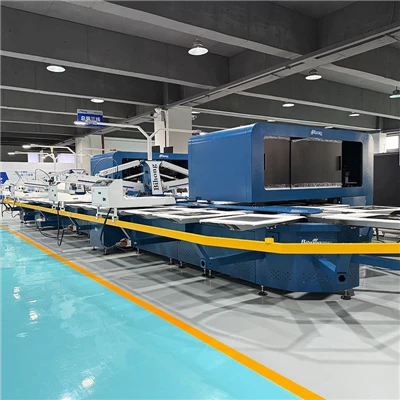
If you’re tired of ruined prints, wasting time taping shirts, or want to step up your shop’s consistency, we build vacuum pallets that are tailored to your press and your products. No one-size-f-all junk, no overpriced nonsense, just pallets that do exactly what they’re supposed to do. If you want to chat about what size you need, what substrate you’re printing, or even just ask a dumb question (I’ve been doing this for 12 years, no question is stupid), hit us up to talk shop. We’re here to make your life easier, not sell you something you don’t need.
Tunnel Dryer References:
- Screen Printing: Principles and Practice, Third Edition, Graphic Arts Publishing, 2018.
- Vacuum Fixture Design for Industrial Assembly, SME Press, 2020.
- Screen Printing Equipment Maintenance Guide, International Screen Printers Association, 2022.
- Custom Vacuum Pallet Engineering for Textile Printing, Journal of Applied Screen Printing Technology, Volume 15, 2021.
- Low-Pressure Vacuum Systems for Small Manufacturing Shops, Small Business Manufacturing Journal, 2023.
Guangdong Aces Machinery Co., Ltd.
Guangdong Aces Machinery Co., Ltd. is one of the most professional pallet for screen printing press manufacturers and suppliers in China. We are committed to providing high quality equipment made in China with low price. If you’re going to buy durable pallet for screen printing press, welcome to get pricelist from our factory. Customized orders are welcome.
Address: 701, Building 5, Liandong U Valley, No.8 Zhixin 1st Road, Dagang Town, Nansha District, Guangzhou City, Guangdong Province, China.
E-mail: jessie@bhprinter.com
WebSite: https://www.bihongprinter.com/
