If you’ve ever stood in front of a compressed air system, staring at a gauge, wondering why your current screw air compressor keeps falling short, you’re not alone. As a screw air compressor supplier, every day I talk to shop owners, plant managers, and maintenance technicians who’ve either bought a compressor that’s too small (so they’re running at max capacity 24/7, breaking down more often) or too big (wasting energy on unnecessary idle time). The sweet spot? Calculating the right CFM, or cubic feet per minute, for your needs. It’s not just about picking a number off a spec sheet—it’s about matching your compressor to the exact, unique demands of your operation. Let’s break this down step by step, no jargon, just real-world advice I’ve picked up working with hundreds of customers. Screw Air Compressor
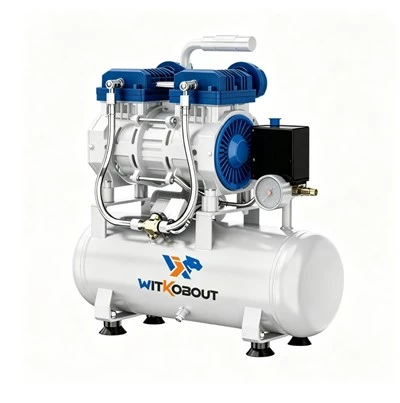
First, let’s get clear on what CFM actually means for screw air compressors. CFM is the volume of free air (air at atmospheric pressure, not pressurized inside the lines) a compressor delivers every minute. Your tools, machinery, and processes all list their required CFM, but here’s the catch: that number is usually at a specific pressure, most often 90 PSI, which is the standard for most industrial and commercial uses. If you need air at a higher or lower pressure, that CFM number changes too. That’s why guessing is a mistake—too many people see a tool’s 5 CFM rating and grab a 5 CFM compressor, only to find it’s rated at 100 PSI and their line pressure is only 80 PSI, leaving them short.
Step one: Gather your total air demand. Start with every single piece of equipment that uses compressed air. This includes everything from nail guns on a construction site, to sandblasting equipment, to process lines in a food and beverage plant, to HVAC tools in a auto repair shop. For each tool or machine, write down its required CFM at the operating pressure you use. If a tool says it needs 6 CFM at 90 PSI, that’s your baseline for that item. Now, add all those numbers up. But wait—this is the “active” demand, the air you use when every single tool is running at the same time. That’s a big “if” in most operations. A wood shop might have 10 nail guns, but how many do you use at once? A factory might have 5 presses, but only 2 cycle during a given work shift. That’s where demand factor comes in.
Demand factor is the percentage of your total connected tools that are actually operating at peak capacity at any point. I typically recommend a demand factor between 60% and 85% for most general industrial operations. Why? Let’s say your total active demand is 100 CFM (from 10 tools, each needing 10 CFM). A demand factor of 70% would mean you need 70 CFM, right? That makes sense because you don’t run every tool at full power 100% of the time. But if you’re running 24/7 processes, like packaging line in a food plant that’s almost never idle, you might use a higher demand factor—closer to 90%—because those tools are running more consistently. If you’re a small job shop with tools that run in batches, you can go lower, maybe 60%, to account for longer idle periods.
Next, add in your system losses. This is the part most people forget, and it’s the reason even if you calculate 80 CFM of demand, you might still fall short. Compressed air doesn’t just go from the compressor to your tool—it travels through pipes, fittings, valves, and hose, and every inch of that network causes small leaks and pressure drops. Even a well-maintained system has 10-15% loss; if your pipes are rusted, have loose fittings, or are too small for your system, that loss can jump to 20% or more. So after you calculate your adjusted demand (total active CFM times demand factor), you need to add a buffer for these losses. I always tell customers to add at least 10% to their adjusted demand. For example, if your adjusted demand is 70 CFM, add 7 CFM for losses, bringing you to 77 CFM.
Then there’s pressure adjustment. Remember, CFM ratings are always tied to a specific pressure. If your equipment runs at a different pressure, you have to adjust your total CFM to match. Let’s do a quick example: if your tool requires 6 CFM at 90 PSI, but your system runs at 110 PSI, how do you adjust that? Boyle’s Law tells us that the volume of gas is inversely proportional to pressure, assuming temperature is constant. The formula is: New CFM = (Old CFM * New Pressure) / Old Pressure. Wait, let’s test that: (6 CFM * 110 PSI) / 90 PSI = 7.33 CFM. Oh, right! So at 110 PSI, that same tool needs 7.33 CFM, not 6. If you’re running at lower pressure, say 70 PSI, it would be (6 *70)/90 = 4.67 CFM. That’s a huge difference—if you buy a compressor rated for 6 CFM at 90 PSI for your 70 PSI system, you’re actually only getting ~4.7 CFM, which might not be enough for your tool. This is such a common mistake that I see customers undo it all the time by not adjusting for pressure.
Now, let’s talk about different types of screw air compressors, because your calculation has to align with the compressor’s configuration. There are two main types: fixed-speed and variable speed drive (VSD) screw compressors. Fixed-speed compressors run at full capacity all the time, and they cycle on and off to match demand. VSD compressors adjust their motor speed to match real-time demand, which saves energy for operations that have fluctuating demand. If your demand is consistent (like a manufacturing line that runs the same 80 CFM every hour), a fixed-speed compressor rated for your calculated CFM works great. But if your demand varies a lot—say, sometimes you need 40 CFM, sometimes 80 CFM, sometimes you’re idling—VSD is the way to go, and you can size it to your average demand, not just peak demand. That’s why we always ask customers about their load profile, not just their peak CFM, because it changes the optimal compressor type.
Wait, what about future growth? This is another question I get all the time: “I need a compressor now, but what if I add a new line next year?” It’s worth building in a small buffer for that, too. If you’re planning to add new tools or expand your operation within 2-3 years, add another 10-15% to your total. Let’s put this all together in a real example to make it concrete. Let’s say you’re a small auto repair shop. Your equipment includes: 1 impact wrench (5 CFM at 90 PSI), 2 nail guns (2 CFM each, total 4 CFM at 90 PSI), 1 spray gun (10 CFM at 90 PSI). Total active demand is 5 + 4 + 10 = 19 CFM. Your shop runs 8 hours a day, 5 days a week, and you don’t run all tools at once—your demand factor here is 75% (since often only 1 impact wrench and 1 nail gun are in use at the same time). Adjusted demand is 19 * 0.75 = 14.25 CFM. Add 10% for system losses: 14.25 + 1.425 = 15.675 CFM. Your system runs at 85 PSI (not 90), so adjust for pressure: (15.675 * 85) / 90 = ~14.8 CFM. If you want to add a new tire changer next year that needs 8 CFM at 90 PSI, add another 10% buffer: 14.8 * 1.1 = ~16.3 CFM. So for your auto shop, you’d need a screw air compressor rated for ~16-17 CFM at 90 PSI. That’s exactly the kind of step-by-step I walk customers through when they call us.
What about common pitfalls to avoid? First, don’t rely on the nameplate CFM of your current old compressor. Over time, wear and tear reduces delivery— a compressor that was rated for 20 CFM 10 years ago might only deliver 17 CFM now, so you can’t use that old number as your new demand. Second, don’t forget leak testing. If you’re moving into a new space, or haven’t checked your air lines in a while, do a leak test before you size a new compressor. A system with 20% leaks is a 20% higher demand than you calculated, so you might need a bigger compressor than you thought. Third, don’t confuse standard CFM (SCFM) with free air CFM. SCFM is the CFM at standard conditions (14.7 PSI, 68°F), which is a universal measurement, while some manufacturers will advertise “CFM” at a higher pressure, which sounds better but isn’t what you need. Always check that the CFM rating is at your operating pressure for your application.
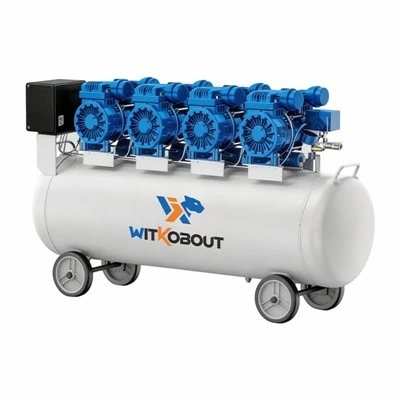
As a screw air compressor supplier, our job isn’t just to sell a unit—it’s to make sure it works for you. We’ve seen so many customers buy the cheapest compressor they can find, do a quick Google search for “CFM calculator”, and end up with a compressor that runs non-stop, wastes thousands of dollars in energy bills, and breaks down every few months because it’s undersized. The right calculation is the difference between a compressor that runs smoothly for 10+ years and one that’s a constant headache. If you’re not sure about your demand factor, your pressure adjustments, or what type of screw compressor fits your operation, don’t guess. We can help you walk through every step, from listing your equipment to accounting for your work schedule and future plans. Whether you’re a small shop, a mid-sized factory, or a large processing plant, we’ll tailor the calculation to your specific needs so you get exactly the right CFM. Ready to stop guessing and get a compressor that works for you? Reach out to our team to discuss your requirements, and we’ll help you figure out the perfect screw air compressor for your operation.
Air Compressor References:
- Compressed Air and Gas Institute (CAGI). “Screw Air Compressor Sizing and System Design Guidelines”. Compressed Air and Gas Handbook, 2021.
- United States Department of Energy. “Improving Compressed Air System Performance: A Sourcebook for Industry”, 2019.
- Freudenberg, W. “Compressed Air Systems: Selection, Operation, and Maintenance”. Industrial Press, 2020.
- Occupational Safety and Health Administration (OSHA). “Compressed Air Safety Guidelines for Industrial Operations”, 2022.
Hangzhou Witkobout Technology Co., Ltd.
Hangzhou Witkobout Technology Co., Ltd. is one of the most professional screw air compressor manufacturers and suppliers in China, featured by quality products and good service. Please rest assured to wholesale CE approved screw air compressor in stock here and get quotation from our factory. We also accept customized orders.
Address: Room 1211, Huaxia Center, Cangqian Street, Yuhang District, Hangzhou City, Zhejiang Province
E-mail: hzzhikongbao@163.com
WebSite: https://www.witkobout.com/
