If you’ve ever wandered a home improvement store or scrolled through interior design inspiration, you’ve probably seen both “flexible stone” and “real stone” thrown around as premium wall cladding, countertop material, or accent decor. For years, I sold real stone as a stone mason, cutting and hauling granite and slate slabs that weighed as much as I did, and now I run a flexible stone supply business. I get questions all the time: “Is flexible stone just a cheap knockoff?” or “Why would I pay for something that bends when real stone is so durable?” The answer isn’t as black and white as you might think—today, I’m breaking down the real differences between the two, no marketing jargon, just what I’ve learned over two decades in the stone business. Flexible Stone
First, let’s get clear on what each product actually is, because a lot of people mix up the basics. Real stone, the kind quarried from the earth, comes in two main forms: full slabs and thin veneers. Full slabs are the big, heavy 2cm or 3cm thick pieces you see for kitchen countertops, cut directly from solid rock blocks. Thin real stone veneer, meanwhile, is a 10mm to 15mm thick slice of the same material (slate, quartz, limestone, you name it) sliced off a larger block to cut weight and cost. Both are 100% natural rock, mined from quarries that have been in operation for hundreds of years in places like Vermont, Italy, or Brazil.
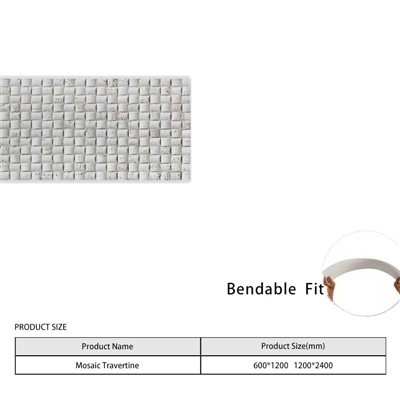
Flexible stone? It’s not a real stone at all—at least, not in the traditional sense. The base is a thin, breathable layer of polymer-modified mesh fabric, bonded to a top layer of actual crushed stone dust that’s fused together with a mineral binder. The end result is a product that’s only 1.5mm to 3mm thick, weighs less than a pound per square foot, and can bend around a 1-inch diameter pipe or curved wall like a piece of thick vinyl. For context, a thin real stone veneer is around 10 times thicker and 15 times heavier than flexible stone.
Weight is one of the first, most noticeable differences, and it’s not just a minor detail—it changes everything for installation. I’ve seen so many construction teams pull their hair out trying to lift 200-pound granite slabs up a second-floor wall, or patch holes with extra fasteners to support heavy thin stone veneer on an exterior facade. Flexible stone cuts that weight drastically: a 10×10 foot accent wall of flexible stone weighs about the same as a roll of heavy wallpaper, so you can install it with just a basic adhesive and no extra structural reinforcement. That’s a game-changer for historic renovations, where you can’t load a building’s old exterior walls with extra weight, or for DIYers who don’t have a crew to haul heavy materials.
But here’s where a lot of people get confused about “quality”: flexible stone’s bendiness doesn’t mean it’s flimsy. The top stone layer is actual natural stone, just processed into fine particles instead of cut into a slab. Independent tests I’ve run with our materials show that flexible stone has a comparable compressive strength to thin real stone veneer—meaning it can hold up to the same amount of pressure from hanging shelves or foot traffic. The big tradeoff for that strength, though, is scratch resistance. Real stone (especially granite, quartzite, or quartz) is extremely hard—you can drop a knife on a granite counter and barely mark it. Flexible stone’s top layer is crushed stone, so it scratches more easily than full real stone, though we add a UV-resistant clear coat to our products to cut down on that for exterior use. For interior accent walls that won’t get heavy, daily use, that’s a non-issue for most homeowners.
Durability, of course, depends on where and how you use it. Real stone is unmatched for high-traffic areas like kitchen countertops or outdoor patios. It’s resistant to heat—you can set a hot pan on a granite slab without a single mark, while flexible stone will soften and discolor if left near a stove or fireplace for too long. It’s also stain-resistant if sealed properly (again, something flexible stone isn’t as good at, since its thin layer can absorb spills if not cleaned immediately). But for applications like curved feature walls, backsplashes around odd-shaped corners, or interior linings in boats and RVs, real stone can’t work—full slabs are too heavy to bend around curves, and thin veneer can crack if you try to force it into a rounded shape. Flexible stone’s flexibility means it fits those weird, hard-to-design spaces, expanding the kind of stone you can use in a home or project.
Cost is another big difference, but it’s not as straightforward as “flexible stone is always cheaper.” For small, simple projects like a 5-foot kitchen backsplash, thin real stone veneer might cost around $15 to $20 per square foot, while our flexible stone runs $12 to $18 per square foot—so flexible stone is the better deal there. But for large projects, a full granite slab countertop can run $40 to $100 per square foot, way more than flexible stone’s average $15 to $25 per square foot. The hidden cost, though, is installation: a full stone slab installation can cost $50 to $100 per square foot with labor, since it requires specialized tools, heavy equipment to lift the slab, and multiple workers. Flexible stone installs in a fraction of the time, with one worker and basic tools like a paint roller, so labor costs cut the total price difference a lot more than people expect. For example, a 100-square foot curved exterior accent wall would cost around $3,500 for flexible stone installed, vs. $6,000 for thin real stone veneer installed—because you can’t even cut a curved veneer without it cracking, so you’d have to order custom cuts or use smaller pieces, adding time and cost.
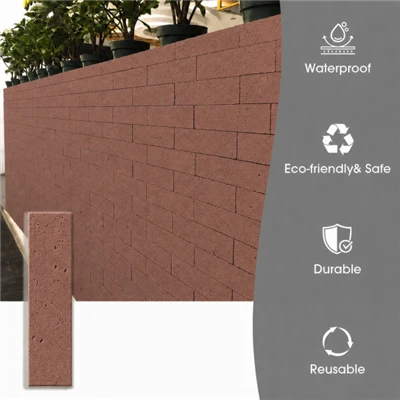
I also get questions about sustainability, and that’s where the two products differ a lot. Real stone quarries are huge operations, with massive mines that can take up hundreds of acres of land, produce tons of waste rock (for every ton of finished stone slab, you get 4 tons of leftover rock), and use a lot of water and energy for cutting and transporting heavy slabs. Flexible stone’s production uses far less raw material: we only use 3mm of stone per square foot, vs. 10mm for thin veneer, so less quarry material is mined. Plus, our products are made with 70% recycled stone dust from the real stone cutting process—we take the leftover dust from quarries that would otherwise go to landfills, fuse it with the mesh base, and turn it into a usable product. For eco-conscious builders and homeowners, that’s a big selling point, though it’s worth noting that the polymer mesh base is a synthetic material, so flexible stone isn’t 100% natural like real stone.
Still, no product is perfect, and there are downsides to both. Real stone can be porous, so it needs to be sealed every 1 to 3 years to resist stains and mold—something flexible stone doesn’t need, since it’s sealed at the factory. But real stone is easier to repair: if a granite counter cracks, a mason can fill and polish it back to almost new. Flexible stone, meanwhile, will crack if you drop a heavy object on it, and since its top layer is thin, repairs require matching material that’s hard to source for small, quick fixes. That’s why we always tell customers: choose real stone for high-use, flat, interior or exterior spaces where durability is non-negotiable, and flexible stone for curved spaces, DIY projects, or areas where weight and cost are big factors.
Over the years, I’ve seen this debate play out in residential jobs and commercial projects alike. A homeowner once came to me upset that her thin stone veneer wall cracked mid-installation when she tried to bend it around a fireplace arch—she thought flexible stone was “cheap” and didn’t trust it, so she tried to force the wrong product. A restaurant builder, on the other hand, picked flexible stone for his curved wall around the bar, and told me it cut his installation time by half and saved him $2,000 in labor. The line isn’t about which is “better”—it’s about which fits the job.
As someone who’s worked with stone both quarried and engineered, I know there’s no one-size-fits-all answer. If you’re planning a project and trying to decide between flexible stone and real stone, you might have questions about both—whether it’s matching a specific color, calculating weight for a second-floor install, or understanding long-term maintenance needs. I’m here to help you figure out the right material for your space, no sales pressure, just the advice I’ve gained from 20 years in the stone industry.
If you’re ready to discuss your project, need sample materials, or want to ask specific questions about installation, durability, or customization, feel free to reach out to us for a procurement consultation. We’re here to walk through your needs, compare product options, and help you make the best choice for your space.
OEM/ODM References
- National Association of Home Builders. (2022). Sustainable Building Materials Guide: Natural Stone vs. Engineered Stone.
- Natural Stone Council. (2021). Performance Comparison: Thin Stone Veneer vs. Alternative Cladding Materials.
- International Code Council. (2020). Residential Building Code Guidelines for Non-Structural Wall Cladding.
- Journal of Building Physics. (2019). Thermal and Structural Properties of Flexible Stone Composites for Architectural Applications.
Jiangsu Baidai Energy-Saving Building Materials Co., Ltd.
As one of the most professional flexible stone manufacturers and suppliers in China for over 20 years, we also support customized service. Please feel free to buy flexible stone made in China here and get free sample from our factory. For price consultation, contact us.
Address: NO.37 Standard Workshop, Hailing Industrial Park, Taizhou City, Jiangsu Province, P.R.China
E-mail: Andy@baidai.cn
WebSite: https://www.bdflexiblestone.com/
