If you’ve ever walked into a packed wedding venue, a lively bar, or a small event space in a coastal city, you’ve probably noticed the colorful, dynamic LED effect lights bouncing off the walls, beams cutting through the mist, and patterns shifting to match the music. But if you’ve ever worked in the event lighting space like I have—running a small, customer-focused LED effect light supply business—you’ve also heard the same question over and over: “Will these lights hold up in a humid place?” LED Effect Light
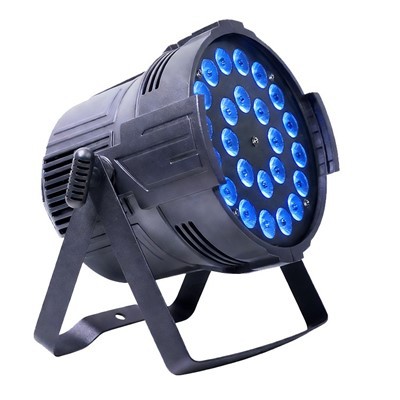
It’s a fair question. Humid environments don’t just feel sticky; they can wreak havoc on electronics, especially for lighting gear that’s often pushed hard in spaces like beachside nightclubs, indoor water parks, or outdoor event tents near lakes. As someone who’s been troubleshooting these exact scenarios for 12 years, I can tell you the answer isn’t a simple “yes” or “no.” It comes down to how the lights are built, how they’re installed, and even how you maintain them once they’re up and running.
Let’s start with the science, because that’s where most people get tripped up. LED effect lights rely on two core components: the LED diodes themselves, which produce light, and the control boards, fans, and power supplies that make them turn, change color, or adjust brightness. Humidity is just water vapor in the air, but when that vapor meets something cold inside a light fixture, it turns into condensation—think of a cold glass of iced tea sweating on a hot, humid day. Condensation is the big enemy here. If water drips onto a circuit board, it can cause a short circuit, corrode metal contacts, or even make the LED diodes stop working entirely. Old-school incandescent lights, by the way, have their own humidity issues, but LEDs are a little different because they run cooler, right? Wait, that’s a common myth I hear all the time. LEDs do produce less heat than incandescents, but their internal electronics still generate enough warmth that if the outside of the fixture is cool enough, condensation will form inside it. It’s a balance of temperature and humidity that’s way more predictable with the right design.
Here’s where my experience as a supplier matters. Early on, I sold generic LED lights to a beach club in Miami, and half of them failed within three months. That wasn’t because LEDs are bad in humidity—it was because those cheap lights were built with flimsy, unsealed casings. They had plastic shells that let water vapor seep right in, no coating on the circuit boards to fight corrosion, and tiny fans that pulled more moist air in to cool the electronics. We refunded that customer, reworked the design of our own lights, and now every LED effect light we sell has two key features tailored for humid environments.
First, we use a conformal coating on all internal circuit boards. That’s a thin, clear polymer layer that acts like a rain jacket for the electronics. It stops water droplets and vapor from touching the metal traces and solders on the board, so even if a little condensation forms, it can’t cause damage. Second, we seal the fixture’s casing with IP-rated enclosures. Wait, IP ratings are important to get right, too. A lot of people see “IP65” and think that means it’s totally waterproof, but for indoor humid environments, an IP54 is actually more than enough to block dust and splashes, while still letting the small amount of heat the electronics produce escape. An IP67 would be overkill for a nightclub or event space, and it makes the light bulkier and more expensive, which isn’t necessary for most humid applications. The key is matching the IP rating to the environment: if you’re setting up near a pool or outdoor sprinklers, you might go higher, but for a stuffy basement bar or a coastal wedding hall, IP54 or IP65 is perfect.
I’ve also seen another common mistake: installing lights too close to humid vents, or not letting enough air circulate around them. A few years back, I supplied lights to an indoor water park that kept having issues with their moving head effect lights. Turned out, they’d mounted the lights right above the lazy river’s steam vents, which were pumping out super hot, moist air straight into the fixtures. The fans inside couldn’t keep the internal temperature consistent, so condensation formed every time the vents kicked on. We adjusted their mounting positions, added small, waterproof vent filters to the fixtures, and the problem was gone. That’s a perfect example of how it’s not just the light itself—it’s the installation that makes the difference.
Another big thing is regular maintenance, and I tell every customer that buys our lights this. Humidity can cause slow, subtle damage even if the lights don’t fail right away. Once a month, you should wipe down the outside of the fixtures with a dry microfiber cloth to get rid of any salt residue (if you’re on the coast) or dust that can block vents. If you’re working in a space with really high humidity, like a water park, you should also pop the casing open twice a year to check for any tiny droplets inside, and dry them out with a low-heat hair dryer (not too hot, because that can warp the plastic casing). I know it sounds like a hassle, but it’s way cheaper than replacing a $500 moving head light every couple of months.
I won’t lie, there are environments where even the best-built LED effect lights struggle, but those are the extreme ones: like fully submerged underwater applications, or outdoor spaces that get exposed to heavy, constant rain without any cover. For those, you’d need lights designed specifically for aquatic use, which are a totally different product. But for 99% of the humid environments my customers work in—coastal event spaces, indoor sports arenas, bar with tropical themes, even warehouse events in the South—our lights work just as well as they do in a dry office or a theater.
I’ve had customers tell me that after switching to our humid-rated LED effect lights, they haven’t had a single failure in over two years. Last month, a club owner in Tampa reached out saying their old lights would die every summer when the humidity hit 80%+, and after installing ours, they’ve had zero issues. That’s the kind of feedback that makes all the late nights troubleshooting design tweaks worth it.

If you’re planning an event in a humid space, or you’re a venue manager tired of replacing lights every few months, I’d encourage you to reach out. We can walk you through the right light for your space, talk about installation tips, and even share maintenance guides tailored to your specific environment. Don’t let humidity ruin your event lighting setup—let’s find the right LED effect lights that will keep your space looking great for years.
Indoor LED COB Face Light For more information on the performance of LED lights in humid conditions, and the testing standards for IP ratings, refer to:
- International Electrotechnical Commission (IEC) Standard 60529: Degrees of protection provided by enclosures (IP Code)
- Institute of Electrical and Electronics Engineers (IEEE) Transactions on Components, Packaging, and Manufacturing Technology, Vol. 18, No. 2: “Moisture Effects on Electronic Components in Coastal Environments”
- Lighting Research Center, Rensselaer Polytechnic Institute: “Environmental Durability of LED Lighting Systems”
Guangdong New Start Lighting Co., Ltd.
Guangdong New Start Lighting Co., Ltd. is one of the most professional led effect light manufacturers and suppliers in China. Welcome to wholesale durable led effect light in stock here and get quotation from our factory. All customized products are with high quality and competitive price.
Address: No.2, Hubin Road, Jiaoxin Village, Shimen Street, Baiyun District, Guangzhou, Guangdong, China
E-mail: newstartkate@gmail.com
WebSite: https://www.newstartlighting.com/
