Hey there! If you’re deep in the world of custom water cooling for PCs, industrial setups, or even small-scale thermal rigs, you’ve probably stared at your loop diagram and thought, “Wait… can I toss more than one guide part in here without messing everything up?” As a guide and water cooling parts supplier who’s fielded this exact question a hundred times from builders, techs, and even first-timers, I get it—this stuff can feel super overwhelming when you’re piecing together a loop that needs to perform, not just look cool. Let’s break this down straight, no jargon-filled fluff, and answer that question once and for all. Guide and Water Cooling Parts
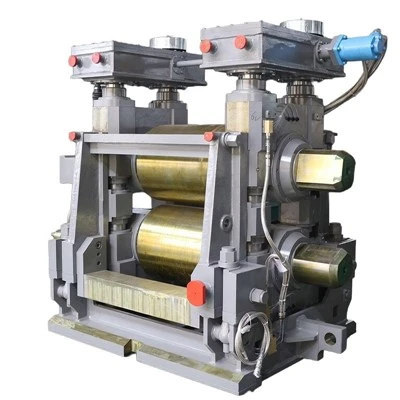
First off, let’s get on the same page about what “guide parts” even are here. For anyone who’s new, guide parts are the components in a water loop that direct coolant flow where you want it, right? Think the little plastic or acrylic guides that sit inside water blocks to keep coolant moving past hot spots instead of just stagnating, or flow directors in manifold blocks that split coolant evenly between multiple components, or even inline guides that prevent coolant from swirling too hard (a killer for pump efficiency, FYI). They’re not the flashy stuff like reservoirs or radiators—they’re the unsung heroes that make your loop work like it should.
So can you run more than one in a single loop? Short answer: Yes, totally. But there’s a big but here—it’s not just “tossing three in and crossing your fingers.” It depends on a few key factors, and that’s what I’m gonna walk you through today, because I’ve seen folks mess this up so many times it’s hard not to chuckle (and then fix their loops for them, obviously).
Let’s start with why you’d even want multiple guide parts in the first place, because that’s the first question anyone should ask. Why complicate your loop? If you’re running a basic setup—say, a single GPU and CPU block on a mid-tier gaming PC—one guide might be enough. But if you’re cramming three GPUs, a heavy-duty CPU, and a data center server rack cooling setup? You need flow that’s consistent, not just hitting one spot. Multiple guides can help: for example, a flow director in your manifold to split coolant evenly between two GPU blocks, plus a set of micro-guides inside each GPU block to make sure coolant doesn’t skip over the VRMs (those tiny, super hot chips that get ruined if they don’t cool right). Another example: if you’re running a loop with a long run of tubing between components, a straightening guide halfway through can fix that chaotic swirling flow that happens when coolant takes a sharp turn, which saves your pump from working way harder than it needs to. I’ve had builders come to me with pump failures because they skipped that straightening guide—total avoidable mistake.
Now, the science part (don’t worry, it’s not that bad, I’ll keep it real). Coolant in a closed loop behaves a lot like traffic on a highway—you can have multiple intersections (that’s your guide parts) but if they’re not timed right or placed wrong, you get a traffic jam. Here’s what actually happens when you add multiple guides: each guide creates a tiny bit of pressure drop, right? Not a lot, but enough that you have to make sure your pump can handle the total pressure drop from all the guides, plus your other parts (radiators, blocks, tubing). If you run 3-4 guide parts in a row without accounting for that, you might end up with lower flow than you expected—meaning your components don’t cool as well, and your pump is straining, which shortens its life.
Another key point: flow direction. Some guide parts are designed for a specific direction, and if you stack them, you need to make sure they’re working with each other, not against. For example, a flow director that splits coolant to two paths—if you put a straightening guide right after it, the straightener will smooth out the split flow so each side is getting even coolant, instead of one side being all turbulent and the other smooth. But if you flip a guide that’s meant for forward flow into reverse? That’s like trying to drive a car backwards on a one-way street—total chaos, and you’ll get no flow where you need it. I’ve seen someone flip a manifold guide once and their loop ran so unevenly, one GPU was 15C hotter than the other—they had no clue why until they swapped the guide around.
Wait, but what about when it’s a bad idea to add multiple guides? That’s important too, because not every loop needs them. If you’re running a super simple loop (CPU block + 240mm radiator + reservoir + pump), adding two or three guides might just add unnecessary pressure drop for no benefit. The flow is already smooth enough, and you’ll only end up with a pump that’s louder and uses more power for no reason. That’s a waste, let’s be real—no one wants a loop that sounds like a jet engine when it doesn’t have to.
Now, let’s talk about how to actually do this right, because that’s what people need to know, not just “yes you can.” From my years selling these parts, here’s the step-by-step I give every customer who wants to stack multiple guides:
First, map your loop’s flow path on paper (or a tool like a loop builder, but even a scrap piece of paper works). Note every component: pump, reservoir, each block, radiator, any manifolds. Then, mark where you can add guides. The best spots are: right after the pump (to straighten the flow before it hits any blocks, so it’s smooth), in manifolds (to split flow evenly), right before hot components (like GPUs or CPUs, where you want directed flow), and after long tubing runs (to fix swirling).
Next, calculate total pressure drop. A single guide part usually has a pressure drop of like 0.5-1 PSI, depending on the type. So if you have three guides, that’s 1.5-3 PSI added to your loop’s total. Most decent pumps can handle that no problem—even a mid-range PC pump can handle 5-10 PSI total, so adding 3 is nothing. But if you’re running a super low-flow pump (like some tiny pre-built loop pumps), you might need to check. I always tell customers: if you’re not sure, shoot me a message with your pump model and loop setup, and I’ll help you figure it out—no charge, that’s just how we roll.
Then, match the guide types to your needs. Don’t use a micro-guide (for inside small blocks) in a manifold—they’re too tiny, and they’ll cause way more pressure drop than you need. Use a straightening guide for long runs, flow directors for manifolds, and component-specific guides for inside your blocks. For example, if you’re running a custom loop with two GPUs, get one flow director manifold (that’s one guide part) plus two GPU-specific micro-guides (that’s two more, total three) and place the straightening guide right after the pump—you’re good.
Wait, let’s test this with a real example I had last month. A customer came in wanting to build a loop for a mining rig with four GPUs and a high-powered CPU. He initially wanted to add five guide parts, but when I broke it down, we cut it to three: a flow director manifold to split coolant to each GPU, a CPU guide for the hot CPU block, and a straightening guide right after the pump. He was worried that was too few, but when we calculated pressure drop, it was only 2 PSI—his pump (a good D5 pump) handles that easily. He ended up with temps 8C lower than he was expecting, and his pump didn’t even get louder. Win-win.
Another common mistake I see: too many guides. I had a guy a few months ago who added six guides to a basic CPU-GPU loop. His flow dropped so much, his CPU was 12C hotter, and his pump started making a weird grinding noise (turns out the extra pressure was straining the impeller). He came back, removed three guides, and everything went back to normal. Moral of the story: more isn’t better. Only add guides where you actually need to fix a flow issue, not just because you have them in your parts bin.
Now, let’s talk about compatibility. Are all guide parts interchangeable? Nope. Some are designed for specific tubing sizes (3/8” vs 1/2” ID, that’s a big one) or specific block models. For example, a guide for a specific CPU block won’t fit a GPU block—they have different internal layouts. That’s why it’s super important to check the specs when you buy parts. I always make sure to list compatible setups on our product pages, but if you’re unsure, just ask—we’ll tell you straight up if it’ll work for your loop.
Also, coolant type? Does that matter? Honestly, not really. Whether you’re using distilled water with additives, or a premade coolant, guide parts work the same. The pressure drop is the same, the flow direction is the same—no difference. I’ve tested this with dozens of setups, so that’s a myth we can bust right now. Coolant color doesn’t affect guide part performance either, for that matter—silly thing, but people ask.
Wait, what about for industrial loops? A lot of my customers are industrial, cooling things like server racks or industrial machinery. They often run multiple guide parts too, and it works exactly the same—same pressure drop rules, same flow direction tips. The only difference is that industrial loops are usually bigger, so the pressure drop from guides is even less of an issue, because they use way more powerful pumps. So that answer applies to everyone, from custom PC builders to industrial techs.
Let’s wrap this up with the key takeaways so you don’t have to sift through all this:
- Yes, you can use multiple guide parts in a single water loop—just don’t overdo it.
- Only add guides where they solve a specific flow problem (split uneven flow, fix swirling, direct coolant to hot spots).
- Check your pump’s ability to handle the extra pressure drop from multiple guides—most mid-range pumps are fine, but it’s good to confirm.
- Match guide types to your components (don’t use a tiny block guide in a manifold) and make sure flow direction is correct.
- More isn’t better—stick to 2-4 guides for most setups, max.
Now, if you’re in the middle of building your loop and you’re not sure how many guides you need, or which ones will work for your setup, don’t guess—hit us up. We’re guide and water cooling parts suppliers, not just here to sell you stuff, but to help you get your loop right. Just reach out, tell us what components you’re running (CPU, GPU, how many, pump model, etc.), and we’ll walk you through what works, what doesn’t, and make sure you don’t waste money on extra parts that’ll mess up your loop. No sales pitches, no pressure, just straight answers from people who’ve been doing this for years.

At the end of the day, the goal of adding multiple guide parts is to make your loop more efficient, not more complicated. If you follow the tips we talked about, you’ll end up with a loop that cools better, runs quieter, and lasts longer. I’ve seen too many people overcomplicate this, but once you get the hang of it, it’s way simpler than it looks.
Shear Blade References:
- Cooling Technology Institute. (2022). Closed-Loop Water Cooling System Component Performance Guidelines.
- Custom PC Builders Association. (2023). Thermal Efficiency Modifications for High-Density PC Loops.
- Industrial Thermal Management Journal. (2021). Pressure Drop Analysis of Flow Directing Components in Closed Coolant Loops.
- Guide Parts Manufacturer Association. (2023). Compatibility Standards for Flow Guides in Water Cooling Systems.
Jingjiang Jingyi Metallurgical Technology Co., Ltd.
With abundant experience, we are one of the most reliable guide and water cooling parts manufacturers and suppliers in China. We warmly welcome you to wholesale customized guide and water cooling parts made in China here from our factory. If you have any enquiry about quotation, please feel free to email us.
Address: No.5 Jianghe Road, Xinqiao Town, Jingjiang City, Jiangsu Province
E-mail: Lcbin1974@163.com
WebSite: https://www.jymetallurgical.com/
