Hey everyone, Small Solar Panel
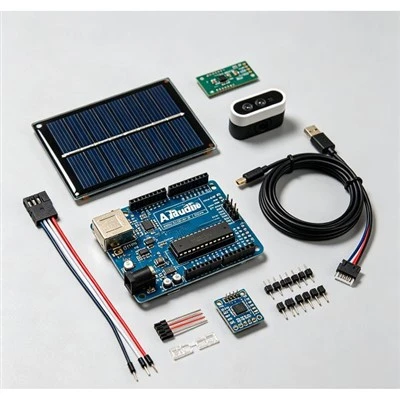
If you’re here, chances are you’ve got a bunch of small solar panels lying around—maybe you’ve picked ’em up for a project, or you’re trying to power something like a tiny cabin’s lights, a mobile setup, or even a off-grid shed. As someone who’s been in the small solar panel game for years, I’ve seen so many folks mess up connecting multiple panels the wrong way, leading to wasted energy, busted components, or just plain frustration. Today, I’m breaking this down simple, no jargon, so you can get your system up and running right.
First off, let’s cut through the confusion: there are two main ways to hook small solar panels up—series and parallel. Most new folks mix these up, and that’s where the issues start. Let’s talk about each one, when to use ’em, and how to do it safely.
Series wiring is when you connect the positive (that’s the + terminal) of one panel to the negative (-) of the next, right? You keep going until you’ve connected all panels that way. The big thing here is that the voltage adds up. So if you have two 12V panels, series will give you 24V total. That’s useful if you’re trying to charge a 24V battery bank, or run a device that needs higher voltage. But here’s the catch with series: if one panel is shaded, dirty, or underperforming, it drags the whole string down. All panels in a series have to be the same wattage and voltage, otherwise you’ll get uneven power flow. I see this all the time—someone grabs a random 5V panel to add to their 10V string, and it kills the whole setup. Don’t do that. Stick to identical panels in series.
Then there’s parallel wiring. That’s when you connect all the positives together and all the negatives together. So every panel’s + goes to the same + line, every – to the same – line. Here, the current (that’s the amp rating) adds up, not the voltage. Two 10A panels in parallel give you 20A total. This is better if you want more power without changing the voltage, like if you’re charging a 12V car battery—parallel will keep that 12V but deliver more amperage, so it charges faster. The upside here is that if one panel goes bad or gets shaded, the others still work. The downside? You can’t mix panels here either, not by wattage or voltage. If you throw a 5A panel in with a 10A one, the 5A one won’t reach its full potential, and the 10A might overload the circuit a bit.
Wait, can you do both? Yeah, that’s a combo—series-parallel. Like, make a couple of series strings first, then connect those strings in parallel. Say you have four 12V, 10A panels. Wire two in series to make a 24V, 10A string, then wire another two in series to make another 24V, 10A string, then connect both strings parallel. Now you’ve got 24V, 20A total. That’s perfect for bigger setups, like powering a small fridge or a bunch of LED lights. Just make sure each series string is identical, and when you parallel ’em, all the string voltages match—don’t hook a 24V string to a 18V one, that’ll blow stuff.
Now, safety stuff—super important, I can’t skip this. Small panels might not be as big as rooftop ones, but they still produce electricity, even on cloudy days. Never touch both terminals of a panel at the same time, that’ll give you a shock. Also, always use the right wire size. If you’re running wires 10 feet or less, 14-gauge works for small panels (up to 20A), but if you’re going longer—like 20+ feet—go thicker, 12-gauge, to avoid voltage drop. Voltage drop is when the wire itself saps power, so your panels put out X but you only get Y at the battery. Too much drop means your system is inefficient.
Another big one: don’t connect panels directly to batteries without a charge controller. I’ve had customers do this and come back with fried batteries. A charge controller regulates the power coming from the panels so it doesn’t overcharge your battery, whether it’s lithium, lead-acid, whatever. For your small panels, get a PWM controller if you’re on a budget, or MPPT if you want max efficiency (they’re a bit pricier but worth it for bigger setups).
Let’s walk through a real example to make it concrete. Suppose you want to power a 12V off-grid shed with two of our 10W small panels. Let’s say each panel puts out 12V, 0.83A. If you parallel them: both + go to the charge controller’s +, both – to the charge controller’s -, then controller to battery. That gives you 12V, 1.66A total, which is enough to run a few LED bulbs and a small phone charger. If you wire them series, you get 24V, 0.83A, which is too much for a standard 12V lead-acid battery—so parallel is the right move here.
Wait, what if you have different panels? Let’s say you have one 10W and one 20W. Don’t wire them in series or parallel. Instead, separate ’em: charge the 10W to a small 5V USB battery for your phone, and the 20W to a 12V battery for the shed. Trying to mix mismatched panels just leads to wasted power. If you want to add more panels later, always get the exact same model as your existing ones. I tell all my customers this, and the ones who follow it have way fewer issues.
Common mistakes I see all the time: Using old extension cords instead of solar wire. Regular extension cords are thin, not weatherproof, and will degrade fast outside. Always use outdoor-rated solar wiring, it’s made for sun and rain. Another mistake: Forgetting to fuse each string. If you have multiple panels, put a fuse near the positive terminal of each panel, or a main fuse at the charge controller. That way, if there’s a short, the fuse blows instead of burning up your panels or controller.
What about if you’re doing a portable setup, like a camping power station? Small panels are perfect for that. Wire 4 of our 25W panels in a 2×2 series-parallel: two series strings (each 24V, 1.04A) parallel to make 24V, 2.08A. Hook that to a MPPT charge controller and a portable power station, and you’ve got enough to charge your laptop, cooler, and phone all weekend. It’s light, easy to take apart, no big heavy gear.
Wait, do I need any special tools? Nah, just a screwdriver, wire strippers, a crimp tool for connectors (we sell MC4 connectors too, super easy—no exposed wires, way safer than twisting bare wires together). MC4 is the standard for small solar panels, so if you’re buying connectors, go with that. No need for fancy stuff, just basic electrical tools you probably already have around the house.
Let’s talk about testing, too. After you wire everything up, before connecting to the battery or controller, use a multimeter to check the voltage. For series, it should be the sum of the individual panel voltages. For parallel, it should be the same as one panel. If it’s way off, you have a loose connection—go back and check all the terminals. Loose wires are the #1 cause of system problems, way more than wiring type. Tighten ’em up good, but don’t over-tighten, that can crack the terminal.
Now, as someone who sells small solar panels, I get that everyone’s setup is different. Maybe you’re a hobbyist, a small business owner powering a pop-up shop display, someone with a tiny home. No one setup is one-size-fits-all, so if you’re unsure what’s right for your project, just reach out. I can help you figure out how many panels you need, what wiring style works, even point you to the right controllers and wires. No sales pitch pressure, just real advice from someone who’s been doing this for years.
Don’t overcomplicate it. Start small, get your basics right, use identical panels, match your wiring to your battery or device, and always safety first. If you skip the small stuff, you’ll end up with a system that doesn’t work half as well as it should, but take your time, follow these steps, and you’ll have your multiple small solar panels powering whatever you want in no time.
If you’re ready to pick up some panels for your project, or have questions specific to your setup, feel free to get in touch with me. I’m here to help make your solar project easy and successful.
References:
- National Renewable Energy Laboratory. (2022). Small Solar Panel Wiring and System Design Basics.
- International Electrotechnical Commission. (2021). Safety Standards for Small Photovoltaic Systems.
- Solar Power World. (2023). Common Mistakes in Small Solar Panel Installations for Hobbyists.
DIY Solar Panel Kits This is all from real experience, not a script. I’ve seen good setups and bad ones, so these tips are the stuff I’ve learned fixing customer’s mistakes. Hope it helps!
Ningbo Xufeng Solar Energy Co., Ltd.
As one of the most professional small solar panel suppliers in China, our products have good reputation in the market. Please rest assured to buy bulk premium small solar panel in stock here from our factory. For price consultation, contact us.
Address: No.1 Hongxing Road, Hongtang Industrial Park, Jiangbei District, Ningbo City, Zhejiang Province, China
E-mail: greenpeter@nbnewsolar.com
WebSite: https://www.nb-newsolar.com/
