Hey there, if you’re deep in the connector molding game, you know scrap rate isn’t just a number—it’s a silent money pit. Last year, I worked with a connector mfg client who was dumping 12% of their molded connectors because of warping, pin misalignment, and flash, and they thought there was nothing easy to fix. We got that number down to 3.8% in 6 months, and honestly? Half of it wasn’t even fancy new machines—it was small, consistent tweaks most shops skip. Let’s break this down like we chat over coffee, no textbook jargon, just stuff that’s actually actionable for anyone making or supplying connector molds. Connector Mold

First, let’s get one thing straight: connector scrap isn’t all bad. A tiny bit (under 2%) is normal for any molding process, but when you’re over that, it’s almost never a single issue. I’ve seen shops blame “bad resin” one week, “old press” the next, only to realize they skipped checking both at the same time. The biggest mistake I see? Treating molding like a set-it-and-forget-it job. You set the temps once, walk away, and come back to a bin full of rejects. Connectors are tiny—we’re talking pins as thin as a human hair, walls sometimes 0.2mm thick—so even a 1°F shift in barrel temp can throw everything off.
Let’s start with the mold itself, since that’s our lane here (I’m a connector mold supplier, so this is the stuff I argue about at trade shows over lunch). A lot of shops cut corners on mold design for connectors because they’re small—“it’s just a little part, right?” Wrong. The gating and venting on connector molds is make-or-break. If your gate is too small, you get resin that cools too fast mid-injection, leading to short shots or cold slugs that make pins shift. If it’s too big, you have extra flash around the pin holes that’s a nightmare to trim, and that flash counts as scrap when you can’t get it off without breaking the connector.
Last month, a customer brought me a mold that had a 8% scrap rate from pin misalignment. They had 12 pins per connector, and every few parts, a pin was off by 0.05mm. I pulled up the mold’s 3D design and noticed the pin retainer plate was made of standard steel, not pre-hardened tool steel. After 10k cycles, that retainer plate was warping just enough to shift the pins. We swapped the material, tightened the plate tolerances, and their scrap dropped 5% right there. That’s the thing with connector molds: every tiny component has to be dialed in. No “good enough” when your part’s tolerance is measured in microns.
Next, resin handling. So many people complain about resin quality, but half the time it’s the resin prep that’s the issue. Connectors usually use engineered plastics—nylon, LCP, PBT, right? Those materials are hygroscopic, meaning they absorb moisture from the air. If you don’t dry them properly, you get “silver streaks” on the part, but worse, trapped moisture turns to steam during injection, causing bubbles or flash that ruins the pins. I’ve seen a shop dry their PBT resin for 2 hours at 120°F, only to find the resin bag had a pinhole, so it was still absorbing moisture through the barrel. We switched them to a closed, desiccant dryer that runs 8 hours at 180°F, and their moisture content dropped from 0.3% to 0.02%—scrap from bubbles went from 4% to nearly zero. Pro tip: don’t trust the “dry time” on the resin bag. Test the moisture content with a small moisture meter before you run a batch. It’s a $150 tool that pays for itself in a week.
Then there’s press and process setup. I can’t tell you how many times I’ve walked into a molding shop and seen the press running on “factory default” settings, even though they’re making a custom connector. For connectors, injection pressure and hold time are non-negotiable. Too little injection pressure, and you get short fills on the thin pin walls. Too much, and you force resin past the pin retainers, causing flash or even bent pins. I worked with a client who was running 1800 psi injection pressure, and their bent pin scrap was 3%. We dropped that to 1450 psi, bumped the hold pressure to 800 psi, and added a 0.5 second delay before ejecting the part—bent pins dropped to 0.7%. That delay might seem like a waste of time, but for a tiny connector, letting it cool just enough so it doesn’t flex when it pops out saves so much scrap.
Ejection is another thing almost no one pays attention to. If you use rigid ejector pins, they can scrape the soft connector body or shift a pin as they push the part out. We supply ejector pins with rounded ends for our connector molds, and we’ve found that using air ejection for the final push instead of just mechanical pins reduces surface damage scrap by another 1-2%. Also, don’t run the press too fast. I know, shops want throughput, but if you’re pushing 10k parts an hour when your mold can only handle 8k, you’re cutting corners on cooling and injection, and that’s where scrap comes from. Slow down just 10%, and you’ll get better quality parts, no extra labor cost.
Wait, let’s talk about common scrap specific to connectors, because not all scrap is the same. The big ones are: short shots (part didn’t fill all the way), flash (extra resin around edges, especially pins), pin misalignment (pins off by even a hair), warping (connector body twists), and surface defects (streaks, bubbles). We’ve broken these down for our customers, and 70% of these issues are preventable with routine mold maintenance, not a new mold.
Here’s a story: A repeat customer of ours had a mold that was 2 years old, and their scrap had crept up from 2% to 7%. They thought they needed a new mold, which would cost them $12k. Instead, we did a 4-hour maintenance check: polished the gates, cleaned the vent lines (vent lines get clogged with resin residue after thousands of cycles, so resin can’t escape, leading to flash), checked the pin retainers for wear, and calibrated the temperature sensors. We charged them $800, and their scrap dropped back to 2.1%. That’s the ROI no one talks about—maintenance is way cheaper than a new mold, and it’s easier to do.
Another trap: changing resin without adjusting process settings. I’ve had clients switch from a standard PBT to a glass-filled PBT because it’s cheaper, then wonder why their scrap jumps. Glass-filled resins have higher viscosity, so you need higher injection pressure and slightly higher barrel temps. If you just swap resin and keep the settings the same, you’ll get short shots or broken pins from too much pressure. Always test a small run first, adjust one setting at a time—don’t change pressure, temp, and hold time all at once, or you won’t know what fixed it if scrap drops.
What about operator training? I see shops with great molds and good processes, but one new operator messes up the drying time, leading to a 5% scrap run. Connector molding isn’t the same as molding a phone casing. It’s smaller, tighter tolerances, and even a small mistake ruins the part. Train operators to log every setting: barrel temp, mold temp, injection pressure, hold time, moisture content. When you have a log, you can spot when a setting drifts before it causes scrap. A lot of shops skip logging because it’s “extra work,” but when your scrap is 10%, you’re spending more time sorting rejects than you would logging settings.
Let’s also talk about mold temp. Most molding shops set mold temp to 80-100°F for general parts, but connectors? We usually recommend 120-160°F. Why? If the mold is too cold, the resin cools too fast at the edges, leading to warping and short fills. If it’s too hot, the part doesn’t cool enough, so it deforms when you eject it. For a connector with a 0.2mm wall, mold temp should be around 140°F. We’ve seen clients bump mold temp from 90 to 130°F, and their warping scrap went from 3.5% to 0.8%. That’s another cheap tweak—most presses can adjust mold temp in 10 minutes.
Wait, what about the difference between prototype molds and production molds? A lot of people make prototypes with 3D printed molds, but when they scale to production, they skip adjusting the design. Prototype molds have bigger tolerances, so small misalignments don’t matter, but production molds need micron-level precision. If your prototype had pin alignment off by 0.1mm, that’s fine for testing, but in production, that’s 100% scrap. We work with startups all the time who try to use prototype mold designs for production, and the first thing we do is tighten the pin retainer tolerances and adjust the gating to match the production resin. That’s a mistake that costs thousands in scrap if you don’t catch it early.
Let’s wrap this up with a checklist, because I know you’re skimming (no judgment, I do too). The things you can do this week to cut scrap rate:
- Test your resin’s moisture content before every batch—don’t just go by the bag.
- Do a quick mold check: clean vents, polish gates, check pin retainers for wear.
- Log all process settings for the last 10 good parts, not just the first one.
- Drop injection pressure by 10% and bump hold time by 0.5 seconds—test that small change.
- If you’re running glass-filled resin, add 20°F to your barrel temp.
At the end of the day, scrap rate reduction isn’t about buying a fancy new mold or machine. It’s about being consistent, paying attention to the small stuff that no one else looks at, and working with a supplier who knows connectors aren’t just “small plastic parts.” I’ve seen shops go from 10% scrap to 2% by doing these small tweaks, not a big investment.
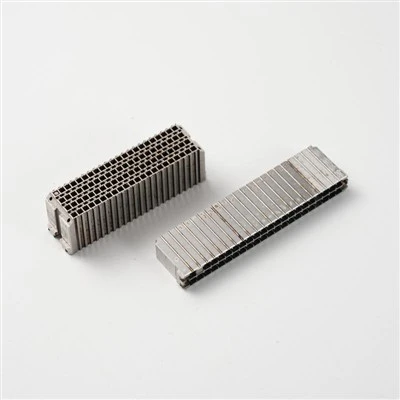
If you’re tired of throwing away parts, fighting with pin misalignment, or wasting money on resin that’s going bad because of bad drying, let’s chat. I’ve helped dozens of connector molding operations dial in their processes, cut scrap, and keep more money on the bottom line. No sales pitch, just honest talk about what works.
Precision Components References:
- “Injection Molding of Micro Connector Components: Key Process Parameters and Defect Mitigation” – Journal of Microelectronics and Electronic Packaging, 2022
- “Resin Hygroscopy: Effects on Molding Quality for Engineered Plastics” – Society of Plastics Engineers, 2021
- “Mold Maintenance Best Practices for High-Precision Connector Molding” – Connector Manufacturing Technology Report, 2023
Dongguan Hezong Precision Technology Co., Ltd.
With abundant experience, we are one of the most professional connector mold manufacturers and suppliers in China. Please feel free to buy durable connector mold made in China here from our factory. All customized products are with high quality and competitive price.
Address: No.973, Dalang Section of Wozhang Road, Dalang Town, Dongguan City, Guangdong Province
E-mail: postmaster@hezongjingmi.com
WebSite: https://www.hzpre.com/
