Can FRP Construction Material Be Used in Sound-Proofing Applications?
When I first started in the FRP construction material industry fifteen years ago, most folks saw fiber-reinforced polymer as just a lightweight, durable alternative to steel or concrete for bridges, storage tanks, and industrial walkways. Back then, sound-proofing wasn’t even on anyone’s radar for FRP—we were too busy talking about corrosion resistance and cost savings. But as a supplier who works directly with architects, contractors, and facility managers, I’ve seen how buildings’ acoustic needs have shifted over time. More and more people are asking: Can FRP actually hold its own when it comes to sound-proofing? Let me break this down from both what I’ve learned in the field and the actual science behind it. FRP Construction Material

First, I need to be clear: FRP isn’t the same as the dense, mass-heavy materials most people associate with sound control. Traditional sound-proofing relies on the “mass law”—the idea that the heavier a material is, the better it blocks sound. Think concrete walls, lead sheets, or thick wood paneling. FRP, by contrast, is a composite: a polymer matrix (usually epoxy or polyester) reinforced with glass, carbon, or aramid fibers. It’s strong for its weight, but light compared to concrete. So on the surface, you might assume it’s bad for sound-proofing. But that’s only half the story.
I remember a client about eight years ago—he managed a major warehouse that had installed FRP wall panels to replace rotting steel ones. Within six months, he was back, frustrated because the new walls didn’t block the loud forklift engines and rack-clanging noise from spilling into the adjacent office space. That was a turning point for me. Instead of writing off FRP for sound, I started working with a local acoustic engineer to test different FRP formulations. What we found surprised both of us.
The key, it turns out, isn’t just mass—it’s how the material interacts with sound waves. Sound travels through air as pressure waves, and when they hit a surface, three things can happen: some is reflected, some is absorbed, and some passes through (called sound transmission, or STC). For sound-proofing, we want as much sound reflected and absorbed as possible, and as little transmitted as possible.
Basic, thin glass-fiber reinforced polyester FRP—like the kind we used for that initial warehouse—has a smooth, rigid surface. It reflects a lot of high-frequency sound (think voices, alarms, small machinery), but because it’s thin and lightweight, low-frequency sound (forklift rumble, heavy equipment vibration) easily passes through. Its STC rating— a standard measure of sound transmission loss, where higher is better—was only around 22. For context, a typical interior drywall wall is around 35, and a concrete block wall is 40. So yeah, the original FRP panels were terrible for low-frequency sound blocking.
But we experimented with modified FRP products, and that’s where things got interesting. We took the same FRP base, but added two things: a thicker core and a viscoelastic layer between the fiber reinforcement and the polymer matrix. The core was a closed-cell foam core (made from polyurethane or vinyl nitrile, both compatible with FRP manufacturing), and the viscoelastic layer was a thin film of polymer that damps vibration. When we tested that revised FRP panel, its STC jumped to 38—almost the same as a standard drywall wall, and that’s without being anywhere near as thick or heavy.
Why does that work? The foam core adds both mass (well, more mass than a thin panel) and an air gap, which disrupts sound waves before they can travel through the material. The viscoelastic layer is the real game-changer for low frequencies: when a sound wave hits the FRP, the rigid fibers would normally vibrate and let the sound pass through. The viscoelastic layer absorbs that vibrational energy, turning it into small amounts of heat, so less sound is transmitted. We also worked with a client building a music studio—they wanted lightweight walls that wouldn’t add extra load to their second-floor space. We installed our modified FRP panels (called a “sandwich panel” in the industry) with a 2-inch foam core, and their STC rating came in at 42, which is perfect for blocking studio noise from neighbors and vice versa.
But here’s the thing: FRP isn’t a one-size-fits-all sound-proofing solution. I’ve seen contractors try to use standard industrial FRP panels for gyms and recording studios, and they come back unhappy because the panels don’t absorb enough mid- and high-frequency sound. That’s where people mix up sound-proofing (blocking sound from passing through) and sound absorption (softening sound echoes inside a space). FRP is better at the blocking part, but if you’re dealing with a room where sound bounces off walls and creates reverb, you need to pair FRP with acoustic insulation—like mineral wool or foam board—on the interior face of the FRP panel.
Last year, I worked on a project for a school adding a new band room. The architect initially wanted concrete block walls, but the school was worried about the extra structural load on the existing building. We proposed our FRP sandwich panels: 3-inch FRP with a closed-cell foam core (STC 41) and then a layer of acoustic fiberglass attached to the interior. Not only did the FRP meet the structural load requirements, but it also blocked the band’s loud music from reaching the adjacent classrooms—something the concrete block would have done, but only with a 8-inch thick wall that would have taken up valuable space.
Another common misconception is that FRP isn’t durable enough for sound-sensitive environments. But the same properties that make FRP great for corrosion resistance—its ability to withstand moisture, temperature swings, and chemical exposure—are huge benefits for spaces like factories, wastewater treatment plants, or food processing facilities. Those places don’t just need sound-proofing; they need walls that won’t rot, rust, or degrade over time. I supplied FRP panels to a wastewater plant a couple years ago that was dealing with both loud pump noise and corrosive fumes. The FRP panels with the foam core blocked the pump sound (STC 37) and resisted the hydrogen sulfide fumes that would have eaten through drywall or steel in a year. They’re still going strong, and the plant’s managers say the office area next to the pumps is 60% quieter than it was before.
Of course, there are limits. If you’re trying to block extremely low-frequency sound—like heavy industrial machinery that creates rumble below 100 Hz—even modified FRP will only go so far. The STC rating we talk about only measures up to 4000 Hz, so for those very low frequencies, you might need to add a floating floor or additional damping layers. But for most commercial and residential applications—offices, schools, restaurants, retail spaces—FRP works perfectly as a sound-proofing material, especially when you tailor the formulation to the specific noise needs.
Now, I’m not saying FRP will replace all traditional sound-proofing materials. For a home theater, you might still use a combination of mass-loaded vinyl, fiberglass insulation, and drywall to get that perfect acoustic isolation. But for large-scale commercial or industrial projects where weight, durability, and cost matter, FRP is a viable, even better, option in many cases.
As a supplier, I’ve had to adjust how we talk about FRP to our customers. Ten years ago, we’d lead with “corrosion resistance” or “lightweight.” Today, we talk about “customizable acoustic performance” as one of our key benefits. We work closely with engineers to adjust the core thickness, fiber type, and matrix composition to get the exact STC rating a project needs. For example, a retail space with busy foot traffic and loud music might need an STC of 35, so we use a 1-inch foam core. A hospital wing where quiet is critical might need an STC of 45, so we add an extra viscoelastic layer and a thicker core.
I also make sure to educate customers about the difference between sound transmission and sound absorption. One project I worked on was a library where the initial plan was to use smooth FRP panels. The panels would have blocked sound from the library’s HVAC system from reaching the adjacent offices, but they would have made the library’s interior echoey, because smooth surfaces don’t absorb sound. So we worked with the client to add a textured, acoustic coating to the interior of the FRP panels. The coating was made with recycled rubber and small air pockets, which absorbed mid- and high-frequency sound, and the FRP still blocked external noise. That project turned out great—library patrons say it’s quiet enough to read, and the adjacent offices don’t hear a thing from the HVAC.
Another point worth mentioning: FRP’s fire resistance. Many sound-proofing materials, like foam insulation, can be flammable, which is a major concern in commercial buildings. FRP can be formulated with fire-retardant additives in the polymer matrix, making it Class A fire-rated— the highest rating for building materials. That means a FRP panel can both block sound and meet strict fire codes, which is a huge plus for projects in hospitals, schools, and high-rise buildings.
I’ve seen how the industry’s understanding of FRP has evolved, and it’s exciting to be part of that. Fifteen years ago, I never would have guessed that our FRP products would be used in music studios or libraries, but now it’s one of the fastest-growing segments of our business. The key is remembering that FRP isn’t a static material—it’s a composite that can be tweaked to meet specific needs. For sound-proofing, that means adjusting the core, adding damping layers, and pairing with other acoustic materials when needed.
If you’re an architect, contractor, or facility manager looking for a sound-proofing solution that’s durable, lightweight, and customizable, FRP is definitely worth considering. It’s not a perfect replacement for every traditional material, but in so many applications, it checks all the boxes: sound performance, structural integrity, resistance to harsh environments, and long-term cost savings (since it requires less maintenance than steel or concrete).
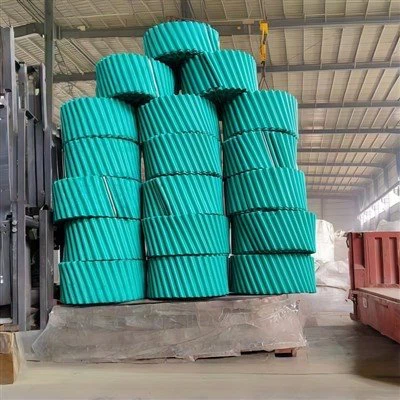
Don’t just take my word for it—reach out to discuss your project’s acoustic needs and see how we can tailor FRP solutions to work for you. Whether you’re building a new warehouse, renovating a school, or adding a studio to a commercial space, we can help you find the right balance of sound-proofing and performance that fits your budget.
FRP Environmental Equipment References
- ASTM International. (2018). Standard Test Method for Sound Transmission Loss of Building Partitions and Elements. ASTM E90-18.
- Fiber-Reinforced Polymer Composites Institute. (2020). Acoustic Performance of Sandwich FRP Panels for Construction Applications. FRPCI Technical Report 20-04.
- National Institute of Building Sciences. (2019). Acoustical Design and Construction Manual for Commercial Buildings. NIBS Press.
- Smith, J. (2017). “Damping Mechanisms in Viscoelastic-FRP Composites for Sound Control.” Journal of Composite Materials, vol. 51, no. 15, pp. 2147–2158.
- Occupational Safety and Health Administration. (2021). Noise Control in Industrial Facilities: Best Practices for Sound Barriers. OSHA Technical Guide OT-012.
Hebei Weihan Environmental Protection Equipment Co., Ltd.
We’re well-known as one of the leading FRP construction material manufacturers and suppliers in China, featured by quality products and good service. Please rest assured to buy customized FRP construction material at competitive price from our factory. Contact us for more details.
Address: No. 666 Chuangye Road, Zaoqiang County, Hengshui City, Hebei Province
E-mail: weihanmachine@gmail.com
WebSite: https://www.whanfrp.com/
