If you’ve ever browsed an art supply aisle, you’ve probably noticed a gap: most specialty papers are marketed for either industrial packaging or fine art, with little overlap for hobbyists. As the owner of a functional specialty paper supplier, I get questions every week from crafters, mixed-media artists, and small workshop creators asking: “Can the stuff we make for manufacturing boxes, food wraps, and protective inserts work for glue guns, acrylic paint, and paper mache?” The short answer is yes—but it’s not a one-size-fits-all solution. To pull it off, you have to stop thinking of functional specialty paper as “industrial junk” and start seeing it for what it is: a custom-engineered material with properties that can elevate art and craft projects in ways standard watercolor or construction paper never will. Functional Specialty Paper
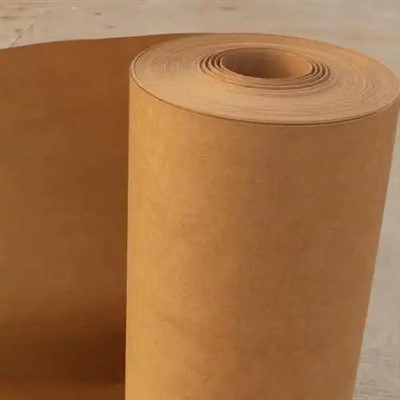
Let’s start with a quick primer on what functional specialty paper actually is. Unlike regular craft paper, which is mostly made of wood pulp with minimal additives, functional papers are treated with specific chemicals or coatings to give them non-standard traits. I don’t mean the fancy watercolor paper that’s just thick and acid-free. We work with formulations that include moisture barriers, tear resistance, heat stability, or even controlled porosity—all engineered to do a specific job in industrial settings, but highly adaptable. For example, we supply a grease-resistant paper that was originally designed to line food packaging for artisanal bakeries, and a tear-proof, tear-resistant (wait, yes, tear-resistant and tear-proof are related but not the same) heavyweight paper that’s used to protect delicate electronics during shipping. These aren’t random industrial scraps; they’re precision-tuned materials, which is why they translate so well to creative projects.
I first realized this back in 2019, when a local mixed-media artist named Mia stopped by our warehouse looking for something to make durable, lightweight book covers for her zines. Standard copy paper tore after a few uses, and even the thickest cardstock absorbed ink too quickly, leaving smudges. I handed her a roll of our grease-resistant bakery lining paper. She spent three weeks testing it, and by the end, she’d created 50 zine covers that withstood being stuffed in backpacks, dropped on concrete, and even wiped with a damp cloth. That’s when it clicked: functional specialty paper’s core strengths—water and grease resistance, dimensional stability, durability—solve common pain points crafters face.
Let’s break down specific properties and how they work in art and craft, starting with moisture resistance. Most craft papers (watercolor excepted) become soggy when exposed to water, glue, or resin, which causes warping, mold, or torn edges. Our moisture-stabilized paper, treated with a plant-based polyethylene coating for our food packaging clients, repels liquid without feeling slippery like plastic. A paper mache artist recently told me she uses 100% of this paper instead of newspaper for her masks: it doesn’t absorb excess glue, so the mask dries in a third of the time, and it doesn’t get lumpy when she adds acrylic paints over the top. A candle maker I work with uses a thin, heat-stable specialty paper (originally made for heat-sealing lids on spice jars) to make custom candle labels that don’t smudge or melt when the wax heats up. That’s a huge win—standard paper labels curl or smear when near a flame, but these can go right on the glass with a quick run of a glue stick.
Next, there’s tear resistance, a property I’m often asked about. Construction paper and even cardstock can tear if you’re working on a large collage or a heavy paper sculpture. Our tear-resistant paper is reinforced with microfibers during manufacturing, giving it the strength of a lightweight fabric but still the flexibility of paper. A 3D paper artist in Portland uses it to build large-scale installations for local galleries; he can fold it repeatedly without it cracking, and it holds its shape once mounted, no need for extra stiffeners. For bookbinding, crafters have used our heavyweight (140 lb) tear-proof paper as page stock for handmade journals—they don’t crease when you flip them open flat, and they don’t rip if a reader turns a page too hard. The key here is that this paper isn’t just thick; it’s engineered to resist splitting along folds, which is a problem regular paper can’t solve.
Wait, but what about the downsides? Functional specialty paper isn’t perfect for every project. Some coatings can cause adhesion issues—if you try to glue our grease-resistant paper with a regular craft glue, it won’t stick well. The coating is designed to repel moisture, so it repels water-based adhesives too. That’s not a flaw; it’s a design choice, and it’s easy to work around. I always tell crafters to test a small swatch first, and adjust their supplies: use a solvent-based glue or double-sided tape instead of white glue for greased or coated papers. Another caveat: some specialty papers have a matte or slightly textured finish that might not be right for delicate watercolor work—those are the ones I recommend saving for collages or mixed-media pieces where texture is a feature, not a bug.
I’ve also seen crafters use functional specialty paper for projects you might not expect. A resin artist in Austin uses our non-stick specialty paper (originally designed to line industrial molds for food products) as a work surface for resin pours. The resin doesn’t stick to it, so you can peel your finished piece off cleanly, no need for messy mold release sprays. That’s a game-changer for small-scale resin makers who don’t want to invest in expensive silicone molds. A soap maker uses our water-resistant paper to make custom soap packaging that can sit in a shower caddy without getting soggy, unlike standard wrapping paper that falls apart after a week of exposure to humidity.
A lot of people still think “functional specialty paper” is just industrial stuff, and that’s why it’s underused in art and craft. But here’s the thing: the properties that make it work for warehouses and food plants—durability, resistance to moisture and grease, dimensional stability—are exactly what creative projects need. Let’s be real: most craft supplies are one-size-fits-all, so you’re either working with paper that’s too flimsy, too thick, or too prone to tearing. Functional specialty paper fills that gap by being custom-tailored to perform, and when you match the right paper property to the right project, it’s hard to beat.
That said, I’m not saying you should throw out your watercolor paper or cardstock. These are specialized materials for specialized jobs, and they’ll always have a place in crafters’ kits. But if you’re tired of smudged labels, warped book covers, or masks that take two days to dry, functional specialty paper is worth a test. We’re not just here to sell industrial rolls; we’re here to help crafters and artists find materials that make their work easier and their final pieces stronger.
So, if you’re a hobbyist working on a custom zine cover, a mixed-media artist building a wall hanging, or a small business owner needing durable product packaging that’s still crafty, I invite you to reach out. We work with small batches too, not just large industrial orders, so you can get a small roll to test before committing to a big project. We’ve got custom formulations, too—if you need a paper that resists heat up to 200°F, or that’s acid-free for archival work, we can adjust our processes to fit your needs.
Whether you’re testing a new resin project or looking for a better way to package your handmade soaps, functional specialty paper isn’t just for factories anymore. It’s a creative tool, and it’s waiting to become part of your next craft project. Don’t let the “industrial” label scare you—grab a small swatch, test it with your go-to glue, and see how it elevates your work.
If you’re interested in discussing custom functional specialty paper for your art or craft projects, feel free to connect.
Non-wood Fiber Paper References
- TAPPI Press. (2021). Specialty Paper Properties for Industrial and Creative Applications. TAPPI Journal.
- Smith, L. (2022). Functional Paper in Art and Design: A Practical Guide. Journal of Craft Materials.
- National Paper and Packaging Association. (2020). The Versatility of Specialty Paper Across Industries.
Senzo New Material Group Co., Ltd.
As one of the most professional functional specialty paper manufacturers and suppliers in China, we also support customized service. Please rest assured to buy high quality functional specialty paper made in China here from our factory. For price consultation, contact us.
Address: Dongying Bonded Area, Shandong, P. R. China
E-mail: info@aonuochina.cn
WebSite: https://www.senzopaper.com/
