Hey there, fellow DIYers, garage organizers, and small business owners – MDF Board
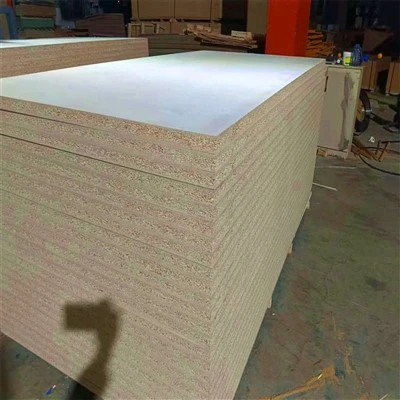
If you’ve ever stood in your garage staring at a pile of unused tools, seasonal decor, and random odds and ends, you’ve probably thought about building some shelves. And when planning that build, you’ve definitely stumbled across MDF. As someone who’s spent the last decade working as an MDF board supplier, I’ve heard every question under the sun about whether this material stacks up for garage shelves. Today, I’m breaking down the facts – the good, the tricky, and how to make it work if that’s the route you want to go.
First, let’s cut through the marketing hype and get clear on what MDF actually is. Medium-density fiberboard is a manufactured wood product made by pressing fine wood fibers, wax, and resin together under high heat and pressure. It’s denser than particleboard, smoother than solid wood, and way cheaper than oak or plywood – that’s why it’s such a go-to for everything from kitchen cabinets to bookshelves. But garages are brutal. They’re not your living room – temperatures swing from freezing in winter to sweltering in summer, there’s humidity, accidental spills, and heavy stuff (think power tools, paint cans, 50-pound bags of fertilizer) that would make a cheap particleboard shelf collapse. So, can MDF handle all that? The short answer is: it depends on how you use it.
Let’s start with the upsides that make MDF a tempting pick for garage shelves, especially if you’re on a budget. First, price. A 4×8 sheet of ¾-inch MDF costs roughly half what a comparable sheet of ¾-inch plywood costs. For someone building multiple shelves or a full storage system, that adds up fast. Then there’s consistency. Solid wood has knots, warps, and that natural color variation that some people love but others hate. MDF is uniform – every sheet is the same thickness, no warping right out of the packaging, and it has a smooth surface that’s perfect for painting or edging. If you’re a beginner DIYer, that uniformity makes measuring, cutting, and assembling way easier than working with solid wood, which can throw off cuts if it’s slightly bowed. We see a lot of first-time renovators and small shop owners pick MDF for that reason – it’s forgiving, and you don’t need a ton of specialized tools to work with it.
But here’s where the garage reality check hits: MDF’s biggest weakness is moisture. Unlike solid wood, which has natural pores that can absorb and release moisture slowly, MDF is a dense, tight composite. When it gets wet, those fibers swell, the resin breaks down, and it turns soft and squishy. A small spill from a can of paint? If you wipe it up fast, no problem. A leak from your garage roof that seeps into the top of your shelf for a couple of days? That MDF will warp, delaminate, and become structurally useless fast. We’ve even seen folks store MDF shelves in damp basements and get the same issue – high humidity over time makes the edges swell, and the shelf will start to sag. That’s not to say MDF is a no-go in humid climates, but you have to take precautions.
Another thing to consider is weight capacity. MDF has a higher weight rating than particleboard, but it’s no match for plywood when it comes to supporting heavy loads. A standard ¾-inch MDF shelf, if installed correctly with enough supports, can hold around 100 pounds per linear foot – that’s fine for storing boxes of holiday decor or lighter tools. But if you’re planning to keep a 100-pound table saw or a stack of 5-gallon paint buckets on that shelf, you’ll want to go thicker – 1-inch MDF, or even plywood, for that. I’ve had customers call me frustrated because their first MDF shelf sagged after a few months, and 9 times out of 10, it’s because they didn’t add enough vertical supports. For garage shelves, you should space supports no more than 16 inches apart, and if the shelf is longer than 4 feet, add a middle support or even a horizontal brace underneath to distribute the weight.
Now, let’s talk about how to make MDF work for garage shelves, because it absolutely can – if you plan ahead and take the right steps. First, pre-seal every single surface. MDF is porous, especially the cut edges – those raw edges are its Achilles’ heel when it comes to moisture. Before you assemble anything, apply a waterproof sealant to the top, bottom, sides, and cut edges. I recommend two coats of oil-based polyurethane, not water-based, because it’s more durable and resistant to spills. If you’re going to paint the shelf, use a latex primer first, then paint – but even then, sealing the raw edges is non-negotiable. Some people skip sealing the edges, and within a year, those edges start to fray and swell from humidity in the air. That’s a mistake that’s easy to fix at the start.
Next, think about where you’re installing the shelves. If your garage is climate-controlled, or you’re only storing dry items that don’t get wet, MDF is a great choice. If your garage is uninsulated, gets heavy rain leaks, or is in a area with 80%+ humidity most of the year, you might want to opt for MDF with a moisture-resistant core (sometimes called MR MDF) instead of standard MDF. MR MDF has a special resin that repels moisture, so it’s a little more expensive, but it’s far less likely to swell if it comes into contact with water. We stock both standard and MR MDF at our supply yard, and I always ask customers about their garage environment before recommending which one to pick.
Another pro tip: avoid leaving MDF shelves exposed to the elements. Even if you seal it, if a rainstorm blows water onto the top of your shelf and it sits there for days, it’s going to seep through the sealant. If you have a garage with no proper door or window seals, consider adding a layer of PVC or laminate on top of the shelf for extra protection. Also, don’t cut corners on hardware. Use heavy-duty L-brackets or shelf brackets rated for at least 150 pounds each, and screw them into wall studs, not just drywall. Drywall alone won’t support heavy MDF shelves – if you don’t have studs, use toggle bolts, but studs are always better for stability.
Now, let’s address a common myth about MDF: that it’s not strong enough for garages. I’ve been in the supply business for 12 years, and I’ve seen MDF shelves last 10+ years in garages as long as they’re installed right. I had a customer a few months back who built a full storage system with ¾-inch MR MDF in his insulated garage, storing lawn equipment, tools, and seasonal items – he’s had no issues, even after two harsh Minnesota winters. Another customer in Florida, where humidity is high, used MR MDF with a top layer of laminate, and his shelves have held up for three years. The problem isn’t the MDF itself – it’s not accounting for the garage’s unique conditions.
What about when MDF isn’t the right choice? If you’re planning to store heavy power tools, automotive parts that might leak oil, or have a garage that gets frequent water exposure (like a garage with a workbench where you wash parts), MDF might not be the best pick. Oil can break down the sealant on MDF, and standing water will damage it over time. In those cases, plywood (especially pressure-treated plywood) or solid wood is a better long-term investment, even if it’s more expensive upfront.
As a supplier, I’ve seen too many customers buy cheap, unsealed MDF, cut corners on hardware, and then call me complaining that their shelf collapsed a year later. That’s why I always take the time to talk through their specific needs: what are they storing, what’s their garage like, how long do they want the shelves to last? MDF isn’t a one-size-fits-all material, but it’s versatile enough for most garage applications if you do it right.
A lot of first-time buyers come to us thinking MDF is only for indoor furniture, and they’re surprised to hear it works for garages. The key is to set realistic expectations. It’s not as durable as pressure-treated plywood, but it’s way more affordable and easier to work with. If you’re a beginner who wants to build a custom shelf system on a budget, MDF is a great place to start – just don’t skip the sealing step.
Before you go, let’s recap the facts: You can use MDF for garage shelves, with caveats. It’s a solid, budget-friendly choice for dry, climate-controlled garages with light to medium weight loads, as long as you seal all surfaces, add enough supports, and use moisture-resistant MDF if your area is humid. It’s not ideal for garages with frequent water leaks or heavy, sharp items that could damage the surface, in which case plywood is a better bet.
If you’re in the process of planning your garage shelves and you’re not sure which MDF type is right for your space, or you need advice on cutting, sealing, or installing, I’m here to help. Don’t hesitate to reach out to our team to discuss your project, get a quote for the right MDF product, or ask any questions you have about making your shelves last. We’re happy to walk you through every step, from choosing the right board to tips for installation that will make your garage storage work for years to come.
Film Faced Plywood References:
- Forest Products Laboratory, U.S. Department of Agriculture. Medium Density Fiberboard (MDF): Properties and Applications. 2021.
- American Wood Council. Engineered Wood Products for Storage and Construction. 2022.
- National Association of Home Builders. Garage Storage Solutions: Material Selection and Durability. 2020.
- Wood Database. MDF: Advantages, Disadvantages, and Proper Use. 2023.
- Composite Panel Association. Moisture-Resistant Medium Density Fiberboard Specifications. 2021.
Lisen Wood Industrial Shouguang Co., Ltd.
Lisen Wood Industrial Shouguang Co., Ltd. is one of the most professional mdf board manufacturers and suppliers in China, featured by quality products and low price. Please rest assured to buy discount mdf board from our factory. Welcome to contact us for quotation and free sample.
Address: Nongsheng road, shouguang,shandong province, china
E-mail: liuzhenxi@lisenboard.com
WebSite: https://www.sglswood.com/
