If you’ve ever stood in front of a mold maintenance bench staring at a broken ejector pin, a worn sprue bushing, or a stripped alignment pin, you’ve probably asked the same question I get every single week from mold makers, maintenance technicians, and production managers: “Can I just grab a part from Brand X to fix my Brand Y mold?” As a mold accessories supplier who’s worked with hundreds of facilities across the automotive, packaging, and medical manufacturing sectors, I get the frustration—when a mold goes down, every minute of downtime costs money. But the answer isn’t as simple as a yes or no; it hinges on a mix of engineering standards, brand-specific design choices, and real-world on-the-ground context that most people don’t see until they’re knee-deep in a half-assembled mold or a line sitting idle. Mold Accessories
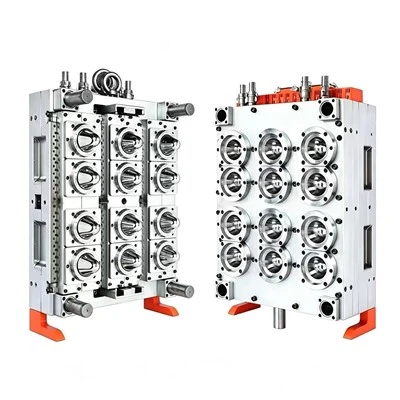
Let’s start with the baseline: not all mold parts are created equal, even when they look identical on the surface. Back when I was a field service tech early in my career, I pulled a seemingly identical ejector pin from a popular U.S. brand’s mold to replace one on a Japanese-made mold for a medical device line. I thought I’d saved the team two hours of lead time—turns out the Japanese mold’s pin had a 0.001mm tighter diameter tolerance, a tiny chamfer on the tip that prevented the product from catching during ejection, and a heat treatment that made it 2 points harder than the off-brand pin I’d grabbed. The result? The new pin scored the mold’s cavity, the product had to be scrapped, and we ended up with 4 hours of additional downtime to source the correct part from the original brand. That story is burned into my brain, and it’s the reason I spend so much time walking new clients through the nuances of interchangeability instead of just selling them the cheapest part they ask for.
First, let’s talk about the parts that are interchangeable, because that’s where a lot of the confusion starts. There’s a group of standard mold accessories governed by the ISO 9001 and ISO 8062 standards, and even more so by the Society of Plastics Engineers (SPE) Mold Making Division’s standard guidelines. Ejector pins, for example, have a core standard: their outer diameter, length, thread pitch on the head, and base geometry are all standardized for sizes ranging from 1mm to 25mm, as long as they fall into ISO class tolerances. Same with core pins, alignment pins, and basic sprue bushings—if a part is marked with the ISO size, it should fit any mold built to those specifications, regardless of the brand that made the mold. I’ve sourced standard ejector pins from three different brands this month alone to fix molds for a food packaging plant, and every single one fit perfectly without any machining adjustments. But here’s the catch: even standard parts can have hidden variations if a brand deviates from the standard for a specific application. For example, a mold for a tiny medical syringe plunger might use an ejector pin with a non-standard chamfer to prevent flash, and that pin won’t work on any other mold without reaming or grinding the cavity. That’s where the real line between interchangeable and not gets blurred.
Then there are the brand-specific parts, and this is where most of the avoidable mistakes happen. A lot of top mold brands—like Milacron, Husky, and Sandvik, to name a few—design their own “proprietary” accessory lines to give their molds a competitive edge. These parts might look like standard versions, but they have tiny, intentional differences that make them only compatible with that brand’s molds. For example, Husky uses a unique slot design on its ejector plate bushings that’s slightly narrower than the ISO standard slot for that size. The difference is so small that if you just measure with a basic caliper, you won’t spot it—until you try to slide the bushing into a Milacron mold and it binds, or until it wears out twice as fast because the slot isn’t aligned correctly with the ejector pin’s guide. Another common proprietary tweak is thread pitch on alignment pins: some European mold brands use a 1.5mm thread for 10mm pins, while U.S. brands might use a 1.75mm thread. They look almost the same, but you can’t thread a U.S. pin into a European mold’s alignment hole without stripping the thread, which can damage the mold’s core and cost thousands of dollars to repair.
I’ve also seen cases where mold builders modify brand-specific parts on purpose, and that’s another layer of confusion. A lot of custom mold shops will tweak a sprue bushing’s counterbore or an ejector pin’s length slightly to accommodate a specific product run, and that modified part won’t work on any other mold. Last year, a client brought me a spare ejector pin that worked on a mold for their disposable razors, and asked if I could source 20 more just like it to fix a similar mold for their toothbrushes. Turns out, the original builder had shortened the pin by 3mm because the toothbrush product was slightly thinner, and the pin I sourced for the razor mold was 3mm too long for the new mold. The client wasted $1,200 on parts that didn’t fit because they didn’t check if the modification was brand-specific or a custom tweak for their own product.
So, what should you do when you need to replace a mold accessory without waiting for the original brand’s lead time (which can be 2-4 weeks for custom parts, by the way)? Let’s break it down into a few actionable steps, from my years of working with shop floors and maintenance teams. First, start with the part number. That seems obvious, but so many people just describe the part (“it’s a 10mm ejector pin with a flat tip”) instead of grabbing the engraved number on the head or base. Mold brands engrave every standard and proprietary part with a unique part number, and that’s the only way to confirm if it’s interchangeable. If you can’t find the part number, take detailed measurements with a micrometer—not just the outer diameter, but the chamfer angle on the tip, the thread pitch, the length of the pin’s head, and even the surface finish. For example, medical mold pins often have a polished surface to prevent plastic residue buildup, and a generic pin’s rougher finish can cause product defects even if it fits.
Second, check the mold’s build specs. Every mold should come with a documentation package that lists all the accessories used, their part numbers, and their tolerances. I always tell my new clients to keep these docs in a labeled binder or a digital folder, because if you lose it, you’re guessing. If you don’t have the docs, contact the mold builder—most will have a copy on file for at least 5 years, and they can tell you if a part is standard or proprietary before you waste time sourcing the wrong part. Last quarter, a client panicked because their mold for a car bumper had a broken core pin, and the mold builder told them the pin was a standard ISO part, so they were able to source it from my shop in 2 days instead of waiting 3 weeks for the original brand.
Third, test small first, especially if you’re working with a critical part. If you’re not sure about a part, order one replacement part first and test it on a spare cavity or a non-production mold before installing it on a live line. I once had a client who ordered 50 custom alignment pins for a mold that made food containers, and they didn’t test them. When they installed them, the pins were 0.002mm too wide, which scratched the container’s outer surface and caused 10,000 parts to be scrapped. A $50 test part would have saved them $8,000 in lost product. It’s a small step, but it’s the difference between a quick fix and a costly mistake.
Now, let’s talk about the exceptions, because there are always outliers. For non-critical parts, like mold plates or support beams, interchangeability is way more flexible—most of these are standard steel or aluminum, and you can cut them or modify them to fit any mold, as long as you have the right tools. But for critical parts that affect product quality, like core pins, cavity inserts, or ejection components, interchangeability is almost never a free pass. I’ve even seen cases where two molds built by the same brand, for the same product, have slightly different accessory specs because of a production run tweak. That’s why I always advise clients to never assume any part is interchangeable—even between molds from the same brand.
As a mold accessories supplier, my role isn’t just to sell parts; it’s to help clients avoid downtime and costly mistakes. I’ve turned down orders for generic parts that didn’t meet a mold’s specs, because I knew they’d cause more harm than good. I’ve also helped clients source standard parts faster than the original brand could, because I keep a large inventory of ISO-compliant accessories and work with a network of trusted manufacturers to get custom parts on short notice.
At the end of the day, the question isn’t “Are mold accessories interchangeable between brands?”—it’s “Which accessories are interchangeable, and how do I confirm that without risking my production line?” The answer depends on specs, part numbers, and a little bit of research. If you’re not sure, don’t guess. Reach out to someone who knows mold parts, like a trusted supplier, or the mold builder. That 10 minutes you spend verifying a part can save you hours of downtime and thousands of dollars in lost product.
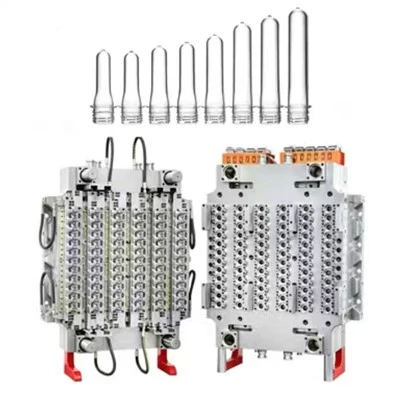
If you’re dealing with broken mold parts, unplanned downtime, or confusion about whether a replacement will work, don’t let another line sit idle. Our team has the inventory and engineering expertise to help you source the right accessories fast, no matter the brand of your mold. Connect with us today to discuss your needs and keep your production running smoothly.
Mold Accessories References
ISO 8062:2018, Geometrical Product Specifications (GPS) – Dimensional and geometrical tolerances for moulded parts
Society of Plastics Engineers (SPE) Mold Making Division, Standard Guidelines for Mold Accessories, 2022
Milacron Mold Parts Catalog, 2023, Milacron LLC
Husky Injection Molding Systems, Proprietary Mold Accessory Specifications, 2021
Taizhou Leizhen Mold Co., Ltd.
Taizhou Leizhen Mold Co., Ltd. is one of the most professional mold accessories manufacturers and suppliers in China, also supports customized service with low price. Please feel free to buy CE approved mold accessories made in China here from our factory. Contact us for pricelist.
Address: No.8828, Changtang Industrial Zone, Beicheng Street, Huangyan District, Taizhou City, Zhejiang Province
E-mail: ningleizhen@gmail.com
WebSite: https://www.leizhenmold.com/
