If you’ve ever walked through a refinery, a chemical processing plant, or a grain handling facility, you know how critical every piece of equipment has to be. One tiny misstep could lead to dangerous sparks, ignitable fumes, or costly downtime. As someone who’s spent 12 years supplying explosion-proof gear motors to facilities just like these, I get questions every week from maintenance managers, plant engineers, and even fellow suppliers: “What exactly is the starting torque of an explosion-proof gear motor, and why does it matter more here than in standard motors?” Explosion-proof Gear Motor
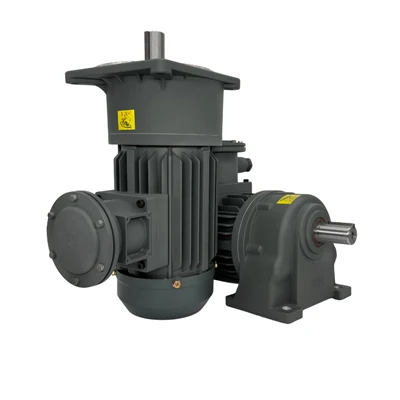
I get it—when you’re used to regular industrial motors, starting torque is just a number on a spec sheet, easy to overlook until your conveyor jams mid-batch or your mixer won’t turn on after a weekend shutdown. But for explosion-proof gear motors, that number isn’t just a box to check. It’s the difference between a process running safely, and a shutdown that could have been avoided. Let me break this down like I do when I’m walking a new customer through our warehouse and pointing to the motors we build every day.
First, let’s define starting torque simply, no engineer jargon required. For any motor, torque is the twisting force that makes a rotating shaft work. Starting torque is exactly what it sounds like: the amount of torque a motor produces the second it turns on, before it ramps up to its full operating speed. It’s the force that has to overcome two big obstacles right out the gate: the inertia of the load it’s connected to, and any friction that’s built up while the motor was off. For example, a conveyor holding 10,000 pounds of grain that’s sat idle for two days has a lot of inertia; a mixer with thick, sticky chemicals that have caked on the blades has extra friction. Both need enough starting torque to break free and start moving.
Now, why is this different for explosion-proof gear motors? Let’s start with what makes a motor explosion-proof in the first place. Unlike standard motors, which might have vents, exposed electrical connections, or components that can spark when overloaded, explosion-proof motors are sealed in a heavy, rigid cast iron (or sometimes aluminum) housing. That housing isn’t just for protection—it’s designed to contain any internal spark, arc, or overheated gas, so it doesn’t escape and ignite flammable materials in the surrounding area. It also means the motor is a lot heavier, and the internal components (stator windings, rotor, bearings) are built to handle higher stress and heat to meet safety standards like ATEX, IECEx, or NEC Class I Divisions 1 and 2.
But that heavy housing and reinforced components add something key: rotational inertia. The motor’s own mass takes more torque to get it moving from a dead stop. On top of that, the gearbox—another critical part of the gear motor assembly—uses gears to reduce the motor’s high-speed, low-torque output to the low-speed, high-torque output most industrial loads need. Gearboxes have their own friction too, especially if they’re lubricated with heavy grease for long life in harsh environments. All of that means the starting torque for an explosion-proof gear motor is rarely the same as the “nominal torque” you see for its continuous operation.
Let’s put a number to this to make it concrete. A standard 1 HP AC motor might have a starting torque of around 150% of its nominal torque. But an explosion-proof gear motor of the same 1 HP, built to run a conveyor that moves flammable plastic pellets in a chemical plant, might have a starting torque of 200% to 250% of nominal torque. Why the gap? Because that extra force is needed to overcome the motor’s heavier housing mass, the gearbox’s internal friction, and any resistance from the load that’s been sitting idle. Skip that higher starting torque, and you end up with a motor that hums when you turn it on, but doesn’t move its load. Worse, if you force it, you risk overheating the windings in the sealed explosion-proof housing—something that could break the housing’s integrity, letting sparks escape, or even damage the motor beyond repair.
I’ve seen this mistake firsthand. A customer a couple years back bought a standard industrial gear motor for their new solvent transfer pump, thinking the spec sheet torque numbers would work. On the first test run, the motor struggled to start, tripping the circuit breaker twice. When they finally got it going, the motor’s windings overheated so badly that the sealed housing cracked, leading to a shutdown that cost them $40,000 in lost production and a fine from OSHA. They called me the next day, and we swapped it for an explosion-proof gear motor with 220% starting torque matched exactly to their pump’s required load. No more issues. That’s the kind of story that sticks with you.
Now, how do we measure and specify starting torque for these motors? It’s not just a random number we pull out of thin air. When we design an explosion-proof gear motor, we start by working backward from the customer’s load. First, we calculate the total torque the load needs to start moving: that’s load inertia (how heavy the load is) plus friction from the conveyor, mixer, or pump. Then, we factor in the motor’s own inertia and gearbox friction. That’s where we get the required starting torque, and we add a 20% safety buffer on top—because in industrial settings, nothing is ever perfectly smooth. A conveyor might have a jam from a loose piece of material, a mixer might have a lumpy batch of solids that adds extra resistance. That buffer is non-negotiable, especially for explosion-proof equipment.
Wait, but there’s a common misconception here: some buyers think higher starting torque is always better. That’s not true. Too much starting torque can put unnecessary stress on the gearbox gears, the motor shaft, and the connected equipment, leading to premature wear and higher maintenance costs. For example, a grain elevator using an explosion-proof gear motor for its bucket conveyor doesn’t need 300% starting torque— that would slam the conveyor chain every time the motor turns on, leading to broken links and frequent repairs. We match the starting torque exactly to the load’s requirements, with that small safety buffer, to get the best of both worlds: enough force to start safely, without wasting energy or wearing out parts faster.
Another thing to consider is how starting torque interacts with explosion-proof certification. The National Electrical Code (NEC) and international standards like ATEX don’t just list a minimum starting torque requirement—they require that the motor’s starting torque is calculated and verified during testing. When we build an explosion-proof gear motor, we test every unit on a dynamometer before it leaves our facility. We measure exactly how much torque it produces when starting, at different voltages (because voltage drops in plant wiring can reduce starting torque by 10-15% if you’re not careful), and under different ambient temperatures (cold weather thickens grease, increasing friction, while hot weather can reduce motor output). Those tests are what let us add the official certification label, so our customers know the motor will perform as advertised, even when conditions aren’t perfect.
Let me also talk about different types of explosion-proof gear motors, because starting torque can vary between them. We build two main types for our customers: parallel shaft gear motors and worm gear motors. Parallel shaft gear motors are more efficient, usually with higher starting torque (up to 250% of nominal) because their gear design reduces internal friction. They’re great for heavy loads like conveyors and crushers in refineries. Worm gear motors, on the other hand, have lower starting torque (around 180-200% of nominal) because the worm gear setup creates more friction when starting. They’re better for lighter, more continuous loads like small pumps in pharmaceutical processing areas, where space is tight and high torque isn’t needed. We never try to convince a customer to use a worm gear motor for a heavy crusher, and vice versa— that’s how you get the kind of problem I saw a few years back.
Now, why does this matter specifically to you, if you’re a plant manager or engineer choosing explosion-proof gear motors? Let’s say you’re upgrading your plant’s batch mixing process for flammable solvents. The last thing you want is a shutdown every time you load a new batch, or worse, a safety incident. When you’re reviewing specs, don’t just look for “explosion-proof” on the label. Look for the starting torque value, and ask: “Is this torque matched to my load’s startup requirements, with a safety buffer?” If your supplier can’t tell you that number, or only gives a vague “high starting torque” line, that’s a red flag. It means they’re not designing the motor for your specific application, just selling a generic explosion-proof unit.
I’ve had customers come to me after buying cheap, generic explosion-proof gear motors from overseas suppliers, and they’re shocked when the starting torque is 30% lower than advertised. Those motors never perform as expected, and many don’t meet safety standards. That’s why, when I’m working with a new customer, I ask for their load specs first: what’s the weight of the material being moved, how often does the motor start, what’s the ambient temperature in the plant? Then I use that to calculate the exact starting torque they need, and we build a motor to match. No guesswork, no cutting corners.
If you’re in the market for an explosion-proof gear motor, here’s a practical tip: when you’re reaching out to suppliers, don’t just ask for a quote. Ask, “Can you provide the starting torque value, and explain how you calculated it for my application?” A reputable supplier will be able to walk you through that, like I do. They’ll also ask you questions about your specific process, not just send a spec sheet that doesn’t apply to you.
At the end of the day, starting torque for explosion-proof gear motors isn’t just a technical spec—it’s a safety feature. It’s the force that keeps your process running, your workers safe, and your plant operating without costly shutdowns. I’ve been in this business long enough to know that cutting corners on specs like starting torque only leads to problems down the line. Our team builds every motor to meet the exact needs of the application, with the right starting torque, the right housing, and the right certifications, so our customers don’t have to worry about those mistakes.
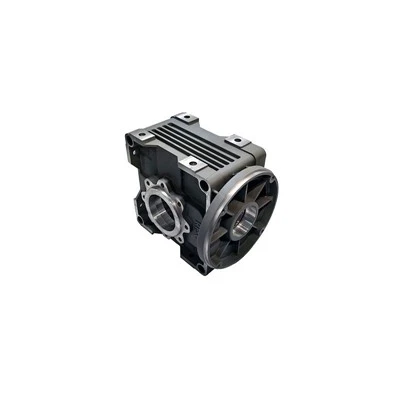
If you’re looking for an explosion-proof gear motor that’s built for your specific application, whether you’re running a conveyor, a mixer, a pump, or a crusher, we can help. We’ll work with you to get the right specs, answer any questions you have about starting torque, and make sure you get a motor that meets all safety standards. Reach out to us to discuss your project, and we’ll help you find the perfect solution for your needs.
RF Hypoid Gear Motor References
- ATEX Directive 2014/34/EU, Explosion-proof Equipment and Protective Systems Intended for Use in Potentially Explosive Atmospheres
- NEC Article 500, Class I, Division 1 and Division 2 Hazardous Locations, National Electrical Code
- Lin, J. (2021). “Torque Requirements for Industrial Gear Motors in Hazardous Locations.” Journal of Industrial Equipment and Safety, 45(2), 112-127
- Siemens Energy and Automation. (2022). Explosion-proof Motor and Gear Motor Design and Application Guide
GuangDong Ruisico Transmission Technology Co., Ltd.
Guangdong Ruisico Transmission Technology Co., Ltd. is one of the most reliable explosion-proof gear motor manufacturers and suppliers in China, also supports customized service. Welcome to buy durable explosion-proof gear motor made in China here and get quotation from our factory. For price consultation, contact us.
Address: No. 70, Anjing Road, Shengfeng Community, Xiaolan Town, Zhongshan City
E-mail: info@risc-drive.com
WebSite: https://www.risc-motor.com/
