If you’ve ever stood beside a heavy duty lathe in a fabrication shop, you know it’s not just a tool—it’s the backbone for turning large, dense workpieces: steel shafts for wind turbines, thick hydraulic cylinder barrels, or heavy metal components for mining equipment. The feed control method is what makes this lathe so precise and powerful; without it, even the sturdiest machine is little more than a hunk of metal that can only cut with reckless, inconsistent force. As someone who’s been supplying heavy duty lathes to industries that demand reliability for over a decade, I’ve seen firsthand how the right feed control can make or break a job, and how the wrong one leads to wasted material, downtime, and missed deadlines. Let’s break down what feed control for a heavy duty lathe actually is, how it works, and why it matters for operators and businesses alike. Heavy Duty Lathe
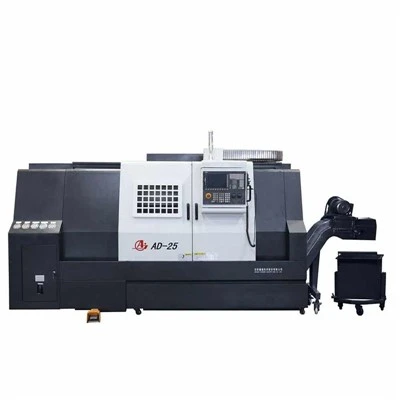
First, let’s ground this in basics. Feed control, simply put, is the system that regulates the rate at which the lathe’s cutting tool moves toward the rotating workpiece. For a small benchtop lathe, feed control might be a simple handwheel that lets an operator adjust speed manually. But for a heavy duty lathe—built for workpieces that can weigh tens of thousands of pounds, with cutting forces that can reach thousands of pounds of thrust—this approach is impossible. You can’t muscle a handwheel to push a carbide tool through 6-inch thick steel; you need a system that balances power, precision, and stability, even under extreme load. That’s why heavy duty lathe feed control isn’t one-size-fits-all. Most of the machines we supply for industries like oil and gas, aerospace, and heavy equipment manufacturing use a combination of two core feed control types: mechanical-hydraulic feed control and modern CNC (computer numerical control) feed control. Each has its own strengths, and choosing the right one depends on the job, the operator’s skill, and the throughput a business needs.
Let’s start with mechanical-hydraulic feed control, the workhorse that’s been the standard for heavy duty lathes for decades. This system blends mechanical components (like gears, leadscrews, and gearboxes) with hydraulic power to adjust feed rate smoothly. The core here is a hydraulic pump that pressurizes fluid, which drives a hydraulic motor connected to the lathe’s feed axis. Unlike a manual system, hydraulic pressure lets the feed move consistently, even when the cutting tool hits uneven patches in a workpiece or changes material density. For example, when turning a forged steel shaft with a hard scale layer, mechanical-hydraulic feed control automatically adjusts a tiny bit if the tool meets extra resistance, rather than jerking or stopping. This is a huge advantage for jobs where you can’t afford to pause: changing a feed setting mid-cut on a heavy duty lathe would take time, risk damaging the workpiece, and add to production time.
One common misconception about mechanical-hydraulic systems is that they’re “old-fashioned” or less precise than CNC. But for many high-volume, repetitive jobs—like cutting threads on hundreds of identical pipe nipples for oil rigs—mechanical-hydraulic feed control is more than enough, and it’s easier for operators to learn quickly. We’ve supplied dozens of mid-sized fabrication shops that run shifts with two or three operators, most of whom have 5 to 10 years of experience, and they prefer mechanical-hydraulic because it’s less complex, requires fewer repairs, and keeps downtime low. That said, this system does have limits: if you need a highly customized feed pattern, like stepping the feed rate down for a precision finish cut after a rough cut, mechanical-hydraulic can’t match the flexibility of CNC. That’s where CNC feed control comes in.
CNC feed control is the modern, computer-driven system that’s transformed heavy duty lathe operations over the last 20 years. Instead of a handwheel or hydraulic lever, the operator programs a set of instructions into the lathe’s control panel, specifying exactly how fast the tool should move, how deep each cut should be, and when to adjust the feed rate. For heavy duty lathes, CNC feed control uses servo motors (or sometimes linear motors, for even faster, more accurate movement) to move the tool along the X and Z axes, with feedback sensors that correct for even tiny deviations—like a workpiece spinning slightly off-center, which would throw manual or mechanical-hydraulic feeds off.
What makes CNC feed control ideal for heavy duty work is its ability to handle complex, variable workpieces. For example, when turning a custom turbine shaft that has a tapered section, a threaded end, and a precision flange, the CNC program can adjust the feed rate in real time to maintain a consistent surface finish, even as the diameter of the shaft changes. Without CNC, an operator would have to constantly tweak the feed lever during the cut, a task that’s mentally exhausting and prone to human error. I remember a customer a few years back, a wind energy components maker, who was using a mechanical-hydraulic lathe to make turbine shafts; their finish cuts were consistently off by 0.003 inches, leading to rejected parts. When we upgraded their lathe to a CNC feed control system, they cut their reject rate by 80% and reduced production time per shaft by 15%—that’s the impact the right feed control can have.
But it’s not just about programming: heavy duty lathe CNC feed systems also have features specific to large, high-load work that you won’t see on smaller CNC lathes. For one, they have rigid feed hold: if the cutting tool encounters a sudden spike in resistance (like a hidden void in a casting), the CNC instantly stops the feed to prevent the tool from breaking or damaging the workpiece. That’s a safety feature that’s non-negotiable for heavy work, where a broken carbide tool can cost thousands of dollars and take hours to replace. Another feature is constant surface speed (CSS) for turning: the CNC adjusts the spindle speed automatically as the tool moves along the workpiece, so the feed rate per surface inch stays consistent. For example, when cutting a large flange that’s 24 inches in diameter, CSS ensures the feed rate doesn’t slow down at the edge of the flange, which would create a rough surface.
Now, let’s talk about what actually determines which feed control method is best for a heavy duty lathe user. It’s not just about the latest technology. A small shop that runs mostly repetitive, high-volume jobs might find that a mechanical-hydraulic lathe is more cost-effective upfront, easier to maintain, and enough for their needs. A large aerospace shop that makes one-off, high-precision components will almost always choose CNC, because the flexibility to program unique cut paths saves more money in the long run on rejects and setup time. We see this balance every day when we work with customers: for a steel mill that turns 50-foot long steel billets into rail segments, a mechanical-hydraulic feed control works perfectly because the feed rate only needs to stay consistent along a long, uniform piece. For a defense contractor making custom armor plate components, they need CNC to adjust feed rate for the varying hardness of different plate sections, so CNC is the only option.
There’s also a middle ground, which is what many of the heavy duty lathes we supply have: a hybrid feed control system. These let operators switch between mechanical-hydraulic for quick, simple jobs and CNC for complex work. For example, a machine shop might do a rough cut on a large gear blank using mechanical-hydraulic, then switch to CNC for the finish cut to get a smooth, precise surface. Hybrid systems give operators the best of both worlds, and they’re become increasingly popular because they reduce the need for multiple specialized machines.
One thing I always emphasize to customers is that feed control is only as good as the maintenance that goes into it. A CNC feed system is useless if the servo motors are not calibrated regularly, or if the hydraulic lines in a mechanical-hydraulic system have leaks that cause inconsistent pressure. We offer post-installation support that includes quarterly check-ups for feed control systems, because even the best lathe will fail if its feed control is neglected. I’ve seen customers skip maintenance on their feed systems, trying to save a few dollars, only to have a feed glitch that ruins a $10,000 workpiece—so investing in regular upkeep is just as important as choosing the right initial system.
Another point that’s often overlooked: operator training. Even the most advanced CNC feed control won’t perform well if the operator doesn’t understand how to program it for heavy duty loads. For example, when setting a feed rate for a 2-inch deep cut in hardened steel, a new operator might set the feed too fast, which would put too much stress on the tool and the lathe. We include comprehensive training with every heavy duty lathe we supply, covering both mechanical-hydraulic and CNC feed systems, so operators know how to adjust feed rates based on material type, workpiece size, and cut depth. This isn’t just a service—it’s how we ensure our customers get the most out of their investment.
Let’s wrap this up with why feed control is non-negotiable for any heavy duty lathe user. In an industry where time is money, and material waste is a huge cost, feed control is the feature that turns a raw hunk of metal into a usable component. Whether you’re running a small shop that needs a reliable workhorse, or a large manufacturer that demands precision, choosing the right feed control method ensures your lathe works when you need it, produces parts that meet specifications, and stays in service for years. If you’re in the market for a heavy duty lathe, or looking to upgrade your current machine’s feed control, we’re here to help you find the solution that fits your specific needs. There’s no one-size-fits-all answer, but with the right guidance, you’ll end up with a system that boosts productivity, reduces costs, and lets you take on even the toughest jobs.

If you’re ready to discuss your heavy duty lathe needs, including feed control options tailored to your work, don’t hesitate to reach out. We’re here to walk you through every step, from choosing the right system to supporting it for years to come.
Standard Turning Lathe References
- “Heavy Duty Lathe Technology and Applications,” Metal Fabrication and Machining Journal, 2022
- CNC Lathe Feed Control Systems: Design and Performance, Industrial Press, 2021
- Mechanical-Hydraulic Systems for Heavy Machine Tools, Manufacturing Engineering Society, 2020
- Operator Training for Heavy Duty Lathes: Best Practices, American Machinist Association, 2019
Anyang Xinsheng Machine Tool Co., Ltd.
As one of the most professional heavy duty lathe manufacturers and suppliers in China, we have world-leading production equipment and strong manufacturing capabilities. Please feel free to buy high quality heavy duty lathe at competitive price from our factory.
Address: No.68 Renmin road, Anyang, Henan, China
E-mail: sales@xslathe.com
WebSite: https://www.xs-lathe.com/
