If you’ve ever stopped by our shop floor during a motor test, you’ve probably heard that sharp, brief jolt of sound right when we flip the power switch. That’s not just the motor waking up—that’s its starting current at work, and as a motor supplier, I get asked about it almost as often as I’m asked about efficiency or voltage ratings. A lot of people mix it up with running current, or assume it’s just a random spike that’s hard to pin down, but it’s rooted in simple physics, and understanding it matters way more than you might think. Motor
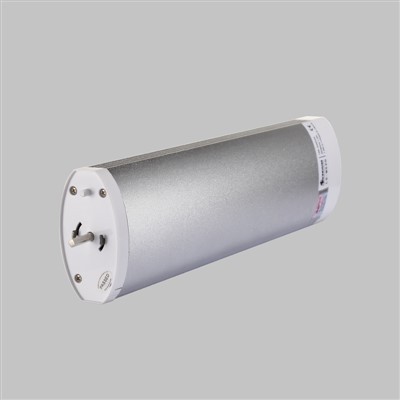
Let’s start with why starting current is so high. When a motor is at rest, the rotor inside (that round, spinning core) isn’t moving through the magnetic field created by the stator windings at all. In normal operation, as the rotor spins, it generates a “back EMF”—electromotive force that opposes the incoming voltage. This back EMF is what limits how much current the motor draws once it’s up to speed, keeping running current at a steady, manageable level. But when the motor is first starting, there’s no back EMF to slow things down. The only resistance is the small amount of impedance from the windings themselves, so current surges. For most AC induction motors—the workhorse for industrial, commercial, and even residential applications—that starting current is 5 to 7 times the motor’s full-load running current. A 10-horsepower motor that draws 15 amps under normal load might pull 75 to 105 amps the second you start it. That’s not a glitch; that’s how it’s designed.
Now, why does that spike matter? A lot of facility managers I talk to worry about it tripping circuit breakers, dimming lights across a warehouse, or putting unnecessary stress on the motor and connected equipment. They’ll ask if we can build a motor that has lower starting current, and the short answer is: yes, but you have to balance it with other performance needs. For example, a motor with more stator resistance will limit starting current, but it will also be less efficient under load, wasting more energy over time. Or we can add starting controls—like star-delta starters or soft starters—that reduce the voltage to the motor during startup, which drops the current spike. But those add cost to the system, and for applications that need full torque right away (like a conveyor that’s loaded with materials when it starts), a lower starting current motor might not have enough torque to get moving. That’s the tradeoff we walk through with every client.
I remember a client last year who runs a packaging plant. They had a line of 15-horsepower conveyor motors that kept tripping their main circuit breaker every time they started all three lines at once. Their electrician wanted to crank up the breaker size, but that posed a fire risk—older wiring in the plant wasn’t rated for higher amperage, and the constant high inrush was wearing out the circuit connections faster. We worked with them to swap one of the standard motors for a high-torque, low-starting-current model, paired with a soft starter that ramped up the voltage slowly. The starting current dropped from 90 amps to 52 amps, which was enough to keep the breakers from tripping, and the motor still had enough torque to move the loaded conveyors. It wasn’t a one-size-fits-all fix, but it was tailored to their specific space and needs.
Another common misconception is that starting current is only a problem for big motors. That’s not true. A small 1-horsepower garage door opener motor will also have a starting current of 5 to 7 times its running current. The difference is that for small, low-power applications, the spike is too small to cause noticeable issues, so people don’t notice it. But for large, high-power systems—like HVAC units for office buildings, crane motors in manufacturing, or pumps for water treatment plants—that spike puts real stress on the electrical grid, especially if multiple motors start at the same time. Many utilities have surcharges for facilities that have high demand spikes, so managing starting current isn’t just about protecting equipment—it’s about lowering monthly energy costs too.
As a motor supplier, I also care about how starting current affects the motor itself in the long run. Every time a motor starts, that high current generates extra heat in the windings. A few starts a day won’t do much, but if a motor cycles on and off frequently—like a motor for a loading dock door that opens and closes 50 times a day—that extra heat builds up over time, shortening the motor’s lifespan. That’s why we’ll often recommend motors designed for frequent starting, with thicker insulation on the windings to handle the heat, or options with better ventilation to keep temperatures down. Again, it’s all about matching the motor to how it’s going to be used.
Let’s get a little more technical for anyone who wants the details, without getting too jargon-heavy. For DC motors, starting current is calculated by Ohm’s Law: I = V/R, where V is the supply voltage and R is the armature resistance. Since R is very small in a DC motor, starting current is extremely high—sometimes 10 to 20 times full-load current—so DC motors almost always need a starting resistor to limit that spike. For AC synchronous motors, the same principle applies: no rotation means no back EMF, so starting current is high until the rotor locks into sync with the stator’s magnetic field. Induction motors, as I mentioned earlier, use slip between the rotor and the stator’s rotating magnetic field to generate torque, and that slip is highest at startup, which leads to the high starting current.
What are the ways we work with starting current here at our company? First, we design motors to meet specific inrush requirements when a client comes to us with their needs. We offer different motor series: standard general-purpose motors, which have higher starting torque and current, for applications where startup load is consistent and space is available for controls; low-starting-current motors, which use optimized winding designs to reduce inrush without sacrificing too much torque, for systems where space or electrical limits are tight; and high-torque motors, for applications like crushers or mixers that need maximum torque at startup, even if that means a higher starting current.
We also don’t just sell motors—we advise on the whole system. If a client is installing a new HVAC system, we’ll work with their electrical contractor to calculate not just the full-load current of the motor, but the starting current, to make sure the wiring, breakers, and grid can handle it. For existing facilities that are upgrading their motors, we’ll test their current setup, check their electrical capacity, and recommend the right combination of motor and controls to fix their specific issue.
Just last month, I had a call with a food processing plant that was having issues with their mixer motor. Every time they started the mixer, the lights in the adjacent warehouse would flicker so bad that night shift workers would comment on it. Their old 20-horsepower motor had a starting current of 110 amps, and the plant’s electrical system was only sized for a 90-amp inrush from that line. We swapped it for a 20-horsepower motor with a built-in soft start feature, which ramps the voltage up over 3 seconds, bringing the starting current down to 55 amps. The lights stopped flickering, and the motor’s maintenance logs have already shown less wear on the belt and gearbox, since it’s no longer under the stress of a hard startup. That’s the kind of small, impactful solution that matters most to our clients.
I want to make one thing clear: starting current isn’t a flaw in motor design. It’s a necessary part of how motors work. If a motor didn’t have that high starting current, it wouldn’t have enough torque to get the rotor moving from a standstill, especially if it’s under load. The trick is managing that current so it doesn’t cause problems without compromising the motor’s performance or efficiency. That’s what we specialize in as motor suppliers—we don’t just sell parts, we help our clients solve problems by understanding how their motors work, from startup to full operation.

If you’re dealing with circuit breakers tripping, equipment wear from frequent startups, electrical surcharges, or just want to make sure your motors are optimized for your specific application, we’d be happy to talk through your needs. Every facility is different, and there’s no one-size-fits-all answer, but we have the experience to find the right solution for you. Whether you’re upgrading a single motor for your garage or designing a full industrial system, we’re here to help you navigate starting current and all the other factors that go into choosing the right motor.
Control System References:
Electric Motor Repair Handbook, 6th Edition, Industrial Press, 2018.
Understanding AC Motor Starting Characteristics, Electrical Construction & Maintenance, 2021.
Motor Starting Current: Causes, Effects, and Solutions, Control Design Magazine, 2022.
Guangdong Langsen M.&E. Co., Ltd.
As one of the most professional motor manufacturers and suppliers in China, we’re featured by quality products and good service. Please rest assured to wholesale customized motor made in China here from our factory. Contact us for more details.
Address: No. 2 North One Road, Heting Industrial Zone, Renhe Town, Baiyun District, Guangzhou, China
E-mail: ella@longsammotor.com
WebSite: https://www.langsenmotor.com/
