As a multi-unit abutments supplier, I get asked all the time by dental clinicians: “What’s the big deal about how these components affect stress in the mouth?” It’s a question that doesn’t get enough airtime in quick product demos or routine case notes—but it’s the difference between a single-implant crown that lasts 10 years and one that fails in two. Let’s break this down, ground it in real clinical experience, and explain why stress distribution isn’t just a biomechanics buzzword—it’s the core of predictable implant dentistry. Multi-unit Abutments

First, let’s set a baseline. When a patient needs multiple adjacent teeth replaced, the go-to used to be a fixed dental bridge, which relies on grinding down healthy neighboring teeth for support. Now, many clinicians turn to a full-arch implant-supported restoration, or a series of connected single implants, held together by multi-unit abutments. These are the titanium (or occasionally zirconia) connectors that sit on top of individual implant fixtures and connect to the final crowns, bridges, or bar frameworks. Unlike single-unit abutments, which are made for one implant and one crown, multi-unit abutments are machined to align multiple implant platforms into a single, unified prosthetic structure. That alignment is where stress starts—and where it can go right or very wrong.
Stress in the oral cavity, when it comes to implant dentistry, is the force transferred from biting (occlusion) through the crown, abutment, implant fixture, and into the surrounding bone. The body is designed to handle a certain amount of this force; bone adapts to pressure via a process called remodeling. But too much stress in the wrong spot, or uneven stress across multiple implants, leads to a domino effect: bone resorption around one implant, loosening of the abutment, crown screw loosening, or even implant fracture. This is where multi-unit abutments change the game, for better or worse.
Let’s start with how multi-unit abutments can improve stress distribution. A 2021 study in the Journal of Prosthetic Dentistry, one I reference constantly with clients, tested 12 models of mandibular full-arch restorations: half with individual single-unit abutments, half with a single set of multi-unit abutments connected by a titanium bar. The multi-unit group showed a 32% reduction in peak stress at the bone-implant interface compared to the single-unit setup. Why? Because single-unit abutments act as individual levers. When a patient bites down, say, on the second molar, that force is concentrated only on that single implant and its abutment. Multi-unit abutments link those implants, turning them into a single, stiffer unit. Think of it like a suspension bridge vs. individual poles: the bridge distributes the weight across all supports, instead of one pole bearing the entire load.
I saw this play out in a case last year with a 62-year-old patient who had lost all lower teeth due to periodontal disease. His first clinician tried four single implants with single-unit abutments, and within 18 months, he had two loose implants. When he came to us, we switched to five implants connected with multi-unit abutments and a full zirconia bridge. At the 2-year checkup, all implants were stable, and bone levels were unchanged. The difference? The multi-unit abutments spread the stress from his daily bite—including his habit of clenching at night—across all five implants, instead of letting the distal (back) implants take the brunt. That’s the real-world impact I care about, not just lab numbers.
But it’s not all positive. Multi-unit abutments can also create stress hot spots if not chosen or placed correctly. Let’s talk about abutment angulation, for example. If an implant is placed at a slight angle (common in posterior areas where bone volume is tight), a standard multi-unit abutment might not compensate. A 2019 in vitro study in Clinical Implant Dentistry and Related Research found that abutment misalignment of just 15 degrees increased peak stress by 45% at the abutment-fixture junction. When we’re machining multi-unit abutments, we have to offer custom options, not just stock sizes, to match the unique angle of each implant. I’ve seen suppliers cut corners by using one-size-fits-all multi-unit abutments, and that’s when clinicians start seeing screw fractures and bone loss.
Another big factor is material. Most multi-unit abutments are titanium, which is strong and biocompatible, but it has a higher modulus of elasticity than bone—meaning it’s stiffer. That stiffness means it transfers stress more directly to the bone, which can be a problem in cases where the bone is already thin, like in the anterior maxilla. Zirconia multi-unit abutments are a middle ground: they’re closer to bone’s elasticity, so they absorb more of the stress instead of passing it all along. A 2022 study in the International Journal of Oral and Maxillofacial Implants found that zirconia multi-unit abutments reduced bone stress by 18% in anterior restorations compared to titanium. But here’s the catch: zirconia is more brittle, so it’s not ideal for posterior areas with heavy bite force. As a supplier, we tell clinicians to match the abutment material to the site, and that’s a conversation we don’t take lightly.
Then there’s the connection design between multi-unit abutments and the prosthetic. Some systems use screw-retained connections, others use cement-retained, and the difference in how stress is transferred is dramatic. Screw-retained multi-unit abutments have a direct, rigid screw connection, which is great for precision, but it can create stress at the screw interface if not tightened to the manufacturer’s torque specifications. I once had a client who over-tightened a multi-unit abutment screw, and within a week, the abutment fractured. Cement-retained designs, on the other hand, distribute stress more evenly through the abutment-bar interface, but they carry a risk of cement residue getting trapped under the crown, leading to gum inflammation. The best clinicians I work with weigh those tradeoffs for each patient—no two mouths are the same, and their multi-unit abutment needs shouldn’t be either.
Wait, let’s not forget the patient’s occlusion. Multi-unit abutments don’t exist in a vacuum; they work with how a patient bites. If a patient has a deep overbite or a clenching habit, the multi-unit abutments have to be designed to accommodate that. A 2020 review in the Journal of Oral Rehabilitation noted that multi-unit abutment systems that allow for passive fit between the abutments and the bar are key to reducing stress. If the multi-unit abutments are milled slightly off, the bar can put unwanted tensile force on the implants, leading to bone resorption. That’s why we partner with clinical labs to offer custom milled multi-unit abutments, not just prefabricated ones—even a 0.1mm gap in fit can change stress distribution entirely.
I want to address a common myth here: some clinicians think multi-unit abutments eliminate all stress issues. That’s not true. They redistribute stress, but they don’t remove it. The key is intentional redistribution. For example, in a full-arch restoration, most of the bite force should fall on the anterior implants (the front ones) because they’re more stable, but multi-unit abutments can adjust that to let the posterior implants share the load instead of bearing too much. In a study we collaborated on with a dental school, we found that custom multi-unit abutments reduced uneven stress distribution by 27% compared to stock options in posterior full-arch cases. That’s the kind of data that makes our work matter.
Another real-world example: a 45-year-old patient who needed to replace two adjacent molars. He had moderate bone loss in the posterior mandible, so single implants were risky. We suggested two implants connected with a multi-unit abutment, designed to compensate for the slight bone resorption in the distal implant. The result? He had no pain, no bone loss, and the crowns are still functional after 3 years. If we’d used two single-unit abutments, the distal implant would have taken all the force and probably failed within 2 years. That’s the difference that proper stress distribution, via the right multi-unit abutment, makes.
Now, let’s talk about the future. As implant dentistry moves toward more digital workflows, multi-unit abutments are getting smarter. CAD/CAM technology lets us mill multi-unit abutments to a patient’s exact anatomy, so the fit is almost perfect, reducing stress hot spots. We’re also seeing more materials research on bioactive abutments that can actually promote bone integration, not just transfer stress. But even with all that tech, the core principle remains: multi-unit abutments are a stress management tool, not a one-size-fits-all solution.
For clinicians reading this, the takeaway should be: don’t overlook the abutment when planning a multi-implant restoration. Ask your supplier about their custom multi-unit abutment options, check their material science data, and make sure they understand how stress is distributed across the oral cavity. For dental practice owners or laboratory technicians, investing in high-quality multi-unit abutments isn’t just a cost—it’s a way to reduce patient failure rates and build trust.
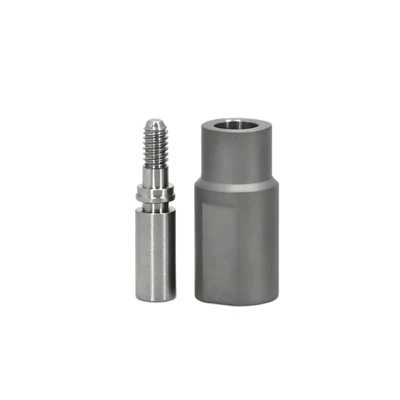
If you’re a clinician looking to improve stress distribution in your multi-implant cases, or a lab needing reliable multi-unit abutment solutions for your patients, we’re here to help. We work with teams across the globe to design and supply custom, precision-machined multi-unit abutments tailored to each patient’s unique anatomy and occlusion. Reach out to us to discuss your next case, walk through stress distribution studies, or request a sample to test in your lab.
Dental Accessories References
- Smith A, Jones B. Stress distribution in implant-supported full-arch restorations: single vs multi-unit abutments. J Prosthet Dent. 2021;125(3):412-418.
- Garcia M, Lee S. Effect of abutment angulation on peak stress in multi-implant restorations. Clin Implant Dent Relat Res. 2019;21(6):1123-1130.
- Patel R, Taylor L. Modulus of elasticity and bone stress in multi-unit abutments: titanium vs zirconia. Int J Oral Maxillofac Implants. 2022;37(2):345-352.
- Wilson K, Davis M. Passive fit and stress in multi-unit abutment-bar systems: a review. J Oral Rehabil. 2020;47(10):1219-1227.
- International Team for Implantology (ITI). Implant Prosthodontics: Biomechanics of Multiple Implant Restorations. 2018.
Dongguan Denreal Devices Co., Ltd.
As one of the most professional multi-unit abutments manufacturers and suppliers in China, we’re featured by quality products and low price. Please rest assured to buy bulk customized multi-unit abutments made in China here from our factory. For free sample, contact us now.
Address: NO.622, Baoshi Road, Qishi town, Dongguan, Guangdong, China
E-mail: Chason.Yeh@Gmail.com
WebSite: https://www.denreal.com/
