Hey there! If you’re running a concrete mixer truck fleet, you know the hydraulic system’s the unsung hero—no smooth rotation, no consistent mix, and you’re dead in the water. As a concrete mixer truck supplier that’s spent years on jobsites watching mechanics panic over preventable hydraulic fails, let’s cut the jargon and talk real, actionable maintenance that actually works. No fancy textbooks, just stuff we’ve seen fix more headaches than any manual. Concrete Mixer Truck
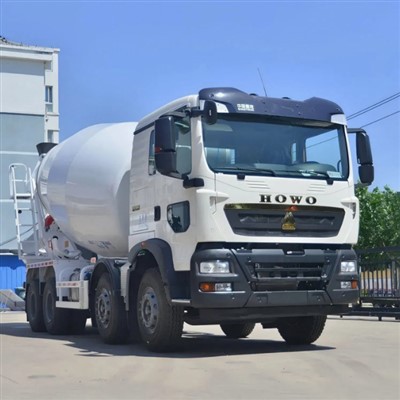
First off, let’s keep it simple: the hydraulic system on your mixer’s got three main bits that run the show: the pump (that pushes fluid around), the motor (which spins the mixer drum), and the hoses/valves that connect everything. Mess with any of these, and you’re either waiting for a tow or losing a job because the drum stopped mid-pour. So let’s start with the most basic, most overlooked step: fluid checks.
Wait, I know—“fluid changes” sounds like every other truck maintenance chore, but don’t sleep on this. A lot of guys just top off the hydraulic fluid once a month and call it good, but that’s a fast track to contamination. Let’s break it down: first, never use just any hydraulic fluid. Your mixer’s hydraulics are built for a specific viscosity—usually anti-wear hydraulic fluid rated for heavy loads, not the random stuff from the auto parts store down the street. Check your operator’s manual (yeah, the one you stuffed in the glove box) for the exact grade. If you can’t find it, hit us up—we’ve got all the specs for every mixer we supply.
Then, the contamination part. Dirt, concrete dust, even water gets in there, and it’s like sandpaper for your pump and motor. How do you catch this early? Every two weeks, pull the dipstick, wipe it clean, and take a good look. If the fluid’s milky? That’s water. If it’s dark, gritty, or smells burnt? That’s contamination. And don’t just change the fluid—change the filter too. A lot of fleets do fluid changes every 500 hours, but if you’re working in dusty jobsites (which, let’s be real, most of you are), cut that to 350 hours. More often if you’re driving through construction zones where dust’s blowing straight into the reservoir vent—we see this all the time on mixers running in urban areas.
Next up: hose inspections. Your mixer’s hoses are under constant pressure—pushing 3,000+ PSI when the drum’s spinning, and they’re rubbing against the frame, getting baked by sun, splashed with concrete slurry. We’ve had clients show up to jobs with a blown hydraulic hose, and half the time it’s because they skipped a visual check. Do this every week, before you hit the road. Run your hand along each hose (wear gloves, those things can get hot!)—if you feel cracks, bulges, or fraying anywhere, replace it immediately. Don’t wait for it to burst mid-pour. Also, make sure the hoses are routed so they’re not rubbing on sharp metal parts—we add extra clamps on our mixers for this, but over time, clamps can loosen. Tighten ’em so there’s zero movement.
Then, the valve and motor checks. The control valves that switch the drum between spin, slow, and reverse—those can get gunked up with concrete residue or fluid sludge, which makes them stick. Every month, flip the drum through all modes: forward spin, reverse, stop. If it’s sluggish or takes a second to switch, the valve’s probably dirty. You can flush it with hydraulic fluid and a soft brush (no wire brushes—you’ll scratch the valve seat and make it worse) to clear out the gunk. As for the hydraulic motor (the thing that actually spins the drum), listen to it when it’s running. A normal motor’s steady and quiet; if you hear knocking or grinding, that’s wear. Don’t ignore that—by the time it’s making noise, you’re looking at a $2,000+ repair, not just a $500 part.
Wait, one big mistake we see a lot: idling the mixer drum too long. If you’re sitting on a jobsite for more than 15 minutes with the drum idling slow, that’s killing your hydraulic system. The fluid’s not circulating enough, it gets hot, and hot fluid breaks down faster. If you’re waiting to pour, spin the drum at a slow but consistent speed—like 2-3 RPM, not the bare minimum. We tell all our clients this on delivery, but a lot guys forget once they’re on their first big job.
Also, cold weather maintenance. If you’re running mixers in places that drop below freezing, your hydraulic fluid thickens up. Cranking the drum right up without letting the fluid warm up can burn out the pump. Before you start, let the truck idle for 5 minutes, and spin the drum slow for a minute to get the fluid moving. If you’re in super cold climates, we can set up a heated reservoir liner on our mixers—way better than just running the heater, which doesn’t hit the hydraulic fluid fast enough.
Now, let’s talk about what to do when something does go wrong. A lot of guys try to fix hydraulic issues themselves, and end up making it way worse. If the drum stops spinning entirely, don’t just crank the pump—you’ll blow a seal. First, check the fluid level (wait, did you do that? Yeah, basic, but half the time it’s low). If it’s full, check the hoses for leaks. If that’s not it, call a pro. And if your mixer’s one we supplied? Hit us up, we’ve got a network of techs who specialize in our hydraulics—no guesswork, no wrong parts.
Wait, let’s circle back to why this matters for your bottom line. We’ve had a client who skipped fluid changes and ended up replacing their hydraulic pump 3 times in a year—cost them over $10k. Another one who did weekly hose checks and never had a hose blow, saving around $1,500 in downtime and repairs. This isn’t just “maintenance”—it’s keeping your mixer on the road, meeting deadlines, and not losing money.
Oh, and one last pro tip: keep a maintenance log. Jot down every fluid change, every filter swap, every hose replacement, even when you checked the valves. Not only does this help you schedule routine stuff, but if you ever have a warranty issue (which we stand behind all our mixers), the log is gold. We always tell new clients to track this—even a simple notebook works, no fancy software needed.

At the end of the day, the hydraulic system’s the core of your concrete mixer. Skip the small checks, and you’re setting yourself up for big headaches. We design our mixers to be low-maintenance, but they still need regular love—just like any piece of heavy equipment. If you’re in the market for a new concrete mixer, or just need specs for your existing one, reach out to us. We’re here to help you keep your trucks running smooth, so you can get the job done.
Concrete Mixer Truck References:
Hydraulic Systems for Mobile Heavy Equipment, Society of Automotive Engineers
Concrete Mixer Maintenance Best Practices, National Ready Mixed Concrete Association
Heavy Duty Hydraulic Fluid Selection Guidelines, Fluid Power Society
Shandong Fuxin Automobile Technology Co., Ltd.
We’re well-known as one of the leading concrete mixer truck manufacturers and suppliers in China, featured by quality products and good price. Please rest assured to buy advanced concrete mixer truck made in China here from our factory. Contact us for more details.
Address: West of Nanshou Road, Beihai Road, Weifang City, Shandong Province
E-mail: h17616861003@gmail.com
WebSite: https://www.fuxinautomobile.com/
