Hey everyone, thanks for tuning in. If you’re here, you probably own a vehicle, work in a shop, or just care about how engines actually work—let’s cut to the chase: pistons are the unsung heroes of every internal combustion engine. They’re the ones slamming up and down thousands of times a minute, turning fuel’s energy into motion. But over years (or sometimes just a few thousand miles), they take a beating. As a piston supplier, I see the same damage again and again—stuff that’s totally preventable if you know what to look for. Today, I’m breaking down exactly what causes piston damage, straight from the guy who ships these parts to mechanics and garages every week. Piston

First, let’s get the basics right, no boring textbook stuff. A piston is a metal cylinder that slides inside your engine’s cylinder bore. It’s got rings around it to seal fuel/air mix, transfer heat to the cylinder wall, and keep oil out of the combustion chamber. If any of that goes wrong, the piston takes the hit. Let’s start with the big one: heat damage. Engines run hot, but when it gets way hotter than it should be? That’s when pistons melt, crack, or seize.
Wait, why does overheating happen? I see this all the time from folks who skip basic maintenance. Low coolant, a broken water pump, a clogged radiator, even a stuck thermostat. If your engine temp gauge spikes and you keep driving it, the piston can’t shed heat fast enough. The top of the piston (the crown) turns soft—like, way softer than it’s supposed to be. Eventually, it’ll crack, or even start to erode. Worse, if the piston expands too much from all that heat, it can seize solid in the cylinder bore. That’s a big, expensive problem—your engine might lock up entirely. I once had a customer bring in a car where someone drove 20 miles with a broken water pump; the piston crown was half-melted into the cylinder wall. Nasty stuff.
Next up: detonation and pre-ignition. These two are often mixed up, but they’re both terrible for pistons. Let’s keep it simple: pre-ignition is when the fuel/air mix ignites before the spark plug even fires. Detonation (sometimes called spark knock) is when the mix explodes instead of burning evenly, right after the spark. Both create shock waves that slam into the piston like a tiny hammer thousands of times a second. What causes this? Bad gas (too low an octane for your engine), carbon buildup on the piston crown or spark plugs, a faulty knock sensor, or way too much boost if you’ve got a turbocharged engine. Over time, those shock waves will pit the piston surface, crack the edges, or even break off parts of the piston itself. I’ve shipped more piston replacements for this than I can count—guys who skipped premium gas in a turbo car and wondered why their engine died at 50k miles.
Then there’s oil-related damage. Pistons need a tiny amount of oil to lubricate the rings and the cylinder wall, but too much or too little oil is a disaster. Too little oil: the piston’s rings can’t slide, they get stuck, and the piston scuffs against the bore. That’s called scuffing—you’ll see scratch marks on the piston skirt or the cylinder wall. Run that, and the rings won’t seal, so compression drops, your engine loses power, and eventually the piston seizes. Too much oil: oil gets into the combustion chamber, burns, and leaves carbon deposits on the piston crown. Those deposits aren’t just gunk—they can cause the pre-ignition I mentioned earlier, trapping heat and leading to cracking. Also, if the oil gets contaminated with dirt or metal shavings from engine wear, that’s like rubbing sandpaper on the piston rings and bore. Every time the piston slides, it’s scraping away at metal, leading to wear and, again, scuffing.
Let’s talk about ring and skirt wear. The piston’s skirt is the lower part, it keeps the piston aligned in the bore so it doesn’t rock back and forth. The rings are the seals—if either wears out, bad things happen. Worn rings let compression leak past the piston, so power drops, but more importantly, they can’t transfer heat away from the piston crown. That makes the piston run hotter, leading to the heat damage I talked about earlier. Also, if the skirt wears thin, the piston will rock, and the edges can hit the cylinder wall at an angle, causing impact damage. Over time, that rocking will wear a groove into the piston or the bore, and that’s a fix that usually needs a whole new engine, not just a piston.
Wait, what about foreign object damage? That’s the one that usually comes out of nowhere. If something gets into the engine—say, a broken valve spring, a piece of a timing belt, a screw that fell in during a repair, even dirt from a clogged air filter—that’s a bullet for the piston. Foreign objects get hit by the connecting rod and slam into the piston crown. Sometimes they punch a hole right through. I had a job last year where a mechanic didn’t clean the engine block out after replacing a head gasket; a metal shim got left behind, and it punched a 1/4-inch hole in the piston on the first start-up. No warning, just a dead engine. That’s why we always tell folks to double-check their engine after any repair, and make sure the air filter is always in good shape—no random junk getting in.
Oh, and let’s not forget timing issues. The piston and the valves have to move in perfect sync. The valves open and close right when the piston is at the top (top dead center, or TDC) or bottom of the stroke. If the timing belt or chain breaks, or slips a tooth, the piston will be moving while a valve is still open. They hit—hard. That’s called valve-piston interference, and it’s a catastrophic damage event. The piston will get bent, cracked, or have chunks knocked out of it. This is super common in interference engines (most older cars, some newer ones too) where there’s zero gap between the valves and piston at TDC. If your timing belt is due for a replacement (usually every 60k-100k miles, check your manual), don’t skip it. I’ve seen so many guys put off a $500 timing belt job and end up with a $3k piston and engine rebuild.
Now, I’m not here to scare you—most of this damage is totally avoidable with basic maintenance. But as a piston supplier, I see first-hand how even small oversights turn into big, expensive problems. Let’s circle back to what matters here: pistons are precision parts. They’re machined to tight tolerances, made from aluminum or cast iron that’s engineered to handle heat and stress. Mess with those tolerances, or add extra stress, and they’ll fail.
If you’re dealing with any of this—your engine is losing power, blowing blue smoke, sputtering, or you just did a teardown and see pitting or cracks on the piston—don’t wait. I supply high-quality, precision-machined pistons for all kinds of engines, from passenger cars to small trucks and even some performance builds. We make sure every piston meets OEM specs, so you don’t have to worry about fit or durability. No cut corners, no cheap castings that’ll break in 10k miles.
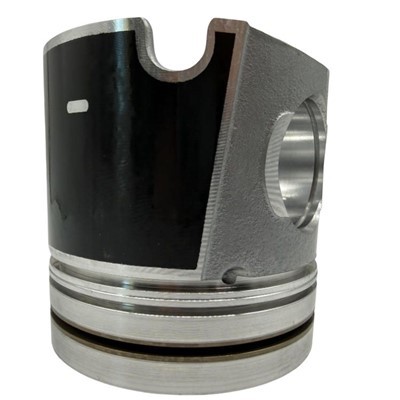
At the end of the day, the best way to avoid piston damage is to keep up with routine checks: change your coolant, replace timing belts/chains on schedule, use the right octane gas, change your oil and filters regularly, and keep your engine’s temp in the normal range. But if you do need a replacement piston, we’ve got you covered. Whether you’re a mechanic working on a fleet, a shop owner, or a DIYer tackling an engine rebuild, reach out to us to talk through your needs, get the right part, and make sure your engine runs smooth for miles.
Caterpillar Piston References:
- Internal Combustion Engine Fundamentals, Heywood, J.B., McGraw-Hill, 1988
- Automotive Engine Rebuilding and Design, Gilles, T.D., Delmar Cengage Learning, 2006
- Piston and Ring Technology for Modern Engines, Society of Automotive Engineers (SAE), 2012
- Engine Overheating: Causes, Prevention, and Repair, Automotive Service Association (ASA), 2019
Hebei Yuwei Piston Co., Ltd.
As one of the most professional piston manufacturers and suppliers in China, we’re featured by quality products and good service. Please rest assured to buy customized piston made in China here from our factory. Also, quotation is available.
Address: Beizhujiacun Village, Sujiuzhuang Town, Ningjin County, Xingtai City, Hebei Province
E-mail: jack@ywpiston.com
WebSite: https://www.ywpiston.com/
