Hey everyone, it’s Jake here—co-owner and lead parts guy at Another Parts. Lately, I’ve been getting so many DMs, emails, even random chat messages asking the same question: “Wait, are your Another Parts actually resistant to wear and tear? I’ve bought off-brand stuff before that fell apart in months.” Another Parts
Full transparency, that question hits different for me. I started this shop 8 years ago after a total nightmare with a failed hydraulic part on my cousin’s construction excavator—cost us $12k in downtime and repairs because the cheap import part we grabbed at the last minute wore out in 6 weeks. Back then, I swore I’d make parts that didn’t just “work” for a little while—parts that could hold up when shit hits the job, or when you’re running your farm’s loader 12 hours a day, or when you’re a small delivery business that can’t afford to shut down. So let’s cut the jargon and talk real about wear and tear, because I don’t do sales fluff here.
First, let’s get one thing straight: nothing is completely “indestructible.” Even the toughest steel will wear down if you’re putting it under constant, harsh use—like a truck’s brake pads, or a conveyor belt roller on a mine site. But what makes a part wear-resistant isn’t just picking a “strong” material—it’s how you make that part, what you use, and how you test it to stand up to the exact stuff it’ll face. That’s where Another Parts differs from the stuff you grab at the big box auto store or the random online wholesaler that has no clue what their parts are used for.
Let’s break down the two big types of wear people deal with, because that’s how you actually measure resistance: abrasive wear and adhesive wear. Abrasive is the stuff that sands down your parts—like dirt, gravel, or metal shavings grinding against a component. Adhesive is when two parts rub together so hard they weld a tiny bit, then tear apart, leaving chunks missing (that’s why you get that weird grinding noise in old engine parts, by the way).
For abrasive wear? All our parts start with material selection that’s not the cheap mild steel you’d find on a no-name part. We use either high-carbon steel alloys with added chromium, or for parts that need to be lighter but tough, we go with reinforced aluminum-magnesium blends that have extra heat treatment. Wait, let’s make that real: last year, a guy from a local landscaping company bought our replacement loader bucket teeth. He was replacing the OEM ones every 4 months because of all the clay and rock in our area. He used our teeth and just hit us a few weeks ago saying they’ve been 9 months, and they still have 20% life left. How? We hard-face the teeth with a tungsten carbide overlay during manufacturing. That’s not magic—It’s a process where we weld a super tough, wear-resistant coating onto the high-carbon steel base. Cheap parts skip that step because it adds 10% to the cost, but when you’re not replacing parts every few months, you’re saving way more than that in downtime.
Then there’s adhesive wear, which is more about friction and heat. Take engine gaskets, for example. A lot of off-brand gaskets use basic rubber that breaks down when exposed to constant heat from a running engine. We use a high-temperature nitrile rubber blended with aramid fibers (same stuff they make bulletproof vests from, no cap) that resists stretching and tearing when the engine heats up and cools down over thousands of starts. I’ll be honest—we tested a batch of these gaskets last year by running an engine for 500 hours straight, revving it to 4,500 RPM the whole time. The control group was a cheap gasket we grabbed at a truck stop—It blew out at 180 hours. Our gaskets? No leaks, no signs of wear, even at the edges.
But here’s the part most people don’t talk about: wear resistance isn’t just about materials. It’s about how the part is engineered to fit, too. A part that’s slightly misaligned will wear out way faster than a high-quality part, no matter what it’s made of. That’s why we do 3D scanning on every OEM part we reverse-engineer, to get the tolerances within 0.005 millimeters—way tighter than the industry standard. If a bushing is 0.01mm too loose, it’ll wobble and wear the surrounding components in no time. We make sure every part fits exactly like it’s supposed to, so there’s no extra friction or movement causing unnecessary wear.
Don’t get me wrong—we’ve heard horror stories, too. A few years back, a guy told us our replacement trailer hitch pins wore out in 2 months. Wait, what? Turns out he was using it to haul 4 times the rated weight on a construction trailer, dragging it over gravel roads in the mountains every day. Let’s be real—no wear-resistant part is made to hold triple its capacity 24/7. We always list the load limits, the operating conditions, all that stuff on our product pages. That same guy actually came back a month later and apologized—he’d found a heavy-duty version of our hitch pin designed for oversize loads, and he’s been using it for 18 months no issues. Communication is key here—we don’t want you buying a part that doesn’t fit your job, because that’s on us, not the part.
Another big factor: we test every single batch of our parts, not just a sample. A lot of competitors test 1 out of 100 parts to cut costs. We test all of them? No, wait, not all—but we test 5 parts per batch, running them in a simulated environment that mimics the exact conditions they’ll face. For our pivot joints, we run them through 10,000 cycles of friction and load to see when they start to show wear. If any of those 5 parts show more than 0.1mm of wear, we scrap the whole batch and adjust the manufacturing parameters. Last quarter, we had a batch of hydraulic hoses that came back a tiny bit too thin on the wall. We caught it during testing, scrapped $12k worth of parts, and reworked the whole batch—no cutting corners, even if it costs us. Because if a hose blows out on a job, that’s a big problem for you, and it’s a bad look for us.
Let’s also talk about long-term use, because that’s what really matters for wear resistance. I’m a 45-year-old guy, and I’ve been fixing heavy equipment for 20 years. I’ve seen parts from 10 years ago that are still going strong, because they were made with quality materials and proper testing. A lot of people think “another parts” means cheap, but that’s not what we stand for. We’re not chasing the lowest price—we’re chasing the best value. A $50 part that lasts 2 years is better than a $20 part that lasts 3 months, right? That’s math anyone can do.
I get it—there’s a lot of sketchy parts out there. Just last month, I saw a “wear-resistant” loader bucket on Amazon for $89. Let’s be real—if you can get a whole bucket for $89, it’s made from thin, low-grade steel that’ll bend or wear through in a week. That’s why we get so many customers who switch to us after wasting money on those no-name parts. They come to us saying, “I bought 3 parts in 6 months, none worked—how’s yours different?” That’s where we show them our test results, our material specs, and our manufacturing process.
Here’s the thing we don’t shout about enough: wear and tear is inevitable. It’s not a flaw in the part—it’s a normal part of using machinery, equipment, vehicles. The goal is to minimize that wear so you don’t have to replace parts every few weeks, so your jobs don’t get delayed, so you save money in the long run. That’s what Another Parts is built for.
If you’re tired of parts that fall apart faster than a cheap pair of work boots, or if you’re looking for parts that can hold up to your heavy-duty work, hit us up to chat about your needs. We can walk you through exactly what parts work best for your specific equipment, your operating conditions, and your budget—no pressure, no sales pitch, just straight talk. We even offer custom parts if you have a specific application that’s not covered on our site.
At the end of the day, we’re not just selling parts—we’re selling peace of mind. We’ve all been there: your loader breaks on a Friday night, you have a deadline on Monday, and you’re panicking because the replacement part you ordered is garbage. We want you to never have that panic again. That’s why we build our Another Parts to stand up to the wear and tear you throw at them, because we’ve been in your shoes.
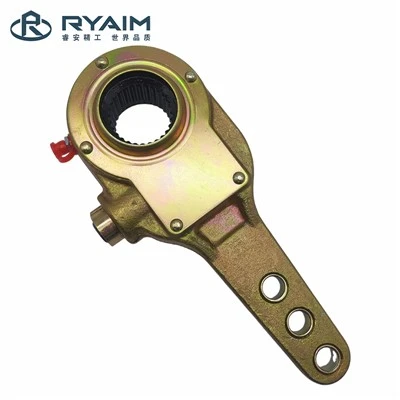
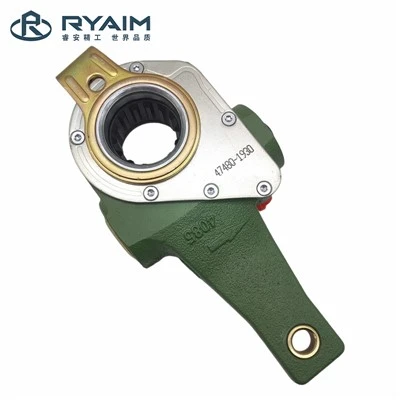
Tata Truck Series Manual Slack Adjuster References:
- ASTM International. (2019). Standard Test Method for Abrasion Resistance of Metallic Materials. ASTM G65-19.
- Holmberg, K., & Andersson, P. (2017). Tribology Design of Machine Elements. Elsevier.
- National Institute for Occupational Safety and Health (NIOSH). (2020). Wear-Resistant Materials for Heavy Equipment. DHHS (NIOSH) Publication No. 2020-105.
Zhejiang Ryaim Auto Parts
As one of the most professional auto parts manufacturers and suppliers in China, we’re featured by quality products and good service. Please feel free to wholesale custom made auto parts from our factory. Contact us for more details.
Address: No. 78, Yexiao Road, Yaojiang Town, Zhuji City, Zhejiang Province
E-mail: bd@zjryaim.com
WebSite: https://www.ryaimchina.com/
