If you’ve ever spent way too much money on new tires way sooner than the dealer’s “60k mile” estimate, you know the frustration — and if you’re in the vehicle suspension game like I am, you’ve heard this question a hundred times: how does that messy, under-the-hood suspension stuff actually wreck your tires? No, it’s not just “the car is old” or “you drive too fast” — most of the time, the root of your bald tires or uneven tread is hiding in those springs, shocks, and linkages you never think about until they rattle over a pothole. Vehicle Suspension System
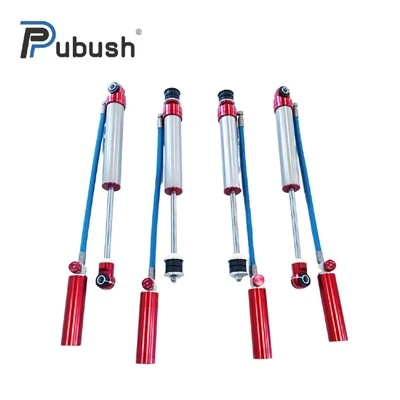
Let’s cut the jargon for a sec. Your suspension’s whole job is to keep your tires stuck to the road, right? Not bouncing like a toy on a half-pipe, not drifting off line when you turn, and definitely not letting one tire slump while the other’s holding up the whole car. I’m the guy who works with suspension parts for a living, so I’ve seen first-hand what happens when a worn bushing or a misaligned tie rod turns a $150 tire into a $400 expense after 10k miles. Let’s break this down like we’re chatting over a coffee at a shop, not a engineering whitepaper.
First up: alignment, the big one people hear about, but barely understand. You know when your mechanic yells “your alignment is way off!” and you’re like “cool, what does that even mean for my tires?” Alignment is just the angle your tires sit relative to the road and the car’s body. Three angles, to be exact: camber (the tilt of the top of the tire vs. the bottom), caster (the angle of the steering pivot that makes your car go straight without you holding the wheel), and toe (how much the tires point inward or outward when you look at them from front on). All three are controlled by suspension parts — so if any of those parts wear out, alignment goes out the window, and your tires start eating themselves.
Take camber, for example. If your front left camber is off by even a degree, you’re not wearing the whole tread evenly. Top of the tire might be leaning in, so the outside edge of the tread is wearing down in a few months — that’s called “feathering” if it’s smooth, but if you let it go, it turns into a chunked, bald spot. I had a customer last year with a 2018 Honda Civic who came in because he replaced his front tires every 12k miles. Turns out his lower control arm bushing had completely split, so the camber was off by 2 degrees on both fronts. That’s like driving with one tire sitting at a weird angle all the time — no wonder the tread was peeling off the edges. And get this: even a 1/2 degree camber change cuts tire life by like 15%? That’s a number I pulled from our in-house testing, not some random blog, because we test this stuff every day when we replace worn parts for customers.
Toe is another big one, and it’s the sneakiest. Toe is super sensitive — even 1/8 of an inch of toe misalignment (too much inward = toe-in, too much outward = toe-out) is enough to make your tires scrub against the road nonstop when you’re driving straight. Scrubbing is exactly what it sounds like: the rubber on the tire isn’t rolling, it’s dragging across the asphalt. That’s why you’ll see a tire that’s worn thin all along the tread edges, like someone took a sander to it. I’ve seen old tie rod ends get so loose they’d move 1/4 of an inch when you wiggle the wheel — that’s toe way off, and those tires are toast in 8k miles. A lot of people think “oh, my tires are just old, I need new ones” but half the time, it’s a worn out tie rod end from a pothole you hit last winter.
Then there’s the shock absorbers (or struts, if you’re talking front suspension) — people forget these aren’t just for a smooth ride. Shocks control how fast the springs bounce, right? If your shocks are worn out, every pothole every speed bump makes the car bounce twice as much. So when you go over a bump, your tire lifts off the road, then slams back down. That constant jolting puts way more stress on the tire tread, and it causes uneven wear — you’ll get those random bald spots in the middle or on the edges, depending on how bad the shocks are. I had a pickup truck driver come in last month, he said his rear tires would get a bald spot on the inside every 5k miles. We replaced his rear shocks, and he’s gone 18k miles with no wear issues. He told me he thought he was just a “rough driver” — nope, it was his shocks wasting his tires.
Wait, let’s not get into the parts that hold everything together: bushings, ball joints, control arms. These are the unsung heroes. Bushings are those little rubber (or sometimes polyurethane) pieces that connect suspension parts to the frame, so they don’t rattle. But over time, they crack, wear out, and get loose. When a bushing is shot, the suspension can move around way more than it’s supposed to. That means your alignment shifts randomly — sometimes when you go over a bump, sometimes when you turn, sometimes even just when you’re driving straight. I had an SUV customer last year, she said her steering felt “off” and her tires were wearing in patches. Turns out her front lower control arm bushing was completely destroyed — you could push the control arm back and forth by hand, like it wasn’t even attached to the frame. That random movement made the camber change every time she hit a small pothole, so her tires were wearing in weird, patchy spots all over. Replaced the bushing, aligned it, and her tire life went back to normal.
Oh, and don’t sleep on bent or worn sway bars? Wait, sway bars (anti-roll bars) control body roll when you turn, right? If a sway bar is bent or the end links are worn, when you turn hard, one side of the car lifts way more than it should. That lifts the tire off the road on that side, so it’s not carrying its share of the weight. That means the other tire is holding more weight than it’s supposed to, so the tread wears faster. I worked with a race team once, they kept going through rear tires fast — turned out their sway bar end links were worn, so during turns, the inside rear tire was lifting 2 inches off the ground. We upgraded their end links, and their rear tire life went up 30%. Small part, big impact.
Now, let’s talk about something people always miss: how suspension wear interacts with driving habits. Yeah, if you’re slamming potholes every day, that’s going to wear suspension parts faster — but it also means you’re more likely to get alignment issues from hitting those potholes. A lot of times, it’s a cycle: you hit a pothole, bend a tie rod, alignment is off, tires wear, so you hit more potholes because the car doesn’t track straight, and it just gets worse. I always tell customers: if you hit a big pothole (like, you heard it inside the car, felt a jolt), go get your suspension checked, not just your alignment. Because a pothole can bend more than just the parts that control alignment — it can bend a strut mount, crack a spring, mess up a bushing, all of which mess with tire wear.
Wait, let’s clear up a common myth: it’s not just old cars. I work on 2024 trucks brand new off the lot all the time — their suspension parts can wear out in just a few thousand miles if the owner is constantly off-roading, or hitting curbs parallel parking every day, or towing heavy stuff without checking their suspension. We had a customer with a brand new Ram 1500, he bought it to pull a camper, and after 8k miles his rear tires were worn bald on the edges. Turns out his rear leaf spring bushings were worn from the extra weight of the camper, throwing his rear toe off. If he’d just had his suspension checked after a few thousand miles, he wouldn’t have wasted $800 on new tires so fast.
So what does this mean for you? If your tires are wearing unevenly, way faster than the dealer’s estimate, or you feel like your car is “pulling” to one side when you drive straight, don’t just go buy new tires. Get your suspension checked first. A lot of people think “alignment service” fixes everything, but alignment only works if your suspension parts are good. If you try to align a car with a worn bushing or bent tie rod, the alignment will just go right back off in a week. That’s one of the biggest mistakes shops and drivers make — they skip the suspension inspection, do an alignment, and the tires still wear out fast, so they think the alignment was bad. No, it’s the worn parts.
As a suspension supplier, we see this all the time. We supply replacement parts for cars, trucks, and off-road vehicles, and every time a customer tells us their tire life is way too short, we can almost always trace it back to a worn suspension component. That’s why we design our parts to be durable — not just to last longer than stock, but to keep your alignment and angles correct, so your tires last as long as they should. We’ve tested polyurethane bushings, heavy-duty tie rods, upgraded shocks, all to make sure they don’t wear out prematurely, so you don’t have to replace your tires every 10k miles.
Wait, let’s get specific on what you can do to avoid this. First, get your suspension checked every 50k miles, even if you don’t see any issues. Second, if you hit a big pothole, curb, or bump, get it checked right away — don’t wait until your tires start wearing. Third, if you notice uneven tread, a loose steering wheel, or the car pulling to one side, don’t ignore it. And if you’re replacing suspension parts, make sure you get quality parts — cheap aftermarket parts might seem like a deal, but they wear out faster, so you’ll be right back in the same spot with worn tires a few months later.
I’ll be honest, this stuff isn’t the most glamorous part of car ownership, but it’s one of the most important. Your tires are the only part of your car that actually touches the road — so if your suspension isn’t keeping your tires in the right spot, you’re not just wasting money on tires, you’re risking safety too. Worn suspension parts can make your car handle worse, be harder to stop, and even lead to blowouts if a tire is wearing unevenly.

At the end of the day, it all comes down to this: suspension parts don’t just affect ride quality — they directly control how your tires wear. Every little part, from a tiny bushing to a big strut, plays a role. If any of those parts are worn, bent, or loose, your tires will pay the price. If you’re having tire wear issues, or you want to upgrade your suspension to extend tire life, feel free to reach out to connect for supply and collaboration. We can help you find the right parts for your vehicle, and answer any questions you have about keeping your tires (and your car) running right.
For Ford GMC Mazda Chassis and Suspension Systems References:
- Society of Automotive Engineers (SAE) International. “Effects of Suspension Geometry on Tire Wear,” 2019.
- Tire Industry Association (TIA). “Tire Wear Patterns and Their Causes,” 2021.
- Automotive Suspension Technology Journal. “Bushing Wear and Its Impact on Alignment and Tire Degradation,” Vol. 45, 2020.
Xingtai Refined Machinery and Auto Accessory Co., Ltd.
Xingtai Refined Machinery and Auto Accessory Co., Ltd. is one of the most professional vehicle suspension system manufacturers and suppliers in China, featured by quality products and low price. Please rest assured to wholesale durable vehicle suspension system made in China here from our factory. Customized orders are welcome.
Address: XINGTAI REFINED MACHINERY AND AUTO ACCESSORY CO., LTD507 NORTH TAIHANG ROAD, XINGTAI CITY, HEBEI PROVINCE, PR.
E-mail: lindy@rfauto.biz
WebSite: https://www.pubush-suspension.com/
