Hey there! If you’ve ever stood in front of a sleek storefront, a modern shower enclosure, or a curved phone screen that bends just right, you’ve probably interacted with curved tempered glass without even thinking about it. As a curved tempered glass supplier, I get asked a ton of questions about this stuff—most of the time, it’s about how it holds up, especially since it’s not just flat glass bent into shape. One question I get more than any other is: how does the thickness of curved tempered glass actually affect its strength? Let’s break this down like we’re chatting over a coffee, no stuffy textbook jargon here. Curved Tempered Glass
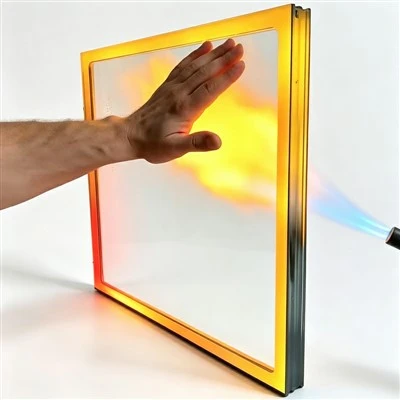
First off, let’s get one thing straight: curved tempered glass isn’t just regular glass with a bend added after it’s made. It goes through a specific process—heating glass to super high temps (like over 600°C, way hotter than your oven gets) then cooling the surface really fast with jets of cold air. That rapid cooling makes the outer layers compress, while the inside stretches, creating internal stresses that make it way stronger than untempered glass. It also means if it does break, it shatters into tiny, safe little pebbles instead of sharp shards. The curve itself plays a role in strength too, but today we’re zeroing in on thickness—trust me, it’s way more important than you might think.
Let’s start with the basics of thickness and strength in general. For most materials, thicker = stronger, right? But with curved tempered glass, it’s a bit more layered (pun totally intended, sorry not sorry) because the thickness works with that tempering process and the curve’s structural load. Let’s use a real-world example everyone gets: a shower door. If you’ve ever leaned hard against a thin curved shower door (say, 6mm thick), you might’ve noticed a little flex—enough to make you worry it’ll snap. A 10mm curved shower door? That barely budges when you lean on it, even if you step on it (don’t test that at home, though). That’s thickness doing its thing, but let’s get into why that happens with tempered glass specifically.
When glass is tempered, the compressive stress on the surface and tensile stress in the core get amplified with thickness. Thicker glass has more material to distribute those stresses, so when something pushes on the curve (like a foot kicking a storefront sign or a shower curtain swinging into the door), the stress doesn’t get concentrated in one tiny spot. Think of it like a pizza: a thin crust bends and breaks if you put too many toppings on one spot, but a thick, hand-tossed crust holds all the toppings evenly without cracking. Same energy here.
Wait, but what about the curve matching the thickness? If you need a super sharp curve (like a curved phone screen or a small awning over a store entrance), you can’t just use 12mm glass—thin glass bends easier, right? So for curved glass with a tight radius (how sharp the curve is), thickness has to align with that bend to keep strength up. For example, a curved phone screen needs to be thin (usually 0.5mm to 2mm) to bend smoothly, but manufacturers temper it extra carefully to make sure it doesn’t end up too fragile. On the flip side, a big, gentle curve like a stadium canopy or a curved facade on a skyscraper can use thicker glass (8mm to 15mm) because the bend is shallow, so there’s no risk of it cracking from the curvature stress. That’s a balance we have to nail every single day at my shop—too thick for a sharp curve, and the glass will crack while bending; too thin for a gentle curve, and it’ll buckle under wind or snow load.
Let’s talk real-world failures I’ve seen over the years, because that’s the stuff that sticks. A few years back, a local café ordered a curved tempered glass storefront with 4mm thickness. They loved how sleek it was, but within six months, a gust of wind from a thunderstorm pushed a section in and cracked it. When we inspected it, the issue was twofold: the 4mm was too thin to handle the wind load for that curved span, and the gentle radius of the curve meant the stress wasn’t distributed enough. We swapped it out for 8mm curved tempered glass, and they haven’t had an issue since. On the flip side, I once worked on a custom curved railing for a luxury home that had a really tight curve (radius of just 30cm). The client initially wanted 10mm glass, which we warned them would be too thick to bend cleanly—it would’ve cracked during the tempering process. We went with 6mm, tempered extra precisely to keep the curve smooth, and it’s held up perfectly for three years now. That’s the sweet spot thickness needs to hit, and it’s all tied to how curved the glass is and what it’s being used for.
Another point: thermal stress. Curved tempered glass gets used in places with big temperature changes, like patios, kitchen backsplashes, or car windows. Thinner glass heats up and cools down faster, right? So if you have a curved patio table top made of 4mm glass, on a hot sunny day it might expand, and if a sudden cold rain hits it, that rapid temperature change can create stress that makes it crack. Thicker glass has more thermal mass—meaning it takes longer to heat and cool—so the internal stresses from temperature swings are more gradual. That’s why car side windows (which are curved and get hot in the sun) are usually 5mm thick, while the rear windshield is thicker at 6mm to handle more thermal load. I’ve had a few clients come to us with cracked curved patio glass that was too thin, and the fix was bumping up the thickness just a little to handle those temperature changes.
Wait, let’s clear up a common myth I hear all the time: some people think thicker tempered glass is always stronger, no matter the curve. Nope, not true. If you take a piece of 12mm glass and try to bend it into a super sharp curve (radius under 50cm), the material will have trouble conforming evenly. The tempering process requires the glass to heat uniformly, and if the bend is too tight, the outer edges might cool too fast while the center is still warm, leading to uneven stress and weak spots. So thickness and curve radius have to work hand in hand. The formula we use at my shop is something like: for every 1mm of thickness, the minimum curve radius should be around 100mm—give or take, depending on the application. So a 5mm glass can have a curve as sharp as 50cm, a 10mm glass needs at least a 1m radius, and that keeps the strength consistent. That’s not just a rule I made up, either—we test every batch with load and stress tests before it leaves our warehouse, so we know that works.
Let’s get into the science a little more, but keep it casual. When you bend glass, the outer surface of the curve is in tension (pulled apart) and the inner surface is in compression (squeezed together). Untempered glass is super weak in tension—even a tiny pull on the outer curve makes it snap. But tempered glass has that built-in compression on the outer layer, which cancels out the tension from bending. The thicker the glass, the more volume that outer compression layer has, so it can handle more tension from the curve or external force. But if the glass is too thin, that compression layer is tiny, so even a small tension force will break through it. That’s why a 4mm curved glass can handle a 5kg load, but an 8mm can handle 15kg—simple math, but it’s all tied to that thickness and the tempering’s stress layers.
I also want to mention edge quality, because that’s a big one tied to thickness. When glass is cut and bent, the edges are the weakest points—they have tiny micro-cracks that can turn into big breaks if stressed. Thicker glass has larger edges, so we have to polish them extra well to get rid of those cracks. If we don’t polish the edges of a thick curved glass, the edge will break before the rest of the glass, no matter how thick it is. That’s a step we never skip here—every curved tempered glass we ship has edges polished smooth and sealed to prevent those micro-cracks. For thinner glass, the edges are smaller, so even a quick polish works, but you still have to be careful not to over-polish and thin them out more than needed.
Let’s talk about different applications to make this real. If you’re getting a curved phone screen, you’re looking at 0.5mm to 2mm glass—super thin, but tempered with ion-exchange (a different process than regular tempering) to add extra surface stress, so it doesn’t scratch or break when you drop it. That thickness is perfect for the curve, and the ion-exchange makes up for how thin it is. For a curved shower enclosure, you’ll see 6mm to 8mm—thick enough to handle water pressure, leaning, and the occasional shower door slamming, and thin enough to curve into a nice shape without looking bulky. For a curved commercial facade, it’s 10mm to 15mm—thick enough to handle wind, snow, and heavy foot traffic nearby, with a gentle curve that doesn’t put too much stress on the thickness. And for a curved awning over a restaurant door, maybe 8mm to 10mm—enough to hold up under rain and snow, with a curve that directs water away, while being strong enough to not crack from a falling branch or something.
I’ve had clients try to skimp on thickness to save money, and it almost always backfires. A few months back, a general contractor ordered 5mm curved glass for a storefront that needed to be 3m wide and have a gentle curve. We warned them 5mm was too thin for that span—wind load alone would be too much—but they went with another supplier who offered it cheaper. Within a month, a panel cracked in a wind storm, and they had to pay to replace it, plus cover the lost revenue from the store being closed while we fixed it. Thickness isn’t just about strength—it’s about durability, and saving a few bucks now will cost you way more later.
Now, if you’re in the market for curved tempered glass, how do you pick the right thickness? It’s not just about going thickest—you need to consider three things: the curve radius (how sharp or gentle the bend is), the load it has to handle (wind, water, people leaning, etc.), and the environment (hot, cold, humid, etc.). That’s where a good curved tempered glass supplier comes in—we don’t just sell you glass, we help you figure out what thickness works for your specific project. For example, if you’re building a curved shower, we’ll ask how big the enclosure is, how often it’s used, and if there are kids or pets to make sure we get the right thickness. If you’re doing a custom furniture piece, we’ll ask about the curve and what it’s holding up.
At the end of the day, the thickness of curved tempered glass is a balancing act—between the tightness of the curve, the forces it will face, and the tempering process that makes it strong. Too thin, and it’ll flex, crack, or break under load. Too thick, and it won’t bend evenly, leading to weak spots or even cracking during production. It’s not a one-size-fits-all thing, which is why working with someone who knows this stuff (like us) makes all the difference.
If you’re planning a project that needs curved tempered glass—whether it’s a storefront, shower, railing, furniture, or anything else—hit us up to chat through your needs. We’ll walk you through thickness options, curve specs, and make sure you get glass that’s strong, durable, and exactly what you need. No sales pitch, just real advice from someone who’s been doing this for years and has seen what works (and what doesn’t).
Fire Rated Glass References:
- Glass Structures & Engineering Handbook, 2nd Edition, International Association for Bridge and Structural Engineering
- Tempered Glass Technology and Applications, Glass Processing Magazine, 2022 Issue 4
- AS 1288:2021 Glass in Buildings – Selection and Installation, Australian Standards
- Curved Glass Design and Performance, Journal of Architectural Engineering, Volume 18, Issue 3, 2012
Suzhou Dingcheng Tempered Glass Co., Ltd.
As one of the most professional curved tempered glass manufacturers and suppliers in China, we also support customized service. We warmly welcome you to wholesale high quality curved tempered glass made in China here from our factory. If you have any enquiry about free sample, please feel free to email us.
Address: No.777 Limin North Road, Lili Town, Wujiang District, Suzhou City, Jiangsu Province
E-mail: Dingchengglass@163.com
WebSite: https://www.dingchengglass.com/
