If you’ve ever worked in the WPC (Wood-Plastic Composite) manufacturing space, you’ve probably found yourself staring at a pile of finished profiles, thinking: “One batch is lighter, feels softer under pressure, and the next is dense, rigid, and almost heavy enough to double as a structural piece.” As a WPC Profile Machine supplier, this is one of the most common questions I get from factory owners, project managers, and even small-scale operators looking to expand their product lines: Can a WPC profile machine actually produce profiles with different densities? The short answer is yes—but the “why” and “how” is where most people get stuck. Let me walk you through what I’ve learned over 12 years of working with these machines, troubleshooting lines, and helping clients shift from a single-density product to a full range of offerings. WPC Profile Machine
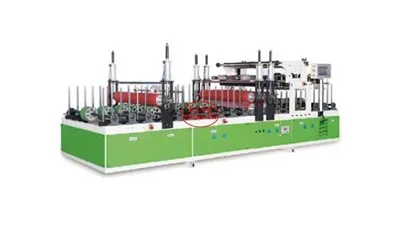
First, let’s ground this in what WPC density even means. Density here isn’t just a random number on a spec sheet—it’s a direct result of how much wood fiber, plastic resin, and additives you cram into a fixed space, and how that mix is processed through the machine. Most people assume density is set once when you first run a line, like a radio tuned to one frequency forever. That’s not true, and that’s the secret to why one machine can handle multiple densities. Let’s break down the core components that control density, because if you understand these, you won’t just get a “yes” answer—you’ll know how to do it yourself.
The feed system is the starting line for density control. Every WPC mix is a powder or granular blend of wood fiber (usually 40-70% of the total mix, depending on the product), thermoplastic resin (polyethylene, polypropylene, or PVC, most common), coupling agents, colorants, and sometimes foaming agents. The feed system’s job is to meter each of these components at a precise ratio. Here’s the trick: if you keep the total output of the machine the same, a higher plastic-to-wood ratio will make a denser profile, and a lower ratio (or adding a foaming agent) will make a lighter, less dense one. Wait, but I’ve had clients tell me they tried changing ratios and their profiles warped or fell apart. Why? Because they didn’t adjust the other parts of the machine to match the new mix. That’s where experience comes in. For example, a client of mine in Ohio, a guy named Mike who runs a small decking factory, came to me three years ago saying his line only made heavy, dense decking that was too expensive to ship to distant projects. He wanted a lighter, floating-decking profile to add to his line. We adjusted his feed system to cut his wood-fiber content from 65% to 50%, added 1.2% of a nitrogen-based foaming agent, and kept his total material feed rate the same. But we didn’t stop there—we had to tweak the next component: the twin-screw extruder.
The twin-screw extruder is where the blend gets melted, mixed, and pushed through the die. Density changes here come down to shear rate and temperature. Shear is how much the screws knead the molten mix. If you’re making a low-density foamed profile, too much shear will pop all the tiny air bubbles you created with the foaming agent, leaving a dense, uneven product instead of a light, stiff one. Conversely, a high-density rigid profile needs enough shear to fully melt the plastic and distribute the wood fiber evenly, so there are no gaps or voids that would lower density unexpectedly. Mike’s original extruder was set to 180 RPM for a dense decking, but for his floating deck, we dropped the screw speed to 120 RPM, and adjusted the temperature zones along the barrel: lower temperatures in the mixing section to keep the foam bubbles intact, higher temperatures at the end to make sure the mix was fluid enough to flow smoothly through the die without getting stuck. That’s the part most machine operators miss—they think changing ratios is enough, but the extruder settings have to change with every density shift.
Next up is the die and the calibrator, the parts that shape the molten mix into the final profile. The die is a metal plate with a cutout of the exact shape you want—think a deck board, a window frame, a fence slat. The gap in the die’s opening, and the pressure inside the die, directly affects density. For a high-density profile, you want slightly higher pressure in the die, because that squeezes the molten mix tightly together, pushing out any extra air and making the material as compact as possible. For low-density foamed profiles, you actually want a bit of pressure drop at the die exit, so the foaming agent can expand into tiny, uniform air bubbles. Calibrators are the water-cooled metal frames that pull the profile out of the die and hold its shape as it cools. If you’re making a low-density profile, you need to slow down the pull speed a little, because if you pull the material too fast, the bubbles won’t have time to set, and the profile will collapse into itself, becoming denser than intended. Mike’s original pull speed was 15 meters per minute for his dense deck. For his foamed floating deck, we dropped it to 11 meters per minute, and adjusted the calibrator cooling temperature—warmer at the inlet to keep the mix flexible enough to expand, cooler at the outlet to set the bubbles before they can pop.
Wait a second—so does that mean every WPC profile machine can make different densities? No, not exactly. The key here is the machine’s flexibility, not just its basic function. A cheap, entry-level WPC machine with a fixed feed system and no adjustable extruder zones can’t switch densities easily—its components are designed for a single mix. But a mid-to-heavy-duty line, the kind we build, has the modular parts to adjust each of these variables on the fly. Let’s test this with a real example: last year, a client in Germany that makes WPC window frames reached out to us. They wanted two products: a dense, structural window frame that could hold heavy glass, and a lighter, trim piece for around the windows, so they could use the same machine for both instead of running two separate lines. We walked them through the changes. For the structural frame, we set their feed ratio to 60% wood fiber, 38% PVC resin, no foaming agent. Extruder speed was 170 RPM, die pressure set to 15 bar, pull speed 12 m/min. Density of that frame: 1.12 g/cm³, which is rigid enough for structural use. For the trim piece, we adjusted feed ratio to 52% wood, 45% PVC, added 0.8% foaming agent, extruder speed 110 RPM, die pressure 9 bar, pull speed 14 m/min. Density here was 0.85 g/cm³—light, easy to install, and perfect for trim. They now run both products on the same line, no downtime between batches, and their production costs dropped by 22% because they don’t need two separate lines. That’s the proof it works, but it takes the right machine and the right adjustments.
I’ve also seen mistakes that make people think their machine can’t do multiple densities. A few years back, a client in Texas called me in a panic, saying their WPC profile machine was producing “fluctuating density” batches—some boards were too light, some too dense. Turns out, their feed system was calibrated for a single mix, and when they tried switching to a slightly different color additive, they didn’t adjust the metering screws, so the resin ratio was off by 5% in some batches. The other mistake? They were running too fast through the calibrator, so the foam bubbles in their low-density boards were only setting halfway, leading to inconsistent density. That’s not a machine flaw—it’s a lack of understanding of how the process changes with density.
So what are the limits here? You can’t go from a structural, high-density profile (1.15 g/cm³) to a foam core profile (0.5 g/cm³) on the same line in an hour, but you can switch between densities that are within a reasonable range, usually 0.7 g/cm³ to 1.15 g/cm³, without reconfiguring too much. The biggest benefit, beyond product variety, is reduced waste and lower overhead. If you’re running a small factory, buying one flexible line is way cheaper than buying two separate lines for different products. And for large factories, being able to adjust densities quickly means you can take on more jobs—high-density structural parts, low-density decorative pieces, even custom profiles for specific client needs.
Let’s also talk about common use cases for multi-density WPC profiles, because that’s where the real value is. Decking is the big one: most people prefer dense, high-traffic deck boards for main floors, and lighter, less dense edge boards that don’t need to hold as much weight. Window frames: structural frames need to be dense to resist wind and load, while sills and trim can be lighter, cutting material costs. Fencing: heavy, dense posts and rails for the main structure, lighter slats that are easier to install. Even furniture parts: dense table legs, lighter cabinet panels. All of these can be made on the same WPC profile machine, as long as it’s set up for density control.
Now, I want to be clear: this isn’t a “set it and forget it” process. Every time you switch densities, you need to test the first few meters of the profile to check density with a basic density meter, look for voids, and make sure the shape is consistent. It’s not complicated, but it does require a basic understanding of the process, which is why we offer on-site training for all our clients. We don’t just sell a machine and walk away—we teach your operators how to adjust feed ratios, extruder settings, and pull speeds to get the exact density you need for every product.
I’ve spent 12 years in this industry, and the biggest misconception new operators have is that WPC is a one-size-fits-all product. It’s not. WPC is a composite, which means you can tweak every part of the recipe and process to get exactly what you want: rigid, lightweight, flexible, water-resistant, whatever your customer needs. The WPC profile machine is the tool that makes that possible, but only if you understand how to adjust its components to control density.
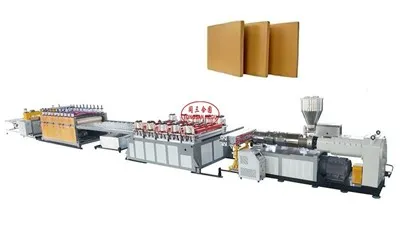
If you’re currently running a WPC line that only produces one density, or you’re thinking about expanding your product line to offer more WPC products without buying a new line, I can help. We design and build WPC profile machines that are flexible enough to switch between densities easily, with the support and training to make the process smooth, no guesswork needed. You don’t have to waste time or money on multiple lines when one well-built, flexible line can give you all the density options you need to grow your business. If you’re ready to talk through your specific product needs, I’m here to help you find the right setup for your factory.
Double Wall Corrugated Pipe Machine References
Klyosov, A. A. (2007). Wood-Plastic Composites. Wiley.
Mengeloglu, F., & Bataille, P. (2010). Extrusion of Wood-Plastic Composites: Process and Technology. Carl Hanser Verlag.
ASTM D792-13, Standard Test Method for Density and Specific Gravity (Relative Density) of Plastics by Displacement. ASTM International.
Qingdao Tongsanhegu Plastic Machinery Manufacturing Co., Ltd.
With abundant experience, we are one of the most reliable wpc profile machine manufacturers and suppliers in China. We warmly welcome you to buy durable wpc profile machine for sale here from our factory. Quality products and reasonable price are available.
Address: West of Xixinzhi Village, Sanlihe District Jiaozhou, Qingdao City, Shandong Province, China
E-mail: info@tongsanhegu.com
WebSite: https://www.tongsanhegumachine.com/
