As a supplier of Transformer Winding Deformation Testers, I am often asked whether our testers can be used for transformers with special structures. This is a crucial question, as special – structured transformers, such as those with non – standard winding configurations, unique core designs, or special insulation materials, are becoming more prevalent in various power systems. In this blog, I will delve into the capabilities of our Transformer Winding Deformation Testers in relation to transformers with special structures. Transformer Winding Deformation Tester

Understanding Transformer Winding Deformation
Before discussing the application of our testers to special – structured transformers, it’s essential to understand what winding deformation is. Transformer windings are subject to various mechanical and electrical stresses during their operation. These stresses can cause physical changes in the winding, such as displacement, buckling, or short – circuiting between turns. Winding deformation can lead to reduced insulation performance, increased losses, and even complete transformer failure.
Our Transformer Winding Deformation Testers are designed to detect these changes by analyzing the electrical characteristics of the windings. They typically use methods such as frequency response analysis (FRA), which measures the transfer function of the winding over a wide frequency range. Any deviation from the normal transfer function can indicate winding deformation.
Challenges with Special – Structured Transformers
Special – structured transformers present unique challenges for winding deformation testing. Firstly, their non – standard winding configurations may result in different electrical characteristics compared to conventional transformers. For example, a transformer with a multi – layer, interleaved winding structure may have a more complex frequency response than a simple single – layer winding. This complexity can make it difficult to establish a baseline for normal operation and to accurately detect deformation.
Secondly, special core designs can also affect the test results. Some transformers use cores with special materials or geometries to achieve specific performance goals. These cores can introduce additional electromagnetic coupling effects, which may interfere with the measurement of the winding’s electrical characteristics.
Finally, special insulation materials used in these transformers can pose challenges. Some insulation materials may have different dielectric properties, which can influence the electrical behavior of the windings. This can make it harder to interpret the test results and to determine whether there is actual winding deformation.
Capabilities of Our Transformer Winding Deformation Testers
Despite these challenges, our Transformer Winding Deformation Testers are well – equipped to handle transformers with special structures. Our testers are based on advanced algorithms and signal processing techniques that can adapt to different winding configurations and electrical characteristics.
Advanced Frequency Response Analysis
Our FRA technology is highly sensitive and can accurately capture the frequency response of even the most complex winding structures. The tester can operate over a wide frequency range, from a few hertz to several megahertz, allowing it to detect both low – frequency and high – frequency changes in the winding. This wide frequency range is crucial for detecting different types of winding deformation, as different types of deformation may manifest at different frequencies.
Customizable Testing Parameters
We understand that each special – structured transformer is unique. Therefore, our testers allow for customizable testing parameters. Users can adjust the test frequency range, the number of measurement points, and other parameters according to the specific characteristics of the transformer. This flexibility ensures that the test results are accurate and reliable for a wide range of special – structured transformers.
Expert Analysis Software
Our testers are accompanied by expert analysis software that can help users interpret the test results. The software has built – in databases of normal frequency responses for various types of transformers, including those with special structures. It can compare the measured frequency response with the baseline data and provide detailed reports on the possible causes of any deviations. This software also has the ability to perform trend analysis over time, which can be useful for monitoring the condition of the transformer and predicting potential failures.
Case Studies
To illustrate the effectiveness of our Transformer Winding Deformation Testers for special – structured transformers, let’s look at a few case studies.
Case 1: A Transformer with a Special Multi – Layer Winding
A power plant had a transformer with a multi – layer, interleaved winding structure. The plant was concerned about the possible winding deformation due to recent electrical faults. Our tester was used to perform an FRA test on the transformer. The test results showed a significant deviation in the frequency response compared to the baseline data. Further analysis using our expert software indicated that there was a displacement in one of the inner layers of the winding. The plant was able to take corrective action before the problem escalated, saving them from a potential transformer failure.
Case 2: A Transformer with a Special Core Design
A utility company had a transformer with a core made of a special magnetic material. The company wanted to ensure the integrity of the windings. Our tester was used to perform a winding deformation test. Despite the complex electromagnetic coupling effects introduced by the special core, our tester was able to accurately measure the frequency response of the windings. The test results showed that the windings were in good condition, providing the utility company with confidence in the transformer’s operation.
Conclusion
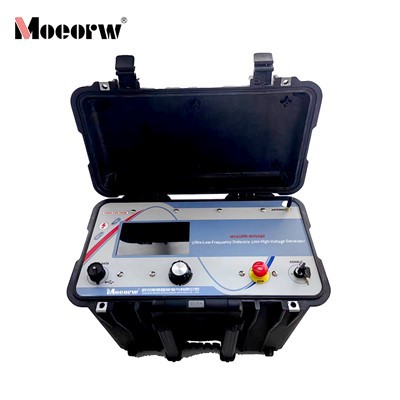
In conclusion, our Transformer Winding Deformation Testers are capable of being used for transformers with special structures. Our advanced technology, customizable testing parameters, and expert analysis software make it possible to accurately detect winding deformation in these complex transformers. Whether it’s a transformer with a non – standard winding configuration, a special core design, or unique insulation materials, our testers can provide reliable and accurate results.
Insulation Resistance Tester If you are dealing with transformers with special structures and are in need of a reliable Transformer Winding Deformation Tester, we are here to help. Our team of experts can provide you with detailed information and support to ensure that you choose the right tester for your specific needs. Contact us to start a procurement discussion and take the first step towards ensuring the safety and reliability of your transformers.
References
- IEEE Std C57.149 – 2012, IEEE Guide for the Application of Frequency Response Analysis for the Evaluation of Power Transformer Winding Deformation.
- CIGRE Technical Brochure 586, Frequency Response Analysis of Power Transformers – A Practical Guide.
Wuhan Moen Intelligent Electric Co., Ltd.
As one of the most professional transformer winding deformation tester manufacturers in China, we’re featured by quality products and good price. Please rest assured to buy high quality transformer winding deformation tester in stock here and get quotation from our factory. Customized orders are welcome.
Address: Building A, No.1, Fenghuangyuan 2nd Road, Donghu New Technology Development Zone, Wuhan, Hubei, China
E-mail: info@hvhipotsystem.com
WebSite: https://www.hvhipotsystem.com/
