If you’ve ever spent hours sifting through chemical catalogs, only to find that the exact amino acid sequence you need for your research, drug discovery project, or diagnostic assay doesn’t exist, you’ve run into the core problem custom peptide synthesis was built to solve. As a provider that’s worked alongside biologists, chemists, and biotech startups for over a decade, I’ve seen first-hand how generic, off-the-shelf peptides fall short when every base pair and amino acid in your sequence matters. Let’s break down what custom peptide synthesis actually is, why it’s not the same as buying a pre-made peptide, and how it fits into the work you do every day. Custom Peptide Synthesis
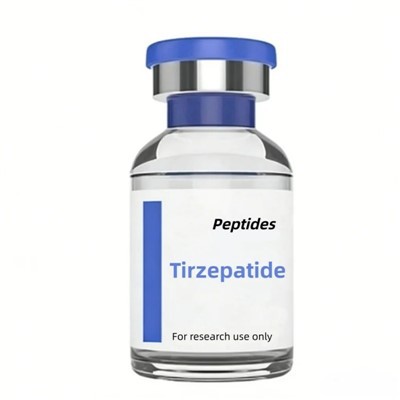
At its most basic, custom peptide synthesis is the laboratory process of chemically building short chains of amino acids (called peptides) with a specific, user-defined sequence, length, and set of modifications—all tailored exactly to your needs, not a one-size-fits-all catalog entry. Peptides are the workhorses of modern life science research: they’re used as antigens for antibody production, as drug candidates for small-molecule therapeutics, as diagnostic tools to detect biomarkers in patient samples, and as research reagents to study protein-protein interactions, enzyme function, and cell signaling pathways. But natural peptides, or even standard synthetic peptides from big chemical suppliers, rarely match the precise specifications required for cutting-edge work.
Let’s dig into how the process works, because that’s where a lot of the value of custom synthesis comes from. Most peptide synthesis today uses solid-phase peptide synthesis (SPPS), a method developed in the 1960s by Robert Merrifield that revolutionized the field and earned him a Nobel Prize. Unlike older solution-phase synthesis, which required purifying intermediate steps at every stage, SPPS anchors the growing peptide chain to a solid resin bead—think of it as a tiny, reusable scaffold that stays in place while you add each amino acid one at a time, in the exact order you want. Each step follows a simple cycle: first, you remove the protective group from the end of the last amino acid on the resin to make it reactive; second, you add the next protected amino acid in your sequence, which binds only to the unprotected end; third, you wash away any unreacted amino acids and byproducts; and fourth, you cap any remaining reactive sites to prevent unwanted side reactions down the line. When you’ve added every amino acid in your sequence, you cut the peptide off the resin, remove any remaining protective groups, and purify it to get a final product that’s typically 90% to 99% pure, depending on your order.
What makes custom peptide synthesis truly customizable, though, isn’t just the sequence of amino acids. It’s the ability to add modifications that natural peptides don’t have, which are often critical for your work. For example, if you’re developing a peptide drug that needs to resist breakdown by enzymes in the body, we can modify individual amino acids to make them more stable—like adding D-amino acids (the mirror image of the L-amino acids found in nature) or incorporating non-natural amino acids that don’t get recognized by proteases. If you need your peptide to bind to a specific label for imaging or detection, we can add biotin, fluorescent tags like FITC or Cy5, or even radiolabels at a position that won’t interfere with your peptide’s function. Another common modification is phosphorylation, which is essential for studying cell signaling pathways that rely on protein phosphorylation events, or amidation at the C-terminus, a modification that makes many peptides more biologically active. We can also make peptides of almost any length, from short 5-amino-acid sequences for binding studies up to 50 or 60 amino acids, which is much longer than most small-molecule drugs can realistically be synthesized for.
I’ve had countless conversations with researchers who think, “Why not just use a protein instead of a peptide?” That’s a fair question, but peptides have unique advantages for many applications. They’re cheaper and faster to produce than full-length proteins, easier to purify, and less likely to trigger unwanted immune responses in animal models or patients. For example, when a customer of mine was developing a new cancer vaccine, they needed a 15-amino-acid sequence from a tumor-specific protein to use as an antigen. A full-length protein would have been expensive, unstable, and would have contained many regions that weren’t relevant to their vaccine’s target. Custom synthesis let them produce exactly that 15-amino-acid sequence, with a modification to make it more stable in the body, at a fraction of the cost and time it would have taken to work with the full protein.
Another common use case for custom peptides is in antibody production. When you raise antibodies against a protein, you don’t need the entire protein—just a small, unique peptide sequence from that protein’s surface, which you inject into an animal to trigger an immune response. If you order a pre-made peptide from a catalog, it might not match the exact sequence you need (for example, if you’re working with a specific isoform of a protein that has a unique sequence), or it might have impurities that lead to non-specific antibodies that bind to other proteins. Custom synthesis eliminates that risk, because you control every step of the sequence, and we can purify the final product to remove any byproducts that would cause off-target binding.
I’d be remiss if I didn’t mention some of the common mistakes people make when ordering custom peptides, because as a supplier, I see these every week. First, many researchers don’t consider peptide purity, which is non-negotiable for most work. A peptide that’s only 80% pure might be fine for a quick initial screen, but for applications like in vivo animal studies or diagnostic assays, you need at least 95% purity, and often 98% or higher. Lower purity means your final experiment will have background noise, inconsistent results, and wasted time and money. Second, people often forget to specify modifications that are critical for their work. For example, if you need your peptide to bind to a metal for purification, or if it needs a specific charge to work in your assay, omitting that detail can lead to a product that doesn’t function as expected. Third, many researchers underestimate the time it takes to synthesize a custom peptide. Unlike a pre-made peptide that ships in 24 hours, custom synthesis takes anywhere from 3 to 10 business days, depending on the length, complexity, and number of modifications. If you’re on a tight deadline, it’s important to communicate that early so we can adjust our process to prioritize your order.
As a custom peptide synthesis provider, we don’t just ship a vial of powder and walk away. We work closely with every customer to make sure their product meets their exact needs. For example, a few months ago, a team at a university was developing a peptide-based inhibitor for a viral enzyme. They had a sequence that they’d tested in preliminary studies, but it was unstable in cell culture media. We worked with them to add a couple of D-amino acids at the termini of the peptide, which didn’t change its binding ability but made it 10 times more stable in cell culture. We also provided a sample of the modified peptide within 5 days, so they didn’t fall behind on their experiments. Another customer, a biotech startup developing a diagnostic test for Alzheimer’s disease, needed a peptide that would specifically bind to a misfolded form of the amyloid-beta protein, not the normal form. We synthesized their exact 12-amino-acid sequence, added a biotin tag for detection, and purified it to 99% purity, which was critical for their assay’s ability to distinguish between healthy and patient samples.
Now, you might be wondering: is custom peptide synthesis right for my work? Let’s say you’re a graduate student working on a protein-protein interaction study. You need a 20-amino-acid sequence from one protein to test its binding to another. Custom synthesis is perfect here. If you’re a pharmaceutical company developing a new peptide drug, you might need longer sequences, multiple modifications, and large-scale production—something we can handle with our scalable synthesis methods, which let us produce peptides in milligram to kilogram quantities for preclinical and early clinical trials. If you’re a clinical researcher developing a new diagnostic assay, you need a peptide that’s consistent, pure, and well-characterized, which custom synthesis provides far better than any pre-made product.
One thing I always tell new customers is that custom peptide synthesis isn’t just a commodity service. It’s a collaborative process, and the best results come when you communicate openly about your project’s goals, timeline, and budget. We can help you design your sequence, suggest modifications that will improve your peptide’s function, troubleshoot any issues that come up during synthesis, and provide you with detailed quality control data to confirm your peptide’s identity, purity, and structure. That quality control step is often overlooked, but it’s essential: every peptide we make comes with a report that includes results from high-performance liquid chromatography (HPLC) to measure purity and mass spectrometry (MS) to confirm the sequence is exactly what you ordered. That data gives you the confidence to run your experiments and trust your results.
I’ve seen too many researchers delay their projects because they tried to use a pre-made peptide that didn’t fit their needs, or they worked with a supplier that didn’t understand the unique requirements of their work. Custom peptide synthesis solves that problem by putting you in control. Whether you need a small batch of a short peptide for a basic research study, or a large-scale, highly modified peptide for preclinical development, the right custom synthesis partner will work with you every step of the way to deliver a product that meets your exact specifications, on time and on budget.

If you’re ready to move beyond generic catalog peptides and get exactly what you need for your project, we invite you to reach out to our team to discuss your requirements. We’re here to answer your questions, help you design your peptide, and provide you with a free, no-obligation quote tailored to your timeline and needs. Don’t let a missing sequence or incompatible modification hold back your research—let’s work together to get the custom peptide you need.
Peptide Blends References
- Merrifield, R. B. (1963). Solid phase peptide synthesis. I. The synthesis of a tetrapeptide. Journal of the American Chemical Society, 85(14), 2149–2154.
- Kent, S. B. H. (1988). Chemical synthesis of peptides and proteins. Annual Review of Biochemistry, 57(1), 957–989.
- Tam, J. P., Xu, J., & Wong, C. H. (2001). New approaches to peptide synthesis. Biotechnology and Bioengineering, 71(1), 31–38.
- Jadhav, A. R., & Tam, J. P. (2007). Peptide therapeutics: a patent review. Expert Opinion on Therapeutic Patents, 17(12), 1471–1488.
- Elman, J., & Gold, L. (1998). Peptide synthesis and applications in drug discovery. Current Opinion in Chemical Biology, 2(3), 490–497.
Zhengzhou Longjia Electronic Technology Co., Ltd.
As one of the leading custom peptide synthesis manufacturers and suppliers in China, we have world-leading production equipment and strong manufacturing capabilities. Please feel free to buy bulk custom peptide synthesis in stock here from our factory. For free sample, contact us now.
Address: Room 2211, 22nd Floor, Unit 3, No.76 Zheng Bian Road, Guancheng Hui District, Zhengzhou City, Henan Province
E-mail: lucy@zzljtech.com
WebSite: https://www.longjiaxintide.com/
