If you’ve ever run my fingers over a soft, performance-driven textile that wears comfortably through a workout, stays fresh all day, or even breaks down gently once its life is over, chances are it’s made from biodegradable functional yarns. As someone who’s been sourcing and supplying these yarns for nearly a decade, I’ve spent countless hours in labs, at textile mills, and in farmer fields digging into exactly what makes these products work—not just for end-users, but for the planet. A lot of people assume “biodegradable” is just buzzword for “flimsy” or “cheap,” but that couldn’t be further from the truth. Modern functional yarns are engineered to deliver the same, if not better, performance than traditional synthetic counterparts, and their core materials are a mix of carefully selected natural, recycled, and bio-based inputs, each serving a specific purpose. Functional Yarns

Let’s start with the foundation of most biodegradable functional yarns: natural plant-based fibers. The most common and versatile of these is hemp. What many don’t know is that hemp is one of the most sustainable crops on Earth—it requires 50% less water than cotton, thrives without toxic pesticides, and absorbs more carbon dioxide per acre than trees. But pure hemp can be coarse, so suppliers like us blend it with softer fibers or process it to add smoothness, making it ideal for activewear linings or everyday casual wear. Another workhorse is linen, made from flax, prized for its natural breathability and moisture-wicking properties. It’s not as stretchy as synthetics, though, so we often blend it with small amounts of bio-based elastane to give it the give needed for yoga pants or undershirts. Then there’s bamboo viscose, a fan favorite for its ultra-soft hand feel. Unlike old-school viscose production that relied on harsh chemicals, modern “closed-loop” methods used by responsible mills recycle 99% of solvents, making bamboo a far more eco-friendly option. Bamboo has natural antimicrobial properties too—its fibers have a bio-agent called bamboo kun that inhibits odor-causing bacteria, which is why it’s perfect for performance socks or workout tees.
Beyond single plant fibers, a big chunk of today’s biodegradable functional yarns use recycled and bio-based synthetic blends, which hit a sweet spot between performance and sustainability. Take recycled polyester (rPET), for example. Made from post-consumer plastic bottles—we use only bottles that would otherwise end up in landfills or oceans—rPET is strong, durable, and moisture-wicking, which makes it ideal for running shorts or outdoor gear. But pure rPET can take decades to biodegrade in a commercial compost setting, so we modify it with bio-based additives to speed up decomposition once the product reaches the end of its life. Another key material here is polylactic acid (PLA), a bio-based polymer derived from fermented plant sugars, most commonly from corn starch or sugarcane. PLA is 100% biodegradable in industrial compost facilities, and it’s lightweight, has good UV resistance, and holds color really well—all must-haves for functional textiles. We often blend PLA with other natural fibers to improve its softness, because pure PLA can feel a bit stiff, especially next to skin.
One of the most innovative and underrated materials in our product line is seaweed-based fiber, or alginate. If you’ve ever had a burn treated with a seaweed-based dressing, you already know how gentle and absorbent alginate is. For yarns, we source it from sustainably farmed seaweed that grows in coastal waters without needing fresh water, fertilizers, or land—seaweed actually absorbs excess nutrients from the ocean, so it even helps improve coastal ecosystems. Alginic acid from seaweed is spun into fine fibers that are naturally moisture-wicking and have built-in UV protection, making them perfect for summer activewear or hats. We blend seaweed fiber with hemp or bamboo to add durability, since pure alginate can be delicate for heavy use items like backpack straps or sock heels.
Wait, what about yarns that need to do more than just basic performance? What about things that regulate temperature, wick sweat, or even offer sun protection? That’s where functional additives come in, and the best part is, many of these additives are themselves biodegradable, not the harsh chemicals traditional synthetic yarns use. For example, to make a yarn temperature-regulating, we add microcapsules made from bio-based materials like cornstarch that hold phase change materials (PCMs). These PCMs absorb heat when your body warms up, releasing it when you cool down, keeping you comfortable in both hot yoga and winter runs. Unlike old-fashioned synthetic microcapsules that leach chemicals over time, our bio-based microcapsules break down safely in compost without leaving toxins behind. For odor resistance, instead of coating yarn with silver nanoparticles (which can be harmful to the environment), we use natural additives like chitosan from shrimp or crab shells. Chitosan is a biodegradable polymer that kills odor-causing bacteria, and it’s also renewable because it’s a byproduct of the seafood industry—another way we’re reducing waste, not creating it.
I wish I could tell you that all biodegradable functional yarns are created equal, because a lot of brands out there slap “biodegradable” on products that are barely better than regular synthetics, or use non-biodegradable additives that defeat the purpose. When we test every batch of yarn our mill produces, we don’t just check performance metrics like stretch or moisture-wicking—we test how well it composts, how much of its production is carbon-neutral, and whether any of the additives are harmful to soil or marine life. Last year, we launched a line of compostable technical yarns for outdoor gear that’s made 60% from recycled fishing nets (another massive ocean pollutant), 25% from hemp, and 15% from seaweed fiber. When we tested the finished product in an industrial compost facility, it fully broke down in 12 months, compared to 20+ years for traditional nylon gear. And it performed just as well in rain and extreme heat—our first customer, a small activewear brand, reported that their best-selling trail jacket was outselling their old synthetic version within six months of launch.
A lot of our clients come to us asking if these yarns can compete with synthetics on cost, and while they’re still slightly more expensive at the raw material stage, the long-term value is huge. They appeal to eco-conscious consumers who are willing to pay a little more for products that don’t hurt the planet, and many retailers offer premium pricing for our functional yarn lines because they stand out from generic synthetics. We also work with brands that want to meet sustainability goals, like reducing their scope 3 emissions or offering take-back programs for old textiles that can be composted instead of thrown away.
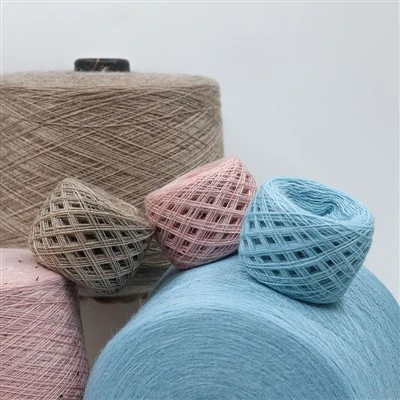
If you’re a brand looking to upgrade your product line with functional yarns that are both high-performing and environmentally responsible, we’ve spent years refining our materials and processes to deliver exactly that. We work with small boutique brands and large retailers alike, and we’re happy to send sample swatches, share our third-party compost and performance test data, or discuss custom blends tailored to your specific product needs. Whether you’re launching a new activewear line, outdoor gear, or everyday apparel that needs to perform well and leave a lighter footprint, our team is here to help you find the right biodegradable functional yarn for your project. Reach out to start the conversation.
Blended Yarn References
- Hempel, S. et al. (2019) Environmental Impacts of Hemp and Flax Fibers Compared to Cotton. Journal of Cleaner Production, vol. 228, pp. 1187-1198.
- World Wildlife Fund (2021) The State of Marine Plastic Pollution: Global Trends and Solutions.
- Zhao, Y. et al. (2020) Seaweed Fibers: A Sustainable Alternative for Technical Textiles. Textile Research Journal, vol. 90, no. 15-16, pp. 1792-1805.
- European Bioplastics (2022) Biodegradable Polymers for Textile Applications: A Guide for Manufacturers and Brands.
- Zhang, L. et al. (2018) Natural Antimicrobial Additives for Functional Textiles: A Review. Journal of Applied Polymer Science, vol. 135, no. 24, pp. 46217.
Dongguan Jintai Textile Technology Co., Ltd.
As one of the most professional functional yarns manufacturers and suppliers in China, we offer a wide range of products with superior quality. With abundant experience, we warmly welcome you to wholesale high quality functional yarns in stock here and get free sample from our factory. We also accept customized orders.
Address: No.22 Fukang Road, Dalang, Dalang Town, Dongguan City, Guangdong Province
E-mail: 13553898187@163.com
WebSite: https://www.jintaitextile.com/
