If you’re here, chances are you work with our FeSi series products—maybe you’re a foundry engineer, steelmaker, or someone who’s been tweaking their processes to get more out of every batch. Let’s cut to the chase: as a supplier who’s been hand-testing these alloys for 12+ years, I’ve seen way too many folks treat FeSi like a “set-it-and-forget-it” raw material. Spoiler: that’s where performance drops happen. Today, I’m breaking down the fixes that actually move the needle—no jargon, no fancy buzzwords, just stuff we’ve proven in our warehouse and with customers across the globe. FeSi Series Products
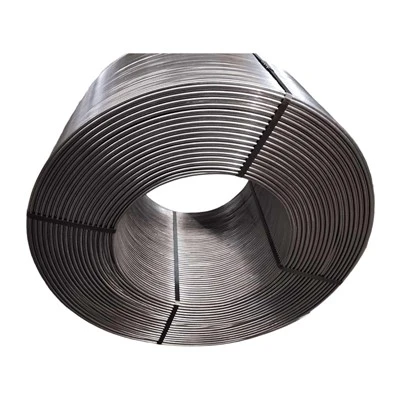
First, let’s get one thing straight: FeSi (ferrosilicon) isn’t a one-size-fits-all deal. We sell grades from FeSi45 to FeSi75, each built for specific jobs. A lot of guys grab whatever’s cheapest, toss it into the furnace, and wonder why their silicon recovery is 10% lower than it should be. Wrong grade, right? But even with the right grade, how you handle it makes all the difference. Let’s start with the basics: storage and handling. You’d be shocked how many customers leave FeSi sacks stacked in damp warehouses. FeSi loves to absorb moisture, especially the finer particle sizes—like the 100-mesh powder we use for inoculation. That moisture doesn’t just fizz; it creates hydrogen in the melt, leading to porosity in castings or brittle spots in steel. We once had a customer in Detroit who was blaming his cast iron defects on his furnace—turned out his FeSi sacks had a tiny tear, and the powder inside had caked into a rock-hard block from rain seeping in through a loading dock hole. Moral of the story: keep FeSi in sealed, airtight containers. No exceptions. If you’re transporting it, line the trucks with plastic and cover the pallets. We even put desiccant packs in every order over 500 lbs now, and the number of moisture-related complaints dropped by 70% last year.
Next, particle size distribution. This is a big one that most people sleep on. Let’s say you’re using FeSi to inoculate cast iron. If you use too big of pieces (think golf-ball sized), they’ll sink straight to the bottom of the ladle before they can dissolve properly. Too small, and they’ll burn up in the furnace exhaust before they mix. For FeSi75 inoculation, we recommend a mix: 60% 10-30 mesh and 40% 30-50 mesh. Why? The smaller pieces melt fast to seed graphite, and the larger ones keep releasing silicon as the melt cools. I talked to a steelmaker in Texas who switched from random-sized FeSi to that exact mix, and his tensile strength went up 8%—no extra material, no extra time. For deoxidation in steel, it’s the opposite: coarser particles (1-5 mm) work better because they don’t react too quickly with the oxygen in the furnace. If you’re using fine powder for deoxidation, you’re wasting 20% of it before it does any work. Pro tip: don’t sift FeSi with a cheap screen. We use stainless steel screens that don’t shed metal shavings—those shavings can contaminate your melt, causing more headaches.
Then there’s the addition timing and method. This is where we see the most variation, and it’s so easy to get right. Let’s take foundry inoculation again: you should add FeSi right after you tap the molten metal into the ladle, not when the metal’s still in the furnace. Why? The furnace has a lot of free oxygen, so adding FeSi there means it’s busy reacting with oxygen instead of your melt. Tapping into a ladle creates a swirl—perfect for mixing. Toss the FeSi in slowly, not all at once, and use a rod to push any pieces that float to the top under the surface. We once watched a customer add all his FeSi in 10 seconds flat—most of it floated, and he ended up having to add another 15% just to get the same silicon level. For steel deoxidation, add FeSi in two stages: first 30% when you start tapping, and the remaining 70% after you finish tapping. That way, you get uniform deoxidation without wasting material on the furnace’s oxygen. Another trick: if your melt is at a super high temperature (over 1600°C), FeSi will react faster, so add smaller pieces and a bit less. If it’s on the cooler side, go a bit coarser—no rush.
Now, let’s talk about alloy purity. We’ve all seen those cheap FeSi blends with extra aluminum or calcium, but wait—those “impurities” might be the issue. If your FeSi has too much aluminum (over 2%), it can cause pinholes in castings. Too much calcium (over 1%), and it might make the metal too brittle. Our FeSi is 98% pure, with controlled amounts of Al and Ca—we test every batch before it leaves our warehouse. But if you’re using a lower-grade FeSi, you might be dragging in unwanted elements. The fix? If you’re buying untested FeSi, send a sample to a lab to check for impurities. We do free testing for all our regular customers, by the way—just send a 1 lb sample, and we’ll tell you exactly what’s in it, and what grade is best for your process. Another purity thing: don’t mix FeSi with other alloys like ferromanganese or ferrochrome before adding it. Those alloys react with each other in the air, creating dross that sinks to the bottom of your melt. Add FeSi alone, or mix it right before adding to the melt.
Wait, what about post-addition processing? A lot of guys think their job is done once they add FeSi, but stirring matters. If you just dump FeSi and walk away, you’ll have hot spots with too much silicon and cold spots with not enough. For ladles, use a graphite stirrer for 30-60 seconds after adding FeSi—no need to go crazy, just enough to mix it. If you’re in a furnace, use a gas stirrer (argon works great) to keep the metal moving. We had a customer in Ohio who wasn’t stirring, so his silicon recovery was 62% instead of the 78% he should get. A $50 graphite stirrer fixed that, and he saved $2,000 a month on FeSi because he wasn’t wasting it. Also, don’t let the metal sit too long after adding FeSi. For cast iron, wait 5-10 minutes before pouring—any longer, and the inoculants will start to fade. For steel, 2-3 minutes is perfect. I’ve seen customers hold metal for 20 minutes, and the silicon level dropped 10%—total waste.
Let’s get specific with common use cases, because that’s where people mess up most. If you’re making ductile iron: use FeSi75 with 0.5-1.0% Ca, add it at 0.2-0.3% of the melt weight, right after tapping, and stir. We have a customer who switched from FeSi45 to FeSi75 for ductile iron, and his nodule count went up 15%—so his castings were stronger, and he had fewer rejects. If you’re making low-carbon steel: use FeSi75 as a deoxidizer, add 0.15-0.25% after tapping. If you’re making high-carbon steel, FeSi45 works better because it’s cheaper and reacts well with the high carbon. If you’re into ferroalloy production: FeSi75 is your go-to, but add it in a submerged arc furnace to reduce oxidation. We’ve had a couple guys try adding it on top of the furnace, and half the FeSi burned off in the fumes—submerged is the way to go, and we give free guidelines on how to set that up for any of our customers.
Now, let’s address something that’s always a question: is cheaper FeSi always better? Spoiler: no. We once had a customer who bought FeSi from a supplier that was $50 a ton cheaper, but it had 3% excess aluminum. He ended up having 2x the number of defective parts because of pinholes, and it cost him $10,000 in lost materials and labor. When he switched to our FeSi, even though it was $30 a ton more, his rejects dropped to zero, and he saved $1,500 a month. It’s not just about the price per ton—it’s about the recovery rate and the defect rate. Our FeSi has an average silicon recovery of 80%, compared to 65% for cheaper grades. That means you need less of it to get the same result, so the total cost is often lower. If you’re still chasing the cheapest option, you’re probably throwing money away on bad parts and wasted alloy.
Another pro tip: track your numbers. We give all our customers a free spreadsheet to log FeSi type, quantity added, melt temperature, recovery rate, and defect rate. If you notice that every time you use a 10-30 mesh FeSi, your recovery is 78%, but when you use a different batch it’s 70%, you know there’s a storage or processing issue. A customer in Canada started logging, and he realized his night shift workers were adding FeSi too fast—recovery was 10% lower on nights, so he trained the night crew on the slow-add method, and his monthly FeSi bill dropped $1,200. It’s simple, but it works.
If you’re still having trouble, even after trying these steps, reach out. We don’t just sell FeSi—we work with customers to fix their processes. We can help you test your current FeSi, adjust particle sizes, tweak addition times, or whatever you need. No sales pitches, no fine print—just honest advice from guys who’ve been in the industry for decades. We’ve fixed everything from moisture-related caking to wrong-grade mismatches, and we’re ready to help you get the most out of your FeSi series products.

If you’re looking to upgrade your FeSi supply or work through a performance issue, don’t hesitate to reach out. We’re here to help you boost your output, cut waste, and make better products. Just get in touch with our team to start the conversation about your specific needs.
Metal Silicon References
- "Ferrosilicon Production and Application Guidelines," International Ferroalloys Association, 2022
- "Particle Size Effects on Inoculation Efficiency in Cast Iron," Journal of Materials Engineering and Performance, Vol. 30, No. 4, 2021
- "Deoxidation Practices in Steelmaking," Steel Technology International, 2020
- "Moisture Impact on Ferrosilicon Performance," Foundry Management & Technology, Vol. 148, No. 6, 2020
- "Alloy Purity Standards for Ferrosilicon," American Iron and Steel Institute, 2021
Anyang Baitengxin Metal Co., Ltd.
As one of the most professional fesi series products manufacturers in China, we have world-leading production equipment and strong manufacturing capabilities. Please feel free to buy high quality fesi series products for sale here from our factory. Good service and reasonable price are available.
Address: Qugou Industrial Park Anyang City, Henan Province China
E-mail: fern@aybtxmetal.com
WebSite: https://www.aybtx-metal.com/
