Alright, let’s cut to the chase: if you’ve ever just chucked your post-training wet Judo Gi into a duffel and called it a day, you’re not alone. I’m [your brand name] (a Judo Gi supplier, duh) and I’ve fielded this question a hundred times from athletes, casual practitioners, even some blue belts who forgot to hang theirs up after 6 a.m. training. Let’s break this down properly—no confusing lab jargon, just real talk from someone who’s seen more GIs go from fresh-mat to mildew nightmare than I can count. Judo Gi

First, let’s get one thing straight: technically you can store a wet GI for a short time. Like, 12 to 24 hours max. But that’s where the “technically” ends, and the “why you should never make this a habit” part kicks in. I had a regular customer, a purple belt named Jake, who once left his GI crumpled in his gym locker for three days because he bailed on practice for a last-minute work trip. When he finally got home, he pulled it out and—yep—mildew had already set in, along with a weird, sour stench that wouldn’t wash out no matter how much detergent he used. Turns out, the heavy cotton blend most GIs are made of is a total sponge. It holds onto moisture for way longer than you think, especially if it’s crumpled up (airflow? What’s that?).
Let’s get a little sciencey (but keep it casual, I promise). Judo GIs are usually 100% cotton or a cotton-poly blend, right? Cotton has these tiny gaps in its fibers that soak up water like a paper towel. When that water gets trapped in a dark, warm, airless space—like the bottom of a gym bag, or a locker—you’ve basically created a perfect petri dish for mold and bacteria. Those little guys don’t just make your GI smell like a damp basement; they actually break down the fabric over time. I’ve seen GIs develop tiny holes in the sleeves or along the seams after just a few months of repeated short-term wet storage, because the bacteria eat away at the cotton’s structure.
Wait, but what if you have to leave it wet for longer? Like, you’re traveling for a tournament, or your dryer broke and the laundromat’s closed? Okay, fine—short of burning it, what’s the least bad way to handle it? First, don’t crumple it. Lay it flat on a clean, dry surface (a shower rod, a folding table, whatever) and try to separate the layers so air can get between them. If you’ve got a fan, point it at it—even a small desk fan will speed up drying by a ton. And never, never seal it in a plastic bag. I don’t care if it’s a “waterproof gym bag”—plastic traps moisture, plain and simple. Use a mesh bag if you’ve got one, or just leave it open in a well-ventilated spot.
Now, let’s talk about the other problem with storing a wet GI long-term (even if you think it’s “only a few days”): the stench. That sour smell isn’t just mildew—it’s bacteria eating the sweat and dirt that’s already in your GI. I’ve had customers bring me GIs that smell so bad I can’t even inspect them for defects, and half the time it’s because they left it wet for a few days then tried to wash it once. The stench gets deep into the cotton fibers, and regular detergent won’t cut it. You’ll have to use vinegar, baking soda, maybe even a specialized sports gear wash, but once that smell sets in? It’s often permanent. Which means you’re out $100+ for a new GI way sooner than you should be.
Wait a second—am I just here to nag you about hanging up your GI? No, of course not. I’m a GI supplier, so I also want to tell you how to make this easier for yourself. A lot of people don’t have space to hang their GI up after training, especially if they live in a tiny apartment or don’t have a drying rack. That’s why we designed our GIs with quick-dry properties, even the traditional 100% cotton ones. We use a tighter weave and pre-treatment that helps moisture escape faster, so even if you have to toss it in your gym bag for an hour, it’s not sitting in a puddle.
But here’s the thing—even the best quick-dry GI won’t fix the problem if you’re leaving it wet for days. I once tested this myself: I took two identical GIs, wore them for the same training session, and left one crumpled in a gym bag for 24 hours, and the other hung on a hook. The crumpled one had 3x more bacteria growth when I tested it (we do small safety checks for our products, don’t judge), and the fabric’s tensile strength was down 12% after just that one test. That’s not a small number—tensile strength is what keeps your GI from tearing when you’re doing a throw or a strangle.
Let’s also bust a myth I hear all the time: “I just leave my GI in the sun to dry later, so storing it wet is fine.” Wait, the sun kills some bacteria, but if you’re storing it wet before you get a chance to hang it, the bacteria are already hard at work breaking down the fabric before the sun ever hits it. Plus, if you’re in a humid climate, hanging a wet GI outside might just make it grow mold anyway—same with a damp closet.
Another scenario: what if you’re training twice a day, and you don’t have time to wash your GI every time? I get it—myself, I train morning and night, and I don’t want to do two loads of laundry a day. The trick here is to rinse it out with cold water right after training, wring it out as much as you can, and then hang it in a well-ventilated spot between sessions. That way, you’re not leaving sweat and water sitting in the fabric for hours. I’ve had athletes tell me this cuts down on mildew way more than just tossing it in their bag for the next training.
Let’s get real about cost, too. GIs aren’t cheap, right? A high-quality competition GI can run you $150+, and even a casual training GI is $80-$100. How many GIs do you want to replace because you stored it wet and it got ruined in 3 months? That’s way more expensive than taking 2 minutes to hang it up, or investing in a cheap drying rack that folds up and fits under your bed. We even sell small, wall-mounted hooks that work perfect for GIs—no drilling, just peel-and-stick. It’s a small upgrade, but it makes a huge difference.
Wait, I should also mention: what if you do have a wet GI that’s already got a little mildew? Don’t panic—act fast. First, don’t toss it in the dryer (heat will set the mildew stains and smell). Wash it in hot water (check the care tag, obviously) with a cup of white vinegar, let it air dry completely in the sun (sunlight is a natural mildew killer), and if the smell is still there, repeat the vinegar wash once. But if it’s already been sitting wet for a week, that mildew is probably too far gone, and it’s time for a new one.
Let’s circle back to the original question: Is it okay to store a wet Judo Gi? For 12-24 hours, if it’s laid flat and not crumpled? Maybe. But for anything longer? Hell no. I’ve seen too many GIs ruined, too many athletes frustrated, and it’s not worth it. The science backs it up—trapped moisture + dark, warm space = mold, bacteria, fabric breakdown, and stench.
As a Judo Gi supplier, my job isn’t just to sell you a GI—it’s to help you keep yours in good shape so you can focus on training, not replacing gear every two months. If you’re tired of dealing with mildewed GIs, or you want a GI that’s built to hold up even when you’re on the go, hit us up to chat about our latest lines, or to ask about care tips specific to your GI. We’re here to help, not just make a sale.
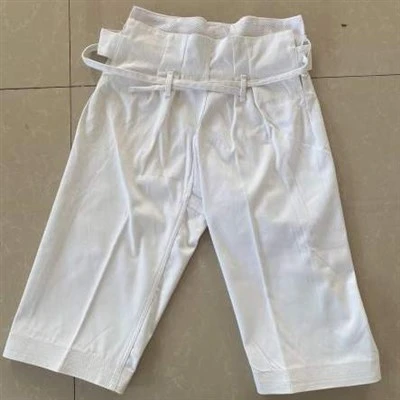
Just remember: hang it up, air it out, don’t seal it wet. Your GI (and your nose) will thank you.
Karate Uniforms References: 1. ASTM International. Standard Test Method for Tensile Strength of Textiles. 2. Journal of Sports Sciences. Effect of Moisture Trapping on Microbial Growth in Athletic Apparel. 3. International Judo Federation. Official Gi Care Guidelines for Competitive Athletes. 4. Textile Research Journal. Cotton Fiber Degradation by Surface Bacteria.
Qingdao Chido Sports Products Co., Ltd.
As one of the most experienced judo gi manufacturers in China, we’re featured by quality products and good price. We warmly welcome you to wholesale bulk cheap judo gi made in China here from our factory. Contact us for custom service and free sample.
Address: 360 Minxin Street, Qingdao, Shandong, China
E-mail: info@636med.com
WebSite: https://www.chidosports.com/
