If you’ve ever stood in a machine shop, a oil and gas rig floor, or a high-precision electronics manufacturing facility, you know the quiet, unglamorous work a stabilizer does. But when magnetism is off the table, that stabilizer stops being just a metal bar holding a drill bit in place—it becomes a critical component that can make or break a well’s directional drilling trajectory, or ruin a wafer-thin semiconductor part during machining. As a non-magnetic stabilizer supplier who’s spent 18 years in this space, I’ve seen too many teams waste time, money, and material because they picked the wrong one. This isn’t a “one-size-fits-all” part, and skipping the right checks will cost you more than just a few extra dollars per unit. Let’s break this down into the hard truths I’ve learned, and the questions you need to answer before you buy. Non-Magnetic Stabilizers
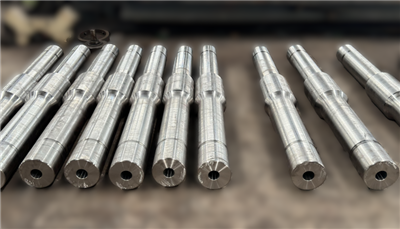
First, let’s get one common misconception out of the way early: non-magnetic stabilizers aren’t just “steel that doesn’t stick to a magnet.” That’s a lazy check, and it’ll fail you fast. A lot of materials look non-magnetic at first glance, but many are only weakly magnetic—enough to throw off sensitive tools like MWD (Measurement While Drilling) sensors, which detect magnetic north to guide directional drills. If you’re working in oil and gas, that error can add up to thousands of feet of off-course drilling, costing millions in extra time and materials. For precision machining, even a faint magnetic signature can pull tiny metal chips toward the stabilizer, scratching parts that cost thousands of dollars each. So your first stop isn’t the magnet test—it’s defining your use case. That’s the foundation of every good decision here.
Let’s start with the most common use case: oil and gas directional drilling. This is where non-magnetic stabilizers got their start, and it’s still the largest segment for my team. Here, the biggest demand drivers are two-fold: MWD/MWD tool compatibility, and downhole environmental resistance. MWD tools rely on the Earth’s geomagnetic field to measure drill angle, so any material with even a weak residual magnetism will create a “magnetic noise” that the sensors can’t filter out. We’ve had customers come to us after using a cheaper, off-the-shelf “non-magnetic” stabilizer from a general industrial supplier, only to find their MWD readings were off by 2-3 degrees—enough to miss a pay zone by hundreds of feet. That’s why when we supply stabilizers for drilling, we test every unit’s magnetic permeability at 100 kHz, a standard frequency for MWD tools. Permeability under 1.05 is non-negotiable for most drilling applications; anything higher will cause interference.
The second factor for drilling applications is material strength, because downhole conditions are brutal. Temperatures can hit 300°F, and there’s constant abrasion from rock formations and high torque from the drill string. The most common materials here are duplex stainless steel and Inconel, but not all duplex is created equal. Lean duplex, for example, is cheaper, but it loses 15-20% of its tensile strength at high temperatures, which can lead to a stabilizer twisting or breaking mid-drill. Super duplex, on the other hand, maintains strength even at 350°F, but it’s more expensive and more difficult to machine, so it’s only necessary for high-temperature wells (over 250°F). I always tell customers: if your well is under 200°F, lean duplex is a solid, cost-effective choice. If it’s hotter, splurge on super duplex—you’ll save way more on avoiding downtime than you’ll spend on the material.
Now, if you’re not in oil and gas, you’re probably in precision machining or aerospace, and your needs are different. Here, the priority isn’t downhole endurance—it’s dimensional stability and non-magnetic consistency for high-vacuum or cleanroom environments. For example, in semiconductor lithography, machining parts for the wafer stage requires a stabilizer that won’t attract ferromagnetic debris, which can contaminate a $10,000 wafer. Here, materials like austenitic stainless steel (316L) are common, but even 316L can develop a magnetic signature if it’s cold-worked during machining. That’s a critical point: the manufacturing process affects magnetism just as much as the base material. If you machine a 316L stabilizer too hard, the cold working changes its crystal structure, turning it weakly magnetic. For aerospace applications, where components need to meet strict NADCAP (National Aerospace and Defense Contractors Accreditation Program) standards, we use a process called solution annealing to eliminate that cold-worked magnetism. It adds a small cost, but it’s non-negotiable for customers who need zero magnetic signature.
Another niche use case is magnetic resonance imaging (MRI) environments. Hospitals and research facilities use MRI machines that generate 1.5T or 3T magnetic fields, so any stabilizer used in equipment near those machines has to be fully non-magnetic to avoid being pulled into the magnet. Here, most standard non-magnetic metals won’t cut it—at 3T, even a small amount of magnetic material will cause a dangerous projectile risk. For these applications, we use a high-nickel alloy called Hastelloy C-276, which has a permeability of 1.01, almost identical to air. We also test each of these units with a gaussmeter to confirm their magnetic field is less than 1 milligauss at 1 inch, which is well below the threshold that affects MRI equipment. I’ve had a hospital customer come to us after a cheap stabilizer from a metal supplier was pulled into their 1.5T MRI, cracking the machine’s protective housing. That’s a risk no one wants to take, so for MRI or high-magnetic environment applications, don’t just go for “non-magnetic”—specify permeability and gaussmeter test results.
Now, let’s talk about the practical, everyday factors that people overlook: size and customizability. A stabilizer that works for a 6-inch drill bit won’t work for a 2-inch semiconductor machining spindle, and a one-size-fits-all bar won’t have the right balance of rigidity for your setup. When we work with customers, we always ask for three dimensions: outer diameter (OD), inner diameter (ID), and length, plus the torque and load requirements of their machine. For example, a customer in a small machine shop might need a custom 4-inch stabilizer for a desktop mill, with a keyway to hold it in place. We can machine that in 7-10 days, whereas a big steel supplier might charge extra for custom machining and take 4 weeks. For larger drilling applications, we also offer hard-facing options—adding a layer of tungsten carbide to the outer surface to reduce abrasion, which doubles the lifespan of the stabilizer in abrasive rock formations. That’s a small add-on that pays for itself in avoided replacement costs.
Another hidden factor: corrosion resistance. If your stabilizer is used in offshore drilling, or in a wet machining environment, it needs to resist pitting corrosion. Lean duplex stainless steel, for example, has a pitting resistance equivalent number (PREN) of around 30, which is good for mild saltwater environments. Super duplex has a PREN of 40+, which is required for offshore or deepwater drilling where saltwater is a constant factor. 316L stainless steel has a PREN of around 25, so it’s fine for indoor machining, but it will corrode quickly if used in saltwater. I’ve seen customers cut corners here too: they pick a cheaper stabilizer, use it in a coastal machine shop, and find it rusted through after 6 months, requiring a full replacement. So always check the PREN number if corrosion is a concern—it’s a quick, standardized way to measure a material’s resistance to pitting.
Let’s also address a common pushback: “non-magnetic stabilizers are too expensive.” I get it, price is a big factor. But I’ve seen too many customers choose a $500 non-magnetic stabilizer over our $800 one, only to spend $10,000 in downtime when it fails. The key here is to prioritize the specifications you need, not the cheapest price. If you’re drilling in a shallow, low-temperature well with no saltwater, lean duplex is $200 cheaper than super duplex, and it will work perfectly. If you’re drilling in a deep, hot well, splurge on super duplex— it will last twice as long, and you won’t have to shut down the rig to replace it every 6 months. For precision machining, a $1,000 solution-annealed 316L stabilizer will avoid ruining a $5,000 part, which is a way better return on investment than a $200 cheap one that might scratch your parts.
Now, let’s walk through a quick decision tree to make this concrete. If you’re choosing a non-magnetic stabilizer, ask yourself these four questions:
- What environment will the stabilizer work in? (Drilling? High-magnetic equipment? Cleanroom machining?)
- What’s the maximum temperature of that environment? (Over 250°F? Under 200°F?)
- Do I need corrosion resistance for saltwater or wet conditions?
- What are my size and machining requirements (custom OD/ID, keyways, hard-facing)?
If you’re a drilling engineer with a 220°F land well, low salt, you’ll lean toward lean duplex, standard size, no hard-facing needed. If you’re a aerospace machinist working in a cleanroom on turbine parts, you’ll go for solution-annealed 316L, custom size, no extra coating. If you’re an offshore oil worker drilling in 300°F saltwater, super duplex with tungsten carbide hard-facing is the way to go.
I should also mention testing and certification, because that’s how you avoid getting scammed. A lot of suppliers will call a part “non-magnetic” without any proof. Reputable non-magnetic stabilizer suppliers will provide third-party test certificates for permeability and gaussmeter readings, plus material certifications (like ASTM A240 for stainless steel, or ASTM B575 for nickel alloys). If a supplier can’t give you those, walk away. We provide every customer with a certificate for every unit we ship, so they can confirm the material and magnetic specs before it even arrives on site.
Let’s wrap this up with a story that sticks. A few years back, a major oil company came to us after three separate drilling operations failed because their non-magnetic stabilizers were interfering with MWD sensors. They’d been buying from a supplier who labeled their “non-magnetic” steel as grade 304, which is weakly magnetic—perfect for pans and pots, but not for drilling. We supplied them with super duplex stabilizers, tested to a permeability of 1.03, and their MWD readings were accurate within 0.1 degrees. That single change cut their drilling error rate by 90%, and they’ve been a repeat customer ever since. The difference wasn’t just the material—it was knowing what specs to look for, and working with a supplier that could back those specs up.
At the end of the day, choosing the right non-magnetic stabilizer isn’t about buying the shiniest metal or the cheapest price. It’s about matching the material, testing, and customization to your exact use case. If you’re tired of dealing with stabilizers that fail mid-operation, or that don’t meet your magnetic specs, the first step is to sit down and map out your needs. Whether you’re drilling a well, machining a semiconductor part, or outfitting an MRI suite, the right stabilizer will be the quiet part that keeps your whole operation running smoothly—no surprises, no downtime, no hidden costs.

If you’re ready to stop guessing and get a stabilizer tailored to your application, reach out to discuss your project needs.
Non-Magnetic Subs References:
- API Specification 7-1, Specification for Rotary Drilling and Well Servicing Equipment, American Petroleum Institute
- NADCAP Standard for Metallic Materials Testing, National Aerospace and Defense Contractors Accreditation Program
- ASTM A240/A240M, Standard Specification for Chromium and Chromium-Nickel Stainless Steel Plate, Sheet, and Strip for Pressure Vessels and for General Applications
- “Magnetic Interference in Downhole Measurement Tools,” Journal of Petroleum Technology, Society of Petroleum Engineers
Shanxi Zhonghe Non-Magnetic Drill Tool Co., Ltd.
Address: No.168 Fenglei Street, Houma City, Linfen City, Shanxi Province, China.
E-mail: lucy@nmdrillcollar.com
WebSite: https://www.zhnmdc.com/
